3 months ago
61
3 months ago
61
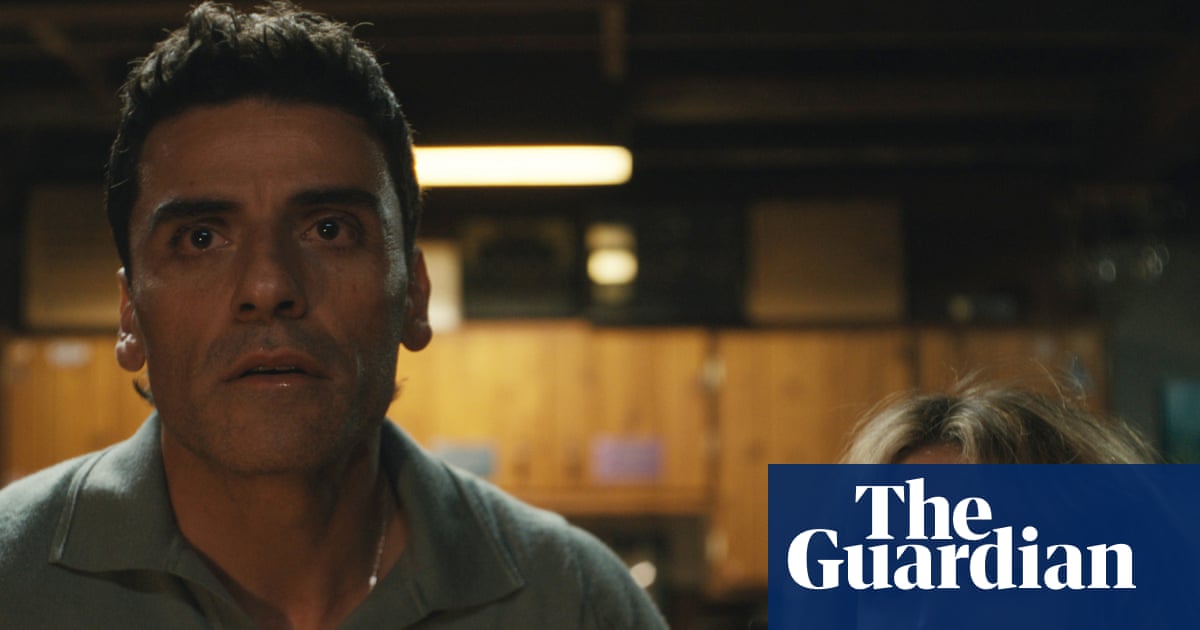
There’s a refreshing lack of subtext and pretension to this week’s gory creature feature Primate, a straight-to-the-point riposte to the glum, trauma-heavy horror films we’ve been enduring of late. Rather than following his genre peers who are busy aiming for the lofty heights of Don’t Look Now and Possession, British director Johannes Roberts is happy to give gen Z their very own Shakma, the goofy 1990 schlocker about a baboon driven wild by an experimental drug.
That film took a while to gain a cult following, ultimately accepted by the same drunk Bad Movie crowd who took in Troll 2, but Primate won’t take anywhere near as long. It’s a far better, slicker movie for one, a surgically well-made crowd-pleaser that swaps out baboon for chimp, cleverly turning him from test subject to domesticated pet. At 89-minutes and paced like a rollercoaster, there’s little room for life lessons, although the film does make for a stern, grisly reminder of why chimps should not be considered part of the family (something many still don’t seem to understand).
It’s ultimately, and importantly, not Ben’s fault. Ben being the chimp who became part of a Hawaii-based family when the late matriarch’s linguistics work followed her home from the lab. He lives with teenager Erin (Gia Hunter) and her crimewriter father Adam (Troy Kotsur, Coda Oscar winner) in a lux, and crucially remote, cliffside house. They’re being visited by absent eldest daughter Lucy (Johnny Sequoyah) who has retreated since the death of her mother. She arrives with best friend in tow, and some stragglers, for a weekend of dad-free fun, abruptly called to a halt when Ben starts exhibiting some alarmingly odd behaviour. It’s not just that he’s weird with strangers (he is) but he’s also been bitten by a mongoose …
As some foreboding explanatory text teases at the start, Ben has contracted rabies and as Lucy explains to her unlucky friends, “he’s not Ben anymore”. The cosy, teddy-clutching little brother has become a bloodthirsty killer and after a nasty initial confrontation, the group take refuge in the middle of the pool (Ben can’t swim and rabies is also associated with hydrophobia). Roberts gets right to it, perhaps a little too quickly (I could have done with a couple more scenes of Ben as pet rather than predator to flesh out the family dynamic and hammer home the horror of his turn), but once we’re off to the races, it’s a thrilling sprint to the finish.
As I sat down to watch, I realised I’d failed to take notice of the rating and perhaps assumed that due to the young cast and evergreen studio thirst for a wider audience, it would be a PG-13. As the cold open climaxes with our first victim getting his face torn off, I realised I was very wrong. Roberts takes full advantage of his hard R, with more jaw-snapping, head-smashing, bone-crunching violence than we’ve seen in a studio horror for a while. It’s inventively, memorably nasty (a fall from a great height ends in a brutally novel way while Ben’s dispatch of an Instagram jock is genuinely, is-he-really-going-to-go-there repulsive) but Roberts doesn’t use his gore to sacrifice the slow, seat-edge build, Ben’s unpredictable behaviour keeping us on our toes. The creature work is remarkably effective, a rare modern feat of practical effects (Ben is played by movement specialist Miguel Torres Umba) and it pulls us that much closer to the chaos unfolding, adding a physical connection to something that could have felt digitally alienating. Ben’s journey to becoming a full, sadistic slasher villain (he even has a Halloween-referencing wardrobe moment) gets a tad laughable by the end but there’s such electricity to the extended family-fights-back finale, that you’ll be too involved in who makes it to care all that much. I found myself surprisingly invested, thanks to some committed young performers and a warm dad role for Kotsur (how many other wide-releasing studio films have featured a deaf actor, with multiple sign language-only scenes, so prominently in the last few years?).
Roberts, and long-time co-writer Ernest Riera, are clearly paying loving homage to the many creature features of the 80s and while some of the nods pay off (the aforementioned practicality, the raucous teens), some of the synth-heavy score choices sometimes don’t, the choice to pick style over suspense often reducing the tension (Roberts’ ho-hum Strangers sequel suffered similarly). But Roberts, who also directed hit shark thriller 47 Metres Down and its superior follow-up, is mostly at his savviest and most ruthlessly efficient here, a confident leveling up for a genre film-maker finding his sweet spot. After a lacklustre year for horror, Primate makes for a wildly entertaining start to 2026.
-
Primate is out in US and UK cinemas on 9 January and in Australia on 22 January