2 hours ago
14
2 hours ago
14
Key events

Jakub Krupa
But we are going to hear from Wadephul and Rutte again very shortly as they address the said conference of German ambassadors in Berlin, where they will no doubt have more time to develop some of the key points from the presser.
I will bring you the key lines here.
Russia's reckless actions 'a sign of weakness and a symptom of its failure to get its way in Ukraine', Nato's Rutte says
Responding, Nato’s Rutte also references the Leipzig attack, stressing the alliance’s united response.
“That is how Nato works, all for one and one for all.
Russia wants to defeat us, but we are united.
Russia wants to stop us helping Ukraine, but we are going to do more for Ukraine.”
He says “Russia’s actions are a sign of weakness and a symptom of its failure to get its way in Ukraine, but Ukraine shows determination every day.”
He stresses the role Germany plays in the alliance, including through deployment in Lithuania and the strength of its defence industry.
Both leaders take no questions, so that ends the presser.
'We should have no illusions' about threats posed by Russia, Germany's Wadephul says
Germany’s Wadephul and Nato’s Rutte are speaking now.
The German foreign minister welcomes Nato’s secretary general as his guest at this year’s ambassadors’ conference.
He jokes that the nationwide test of alarm systems at 11am was, surprisingly, not a special welcome for Rutte, but then seriously adds that it is perhaps “a demonstration … of the fact that our societies have to prepare and equip themselves and make provisions in every possible way.”
He then references the recent failed drone attack in Leipzig, thanking Nato for showing solidarity with Germany.
“Leipzig has … made the threat that Russia pose more tangible, and it is one of a growing number of aggressions on the part of Russia against Europe and Nato,” he warns.
“We should have no illusions: Russia is not only a threat militarily along the eastern flank, and continues its relentless war against Ukraine, but we increasingly notice hybrid activities, cyber-attacks, sabotage, disinformation and attacks on critical infrastructure.”
He continues stressing the importance of Nato stepping up to the challenges it is facing.
Jakub Krupa
As mentioned earlier, we are expecting to hear from Nato’s Mark Rutte and Germany’s Johann Wadephul this morning.
We are likely to hear their latest assessment on the situation in Ukraine and Russia’s alleged acts of sabotage in Europe.
I will bring you the key lines when they show up to speak.
'Strength today is no guarantee of leadership tomorrow,' EU's von der Leyen says as she pledges to work on space economy
Speaking after Macron, European Commission president Ursula von der Leyen also pledged to build on Europe’s strength to invest in space capabilities.
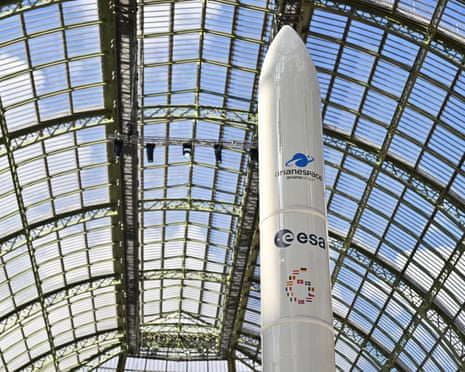
“But strength today is no guarantee of leadership tomorrow,” she said, as she added that “to remain at the forefront, Europe must act together, invest at scale and turn our market into a competitive advantage.”
Von der Leyen also added that “if Europe is to lead in the space economy of tomorrow, the ability to access and act in our space not only underpins our prosperity; it increasingly determines our security and our independence.”
“We increasingly see it in our union itself. We see navigation signals jammed and spoofed, disrupting civilian aircraft. Cyber-attacks on satellite networks, knocking critical infrastructure offline and drones hovering over our airspace using technologies dependent on navigation from above. The message is clear: our security on Earth increasingly depends on our security in space.”
Macron wants Europe to develop its own crewed spaceflight capability
Meanwhile, French president Emmanuel Macron used his international space summit in Paris to call on Europe to develop its own crewed spaceflight capability as part of a broader push to strengthen the continent’s space sector, AFP reported.
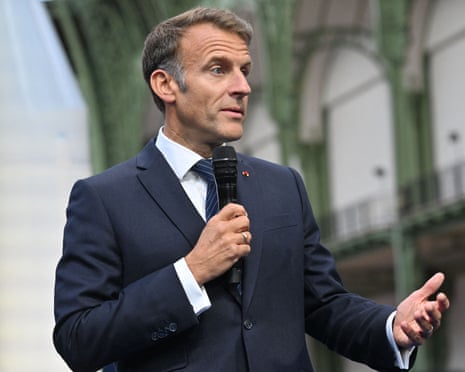
“We want Europe to demonstrate its ambition in the field of crewed spaceflight,” Macron told a space summit in Paris, adding that “our European space programme remains fragile and we must step up our efforts.”
Russia arrests British embassy security guard for alleged false flag plot
Meanwhile, Russia said it had detained a Russian security guard working at Britain’s embassy in Moscow, alleging he was hired by Ukraine for a false flag attack on the UK ambassador, AFP reported.
The FSB security service said the individual had been recruited by a Ukrainian blogger working with that country’s SBU security agency to track events and people at the British embassy and take note of their security system.
Ukraine then “planned to use this obtained information to prepare and carry out sabotage and terrorist attacks against the head of the British diplomatic mission and other diplomats, and then accuse the Russian side”, the FSB said in a statement, without providing any evidence.
Kyiv and London have not responded to the allegations.
The arrest comes just hours after British prosecutors said on Wednesday they had charged a 31-year-old British man for allegedly making contact with a representative of Russia’s GRU military intelligence agency.
Nato allies foiled Russian subsea cable sabotage plot, Reuters says
Meanwhile, Reuters reported that Nato allies interrupted a Russian plot training to unleash a secret weapon designed to disable critical undersea cables without leaving any fingerprints.
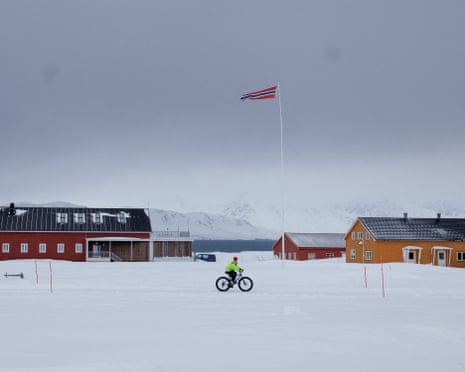
Two 1,400 km subsea fiber-optic cables linking Svalbard to mainland Norway lie as deep as 2,700 metres below the sea’s surface. They carry vast amounts of satellite data downloaded at the SvalSat satellite ground station, the world’s largest and part of NASA’s Near Space Network.
The clandestine Russian operation looking to disable them was reportedly discovered and interrupted by Nato allies Britain, Norway and the US earlier this spring, when they tracked and confronted the Russian vessels at sea.
Russia didn’t damage any cables. The exercise focused on simulating the deployment of the technology in the event of a conflict with Nato, the officials said. They declined to detail how the technology works.
Britain and Norway disclosed in April that they had uncovered a covert Russian operation in Arctic waters. But the discovery of the new weapon, the location of the operation and the US involvement have not been reported.
“Through our joint operation, we sent a clear message to Russia that they cannot operate covertly,” Norway’s defence minister Tore Sandvik said in a statement.
“We have made it unequivocally clear to Russian authorities that any attempt to target our critical infrastructure will be detected and met with consequences,” he said. “It is in no one’s interest to escalate tensions in the High North.”
Russia’s defence ministry didn’t respond to a request for comment on the incident. The Kremlin consistently denies conducting sabotage operations in Nato countries or plotting any confrontation.
Morning opening: Russian attacks continue as Zelenskyy continues diplomacy tour
Jakub Krupa
At least nine people died in overnight Russian strikes on Ukraine, targeting warehouses and ports across the country.
Five people were reported dead and 24 injured in the Sumy region, with four killed and 19 injured in a separate attack on Ukraine’s Black Sea port of Mykolaiv.
The latest wave of attacks come as president Volodymyr Zelenskyy continues his international diplomacy tour with talks on air defence and winter preparations in Canada.
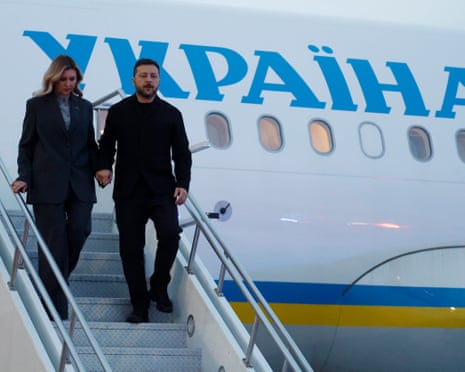
In a statement this morning, he highlighted Ukraine’s ability to conduct retaliatory strikes against Russia, as he said:
“Over the past 24 hours, our warriors struck eight Russian infrastructure facilities supporting the war. An oil refinery in the Yamalo-Nenets region and a seaport in Dagestan were hit. Sites in the Moscow, Voronezh, Astrakhan, and Bryansk regions were also struck.
Russia continues its daily terror against Ukraine. And every day, it receives a just response. I thank every warrior and everyone who enables our long-range capabilities and precision.”
Late last night, Norwegian prime minister Jonas Gahr Støre said that Zelenskyy’s plane was almost hit by a drone when leaving Moldova for Oslo earlier this week. “That is just the reality he lives in,” he told broadcaster NRK.
The alleged incident happened during a previously reported drone incursion into Moldova and Romania on Tuesday night (Europe Live, Tuesday). The Ukrainian side did not comment on what happened.
Separately, Nato’s secretary general Mark Rutte is meeting with Germany’s foreign minister Johann Wadephul this morning, with the pair set to discuss Ukraine and Germany’s own experience with Russia in recent weeks after an attempted drone attack in Leipzig.
I will bring you the key lines from their talks, and other news across Europe.
It’s Thursday, 10 September 2026, it’s Jakub Krupa here, and this is Europe Live.
Good morning.