3 months ago
61
3 months ago
61
Saudi Arabia’s construction of stadiums for the 2034 World Cup is facing delays owing to a desire from the Public Investment Fund (PIF), the kingdom’s sovereign wealth fund, to scale back costs.
The Guardian has been told that several architecture firms awarded contracts to build stadiums in Saudi have been asked to resubmit plans because their designs have been deemed too expensive, and contractors due to start work next year have been told the build will not begin on time.
There is widespread speculation within the construction industry that Saudi Arabia may reduce the number of stadiums to be used at the World Cup from the 15 included in its bid, which was approved by acclamation by Fifa last December. The 2022 World Cup in Qatar operated with eight stadiums, although after the expansion to 48 teams next year’s tournament in the United States, Mexico and Canada will have 16 venues.
Saudi Arabia unveiled plans based around four cities – Riyadh, Jeddah, Al Khobar and Abha – and Neom Stadium, which is due to be built in the yet-to-be-constructed futuristic mega-project known as The Line, a 500-metre-high city to be powered by renewable energy.
Eleven new venues are planned, with four stadiums to be renovated and expanded. Several of the new stadiums are being designed by the UK-based companies Foster + Partners and Arup, and the American firm Populous is also heavily involved.
The construction of three venues has begun, but industry sources have told the Guardian a number of the stadium builds are facing delays. Several architecture firms have been asked to resubmit tenders or reduce costs owing to a slowdown in spending by PIF linked to lower oil prices.
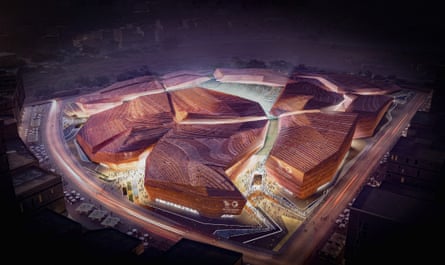
One company is understood to have been told it could lose its stadium contract if it does not produce significant cost savings.
PIF regards the situation as business as usual with many key decisions still to be made with nine years remaining before the World Cup. The tournament is expected to take place in November and December 2034.
Nearly all of Saudi’s capital infrastructure projects come under crown prince Mohammed bin Salman’s Vision 2030 development drive, which was announced in 2016 to move the country away from reliance on oil and towards other industries, particularly tourism, hospitality and property.
Vision 2030 is financed by PIF, which remains heavily reliant on the nation’s vast oil and gas reserves. Saudi Arabia’s state oil company Aramco reduced its prices this month because of falling demand and an oversupply among Opec, the Organization of the Petroleum Exporting Countries.
PIF announced plans in April to cut spending by at least 20% in 2025, with mega-projects such as Neom and other huge entertainment and tourism developments at Qiddiya City and Diriyah initially feeling the pinch.
A Saudi source confirmed that although spending on sport would be prioritised some World Cup projects were likely to be affected. PIF is also the majority owner of Newcastle United and four Saudi Pro League clubs.
The Saudi Arabian Football Federation was approached for comment.