2 months ago
54
2 months ago
54
Kristen Galvan, a teen girl who went missing after being sex-trafficked in 2020, has been confirmed to have been murdered.
Galvan’s death was determined through a recent DNA testing of partial remains of a girl found under a bridge in Missouri City, Texas, three weeks after she disappeared at age 15, said Robyn Cory, her mother.
Cory has spent more than five years searching for her daughter, who was trafficked by Houston gang members after being groomed by them over Instagram. Her case generated significant media attention, including in the Guardian. While Kristen’s remains were discovered on 29 January 2020, they were classified as a “Jane Doe” by the authorities and not investigated as part of her missing person’s case.
A now-removed profile of the Jane Doe on the Department of Justice’s NamUs website – a national database of missing, unidentified and unclaimed people – described an unidentified girl believed to be between 12 and 18 years old. The listing included a forensic facial reconstruction image that strongly resembled Kristen, according to Cory.
Yet DNA from the body was not tested until July 2025. Cory was told that her mitochondrial DNA matched the body’s in August, confirming they are mother and child. However, the police asked her not to publicly disclose the information for several months as they investigated the case.
Cory first became aware of the Jane Doe profile on NamUs in 2022. At the time, Cory had asked law enforcement to check if the remains were her daughter’s, according to correspondence viewed by the Guardian. However, law enforcement officers investigating Kristen’s disappearance told Cory they did not believe Jane Doe was her daughter. Yet they also did not test the DNA of the remains.
Kristen is believed to have been bound with duct tape, beaten and stabbed to death. Only parts of her skull were recovered in 2020. Her limbs, lower body and part of her skull have never been found.
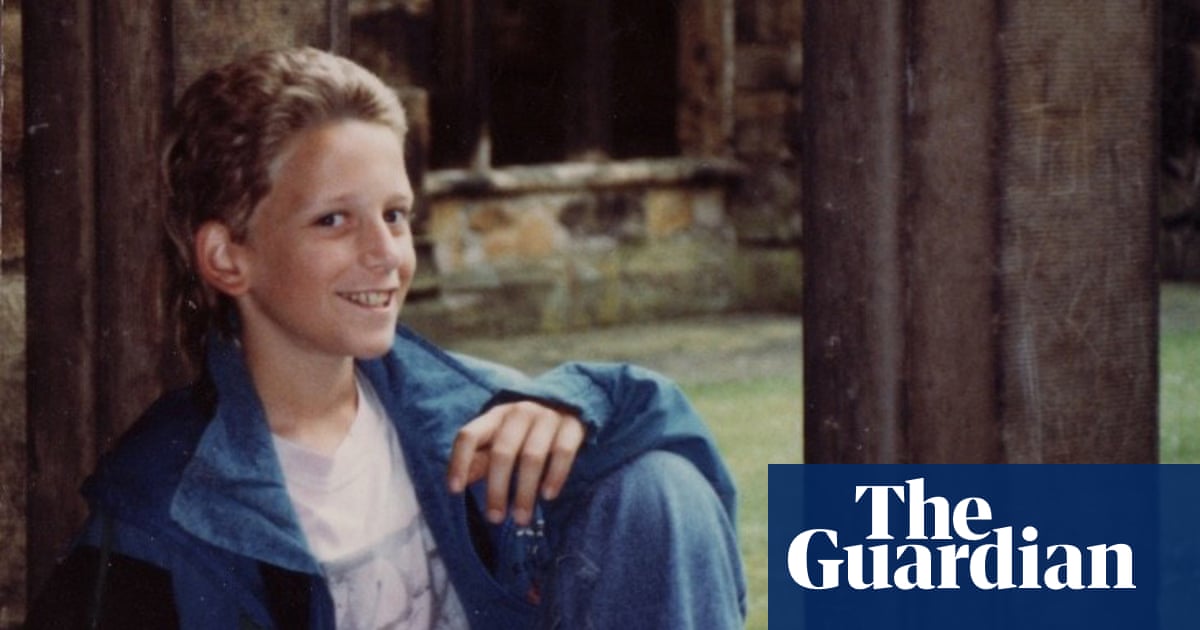
Kristen was known as “Kiki” by her family and friends. The teenager got good grades, was a member of the Girl Scouts and her school’s drill team, and had dreams of a career in the military. She was idolized by her two younger brothers, Cory said.
Everything changed in 2019, when a boy working as a scout for the gang at Kristen’s school identified her as a target. Soon, gang members began bombarding her with flattering comments and invitations to party through Instagram.
The gang eventually lured Kristen away from her family home. Two weeks later, police found her in Houston’s red-light district and returned her home to Cory.
According to Cory, Kristen returned deeply traumatized, angry and frightened the traffickers would hurt her and her family. At the time, she also gave testimony to law enforcement, which was later used to help convict her trafficker, a local rapper named Aryion Jackson.
Jackson and his accomplices ran a “trap house” that held up to 12 girls and women at any one time and forced them to have sex for money. Failure to meet a quota resulted in violence, according to court documents.
“[Jackson] threatened to kill/harm the women/minors or their families if they left him,” one court document stated. “[Jackson] did not provide food for the women/minors but regularly provided them with drugs to keep them working.”
Kristen was beaten and made to walk the streets to find clients to buy sex. She also told her mother that the traffickers would create Instagram accounts to market their victims and set up “dates” for which they would charge between $100 and $300.
“My daughter screamed at me,” says Cory. “‘You don’t know what they made me do! They’re going to kill you all! I have to go back. They have pictures of you all. They’re going to kill my brothers.’”
On 3 January 2020, five months after Kristen was first returned home by the police, she disappeared for a second time. Cory believes she was forced to leave home out of fear the traffickers would come after her family if she didn’t comply with their demands.
Kristen’s family never heard from her again.
Sex trafficking involves the use of force, fraud or coercion to exploit someone for commercial sex. When the victim is under 18, any commercial sexual act is legally considered trafficking, as children cannot consent to sex work.
Court records from Jackson’s trial show he used Instagram to promote himself as a pimp through multiple accounts. One piece of evidence presented was a post on his personal account featuring a photo of a stack of cash, with the caption: “Just from last night … she did her shit last night.”
The documents also state that, after his arrest and incarceration, Jackson continued to run his sex-trafficking operation using a smartphone from inside jail.
Cory works with a private investigator and private groups to recover trafficked girls who are under the age of consent from Houston’s red light district. She desperately hoped that one day one of the girls she rescued would be Kristen.
But Kristen had been found all along: she was the unnamed and unclaimed girl whose forensic sketch was online.
“She’s been hidden in plain sight the whole time,” said Cory. “No parent should have to solve their own daughter’s case.”