3 months ago
61
3 months ago
61
Australians are no strangers to blistering weather – being a “sunburnt country” of “droughts and flooding rains” is baked into our national identity. But since the 2019-20 bushfires, which burned through an area almost the size of the UK, and killed or displaced 3 billion animals, the arrival of warmer weather each year is accompanied by dread. This summer has brought punishing extremes of heat and fire that are brutal even by Australian standards.
More, after this week’s most important reads.
Essential reads
-
The death of Heather Preen: how an eight-year-old lost her life amid sewage crisis
-
Trump lashes out at California governor’s green energy deal with UK
In focus
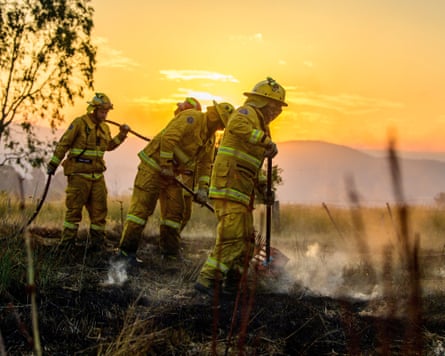
In the first week of January, the country’s south-east experienced the most significant heatwave since the 2019-20 “black summer”. Major cities sweltered: it reached 41C (106F) in Melbourne and 43C in Adelaide. In other parts of the country, the mercury climbed north of 45C.
The hot, dry weather was ripe for fanning flames. On 9 January, in conditions rated as “catastrophic”, crews attended almost 200 fires in the southern state of Victoria. Volunteer firefighters in the towns of Longwood and Harcourt fought flames that would eventually raze their own homes. Some of the blazes would burn for more than a month before being brought under control.
At the end of January, climate scientists identified that the extreme heatwave had been made five times more likely by warming from greenhouse gas emissions. No sooner had they published their findings than the heat was upon us again – in a new blast that rewrote the records. Temperatures in the opal-mining town of Andamooka (population: 262) in South Australia reached 50C – only the eighth time in recorded history that has happened anywhere in Australia.
In Victoria, the state’s all-time heat record was broken at two locations, reaching 48.9C. In Melbourne, where I live, parts of the city hit 45C. Stepping outside on that day, 27 January, felt – and I don’t use this word lightly – apocalyptic. The air was smothering, suffocating – like blasting one’s eyes and open mouth with a hairdryer. The heat was searing, especially in direct sunlight (where temperatures can reach up to 15C higher than official observations).
We know there are biological limits to what the body can withstand. In Australia, extreme heat is the most common cause of weather-related hospitalisations, and kills more people than all other natural hazards combined. Despite the oppressive temperatures, major sporting events such as the Australian Open continued, albeit with extreme heat protocols in place. It raises the question: how feasible will it be to continue holding such events in summer, given the escalating frequency and severity of extremes due to global heating?
Though the season is not yet over, an accounting of this summer’s costs has begun. Across Victoria, 435,000 hectares (1m acres) of land have burned, destroying more than 900 structures. Analysis, using data from the Insurance Council of Australia, has found that fires, floods, heatwaves and storms have resulted in about $1.6bn (£833m) in insured losses this summer so far. (I neglected to mention earlier that between the heat and fires, there were also: seven cyclones; flooding in several states, including flood waters that swept cars out to sea in Victoria; and an algal bloom along the South Australian coast, which has persisted for nearly a year.)
We also still don’t know the full extent of the impacts on Australian wildlife. In extreme temperatures, flying foxes have been dropping dead in their thousands. Some plant species are feared extinct. Images have emerged – as they did in previous summers – of thirsty koalas lapping up water provided by humans – the iconic marsupials usually get most of the water they need from the moisture in the gum leaves they feed on.
The heat this year has been tempered by a La Niña, but Australians will have to get used to increasingly punishing summers. The light at the end of the smoke haze is that Australia has made progress in transitioning away from its infamously coal-dependent electricity system. Through the hot weather, the electricity grid coped with high demand, thanks to the rapid rise of solar power. The week of the second heat event, solar provided 30% of all electricity in the country’s main grid; in the last three months of 2025, renewables contributed more than 50% for the first time.
But the centre-left Labor government continues to back opening and exploring for new fossil fuel projects, mostly for a still-booming fossil fuel export industry. It has approved 33 coal and gas developments or extensions since it was elected in 2022. Just last week, it approved the expansion of a coalmine estimated to release about 236m tonnes of CO2 over its lifetime – equivalent to almost half of Australia’s current annual footprint.
The response from conservationists was understandably sharp: one described the government as “burning our future and burning their own credibility”. As in other parts of the world, the pressure to turn away from fossil fuels will only keep growing; whether politicians can withstand the heat remains to be seen.
Read more: