1 month ago
61
1 month ago
61
Extreme weather supercharged by the climate crisis is fuelling an explosive wildfire season in Europe and extreme rainfall across Asia this summer.
Global heating made hot, dry and windy weather stoking wildfires at least 20 times more likely in Spain and twice as likely in France. EU officials have said wildfires could still be burning until early November in what threatens to be a record-breaking year for the area of land burned.
Meanwhile, unprecedented rains continue across Asia. As South Korea swings between heatwave and downpour, in Japan and Vietnam torrential rain has led to landslides. Extreme rainfall across the world is more common and more intense because of human-caused climate breakdown.
The Guardian’s Europe environment correspondent Ajit Niranjan has been covering the extreme heat and wildfires across Europe this summer, while global environment writer Jonathan Watts reported on the floods in Asia.
Ajit and Jonathan answered questions about their reporting and experiences. Read the Q&A below.
Desenrasco asked: How scared should I be about wildfires?
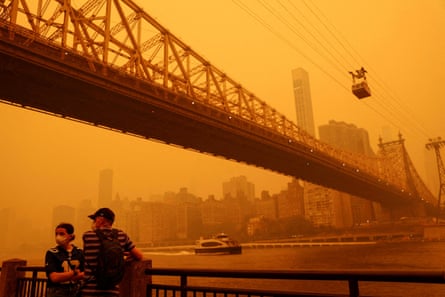
To consider it in the bluntest of terms, wildfires kill surprisingly few people: perhaps hundreds around the world each year, compared to thousands from floods and hundreds of thousands from heatwaves. That is, of course, of little comfort to the people across Spain and France returning to burned-out homes, or to the families of firefighters, locals and tourists who have died in the past few weeks. But what scares me far more is the smoke. Recent studies peg the global death toll from wildfire smoke at 1.5 million people per year. The wildfire season in Canada three years ago was so bad, one study found, that more than 80,000 people died from smoke inhalation – and 20,000 of them were in Europe, as winds carried the pollution over the Atlantic.
Sg_plumber asked: How come pretty much everybody (at least on TV) always forgets to mention that yes, the climate crisis is fuelling these extreme weather events?
Jonathan Watts: I agree. This is not just exasperating, it is frightening. The climate and nature crises are the greatest threats humanity has faced, yet many media organisations downplay or ignore it. Social media is even worse, propagating misinformation and distracting people from the root cause of the problem (petrochemical companies, big agriculture and every rising emissions of greenhouse gases). The Guardian is able to devote much of its resources to covering these topics because it does not have an owner and because our readers make very clear that they want a big share of their contributions to go to this topic.
Economy-Fee5830 asked: You’ve written about oil majors profiting as the world heats. But European wildfire deaths and flood deaths are overwhelmingly determined by local building codes, evacuation planning and firefighting budgets. Does the Big Oil accountability framing crowd out the more boring domestic policy failures that actually determine the body count?
Ajit: I broadly agree with your question but slightly disagree with the premise. Rapid analysis studies in recent years have attributed 40-70% of the death toll from big European heatwaves to the increase in temperatures from carbon pollution.
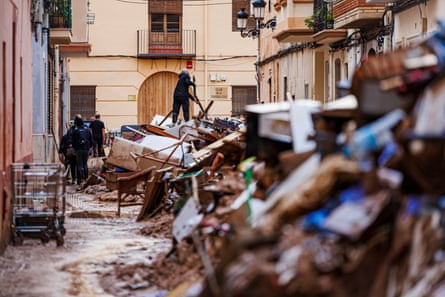
With wildfires and floods it’s much harder for scientists to say how much climate breakdown contributed to the death toll. I’ve covered European floods where they’ve shown the rainfall that triggered the floods to have been made stronger or more likely by up to 20% but, as one scientist put it to me after floods in central Europe last year, it’s a binary problem: the dam will either fail or not. In cases like the floods in Germany’s Ahrtal in 2021, or in Valencia, Spain, in 2024, we saw both jaw-dropping evacuation failures and climate-exacerbated rain.
Cutting fossil fuel pollution is indeed a fundamental solution, and it must be accompanied by a never-ending list of other adaptation measures. I would argue our coverage is pretty good at including both bits. Every article I’ve written on wildfires this summer has included rising temperatures and land abandonment. Our flood coverage had the failures of authorities at the forefront.
Owl1917 asked: With climate anxiety on the rise, particularly amongst younger generations, what advice would you give to those who see the future as hopeless?
Ajit: More than anything else, I would challenge anyone who feels hopeless to be specific about what’s troubling them. This is obviously easier said than done, but if you take a couple of hours to write down what it is that scares you about climate breakdown, what makes you angry, and what leaves you feeling hopeless, the fears become (hopefully) easier to confront.
In my case, reporting on the climate has made me way less worried about some problems and way more worried about others. In terms of hope, I am, perhaps unpopularly, a firm believer in the idea that we have far more agency than anyone around me seems to realise (with the exception of a handful of scientists). Too many people my age claim a powerlessness that is not backed up by data. Sure, your ability to replace a coal plant with a wind turbine may be limited (it’s still not nothing, if you live in a democracy) but you have power over what you eat, how you get around, how much you buy. Consider diets: our collective choice to eat meat and dairy is responsible for 12-20% of planet-heating emissions, and doctors recommend people in rich countries eat far less of it for their own health, let alone the climate. Does this sound like our actions are pointless?
Gold-Loan3142 asked: How do we challenge the mainstream ‘“perpetual growth” economics that infuses almost all discussion of the economy?
Jonathan: You have touched on one of the core issues. The obsession with endless GDP growth on a finite planet can only end in tears. The only question is when. There have been numerous academic challenges to this and alternatives, such as Kate Raworth’s Doughnut Economics and Bill McKibben’s Economics as if the World Mattered. There are also some very interesting studies and books on degrowth by the likes of Jason Hickell and many others.
If I can stray outside my journalist role, I have long believed that what the world needs is not just economic degrowth but ecological regrowth. We need a system of trade, currency, taxation, incentives that rewards countries and companies for restoring the world’s battered ecosystems.
SurinamPam asked: A lot of carbon is emitted for road transportation, building heating/cooling, and electricity generation. And, the world is quickly switching to EVs, heat pumps, and building out solar, wind, and batteries. If all those carbon sources go to zero, how much of an effect will it have on future climate change?
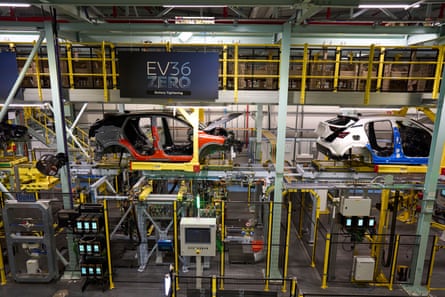
Jonathan: That is a fascinating point. I haven’t done or seen the calculations on this. But, speaking far more broadly, the energy transition is one of four great causes for hope that I have right now. Wind, solar and electric vehicles have taken off far more quickly than almost anyone expected even a decade go. This has the potential to change the global balance of power and, I believe, may also be behind rising US aggression in terms of military conflict, tariffs and attacks on democracy.
Distracted-Nomad asked: In terms of advocacy, what are the most powerful things you can say to convince individuals that their efforts (ie lifestyle change) are important? Most people I know say whatever they do won’t make a difference and governments and corporations need to change before we do.
after newsletter promotion
Jonathan: This is one of the most common and important questions that climate journalists get. I agree the priority must be political action because the required changes – higher taxes on fossil fuels, a wealth tax on billionaires, more investment in renewables, more incentives for plant-based diets, etc – need to come at a national and international level. That said, I disagree that individual action is meaningless. It can set an example to others. And it can show that change can be beneficial to health and wallet. Imagine, for example, how much money electric car owners have saved during the recent oil price spikes. The key is to do this while never letting the petro-companies off the hook. They have tried in the past to convince people that the responsibility for the climate crisis lies with individual consumers. That was why they pushed the idea of carbon calculators. But the real blame lies with them. Most of the big oil companies are expanding production and making record profits.
Karenadona asked: How much longer do we have until we run out of time to save the planet?
Ajit: In one sense, it is never too late, and in another sense, it already is too late. The planet will survive, and even apocalyptic scenarios do not really consider an end to life on Earth as a result of climate breakdown. But while there is technically no time limit to action – climate scientists stress that each extra ton of carbon dioxide heats the planet a bit more – the likelihood of triggering catastrophic tipping points rises the hotter it gets. The 1.5C global heating target, which world leaders agreed to in Paris in 2015, looks extremely likely to be missed. (I am not saying definitely, as it is physically still possible, even if emissions have risen to a level where it is perhaps societally implausible.) Keeping below 2C of warming is, however, very much still possible. Current projections put us on track for somewhere between 2C and 3C by the end of the century.
Szabolcs85 asked: Is there anything to be hopeful about? The future looks very bleak.
Jonathan: I am also pessimistic, but there are still many things to fight for. Every fraction of a degree of warming that we can prevent will help millions of people and billions of other forms of life. UN-led action have already helped in this way, but not enough. But international cooperation is worthwhile.
My four other causes for hope:
-
The energy transition, particularly in China.
-
The rise of the rights for nature movement, which - although imperfect – is confronting the core of our problems, which is a broken relationship with the non-human part of the planet.
-
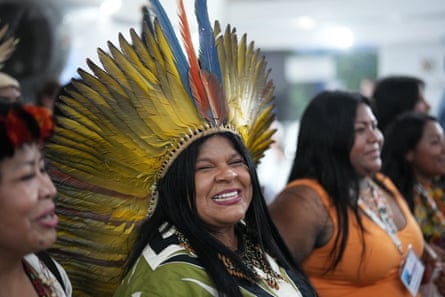
Alternative ways of thinking and being found in the global south, particularly among indigenous communities.
-
The prospect of the global population peaking before 2050, which should reduce pressure on the environment.
Set against this, unfortunately, are the huge military and financial forces of petrostates, such as the US, Russia and Saudi Arabia, often aligned with big corporations.
Fraggin601 asked: How do you think our economic systems must change to cope with climate change?
Jonathan: Great subject. The first step should be a realistic appraisal of the economic risks posed by the climate and nature crises. Currently, most economists are absurdly complacent. The Nobel prize winner William Nordhaus assumes a very low hit to GDP but he omits – as the commentator Genevieve Guenther notes – the full costs of labour productivity, buildings, infrastructure, transportation, non-coastal real estate, insurance, communication, government services and other sectors. Most worrying to me is that most economic model assume smooth linear warming, even though many climate scientists warn of tipping points that are likely to bring jolts, acceleration and catastrophe. It is as though a doctor treats everything as a chronic, manageable ailment while ignoring the very real risks of acute, life-threatening diseases.
Nature also needs to be much more highly valued – and not just in economic terms. Then there is the question of inequality – between nations, communities and species. There is no GDP without a healthy environment. And there is no greater theft from the poor than the loss of clean air, fresh water, fertile soil and a stable climate. On a positive note, I have been very impressed by the recent work done by the World Inequality Lab to try to incorporate more planetary boundaries into their projections of what a cleaner and fairer world could look like.
Lightning7Bolt asked: What can a 17-year-old like me do to fight for change?
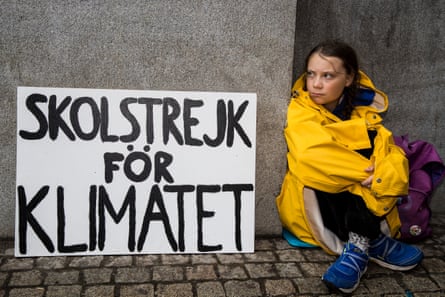
Jonathan Watts: Find out all you can from news articles, books and films. Then spread the word. The great climate science communicator Katherine Hayhoe says the most important thing you can do to fight climate change is to talk about it. Age can be to your advantage. Your generation is the future. Older people are threatening that. Greta Thunberg was 15 when she started fighting for change, sitting outside the Swedish parliament with a sign saying “School Strike for Climate”. By the time she was 17, the movement had gone global. Millions took to the streets and the head of Opec, the world’s biggest oil cartel, declared the youth protest “perhaps the greatest threat to our industry.”