3 months ago
61
3 months ago
61
There are two World Cups. The product, marketed and monetized for all it will yield, and the experience.
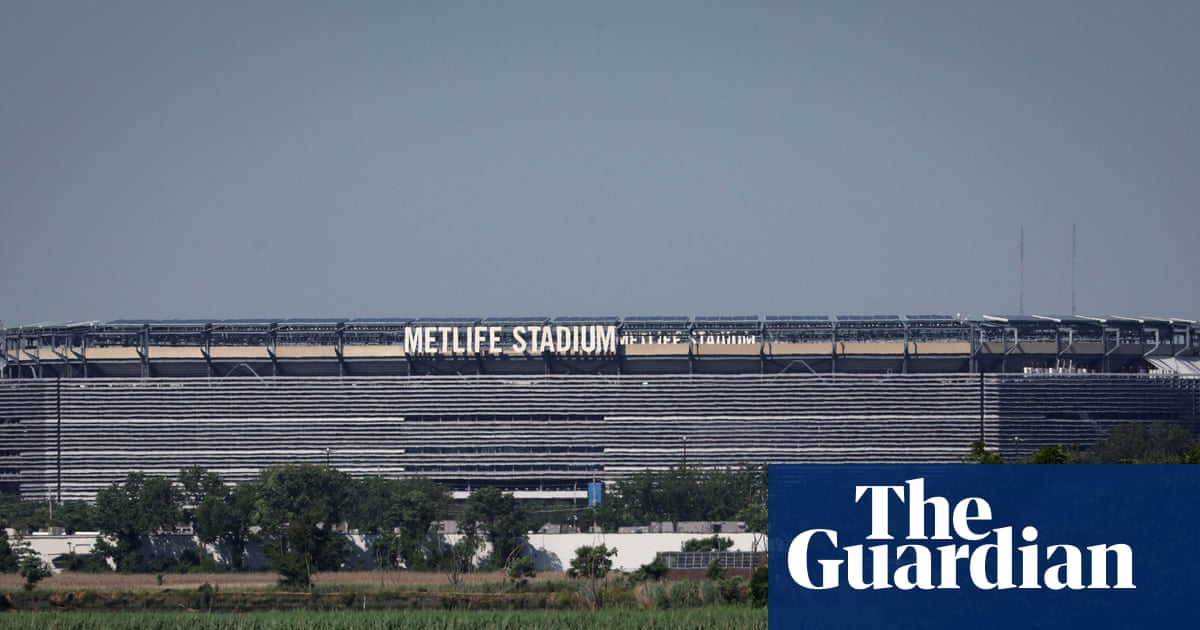
Only one of those is the real thing. And in one case, it’s holding strong. In Seattle, the local organizing committee long ago designated the 26 June game slated for Lumen Field as the “Pride Match” to mark the city’s LGBTQ+ pride weekend celebration.
In a twist, the World Cup draw then assigned Egypt and Iran to that match, countries where the gay community is persecuted and where, in Iran’s case, homosexuality is even punishable by death. The two nations protested. Egypt, in a letter sent to Fifa, referred to a statute “which emphasizes neutrality in political and social matters during Fifa competitions” – a bold reference coming days after US president Donald Trump was handed Fifa’s inaugural peace prize for nakedly political reasons.
The local organizing committee essentially told the Egyptian and Iranian federations to get lost. There will be Pride events. There will be rainbow flags, inside the stadium and out of it. Fifa may have cornered itself by banning rainbow captain’s armbands in Qatar in 2022 on account of local customs. Well, the local custom of the Pacific Northwest is tolerance.
Good. The World Cup is at its best when it feels less like a mega-event that is transported, lock, stock and barrel to a new continent every four years than a template that the hosts get to modify as they see fit. It’s the local flavor and on-field excellence that lasts.
I’ve been to three World Cups. What I remember from 2010 in South Africa is the people, who were, without exception, pleased as punch that you’d come all the way to the end of the earth to share this event with them. I remember playing with a pair of lion cubs outside Cape Town. Just old enough, their handler assured me, to be able to handle my human germs, but not so old that they’d maul me to death. I still have the sweater with the pulled-out threads hanging from them where one cub jumped on my back and hung on with his nails, practising his pouncing. I remember, too, speaking to the disillusioned street vendors in Johannesburg, who had spent their life savings on flags and scarves and vuvuzelas only to learn that Fifa wouldn’t be letting them anywhere near the stadiums.
I can recall only some of the soccer. Landon Donovan’s campaign-saving goal for the US against Algeria, and the press box colleague to my left punching the air with a kind of uppercut so directionless that he caught the next guy flush in the stomach. Watching my birth nation in an excruciating World Cup final, but having to keep my professional cool with my boss sitting beside me. Robin van Persie somehow complaining to me in the mixed zone that the referee – who should have absolutely expelled Nigel de Jong for kicking Xabi Alonso in the chest, but didn’t – had been unfair to the Dutch.
In 2014, Brazilian hotel workers stifled laughter every time I thanked them in the female tense – “obrigada” when I should have said “obridgado”, given that I am male, even though I was addressing a woman. Luis Suárez single-handedly – or single-footedly? – felling England in São Paulo. Van Persie and Arjen Robben and Wesley Sneijder dragging the Dutch to the semi-final. Tim Howard keeping the Belgians at bay more or less by himself.
In Qatar, I remember the cheerful fellow preparing me spicy fried chicken wraps at all hours of the night at the snack shop on the corner of my apartment. Cristiano Ronaldo’s name echoing through Doha’s brand-new subway system, incanted by the Portugal fans. Delirious Argentine scrums, hopping and drumming and singing “Muchachos”. I also remember the empty fan fest at a Potemkin World Cup that delivered terrific football but never quite the festive vibes you would expect, missing the mark with hired performers doing their best Elvis impressions outside stadiums.
The World Cup is not the pomp and circumstance. It is not the star-studded draw spectacular. Not the prizes, conjured from thin air. It isn’t even the awarding of the thing itself at the end of the tournament; a moment ripe for geopolitical posturing.
The World Cup is in the human interactions on the ground, in the series of parties before and after games, and in the seminal moments on the field. It persists as one of the great celebrations of humanity in spite of Fifa.
The 2026 edition will certainly be the most inaccessible and exclusive World Cup ever, but it can still be redeemed. By rejecting attempts at erasing adjacent events such as a Pride celebration. By letting the hosts – and the people who populate these cities – just be who they are.
If this World Cup is to succeed and live up to its towering precedent, it will be because the players put on a show in defiance of their fatigue and the heat and the travel and all that the modern game demands from them. Because the fans are allowed into the country, for a start, and then set free to just have a good time. And because the people who host this tournament are left alone to do it on their own terms.
-
Leander Schaerlaeckens’ book on the United States men’s national soccer team, The Long Game, is out in the spring of 2026. You can preorder it here. He teaches at Marist University.