3 months ago
62
3 months ago
62
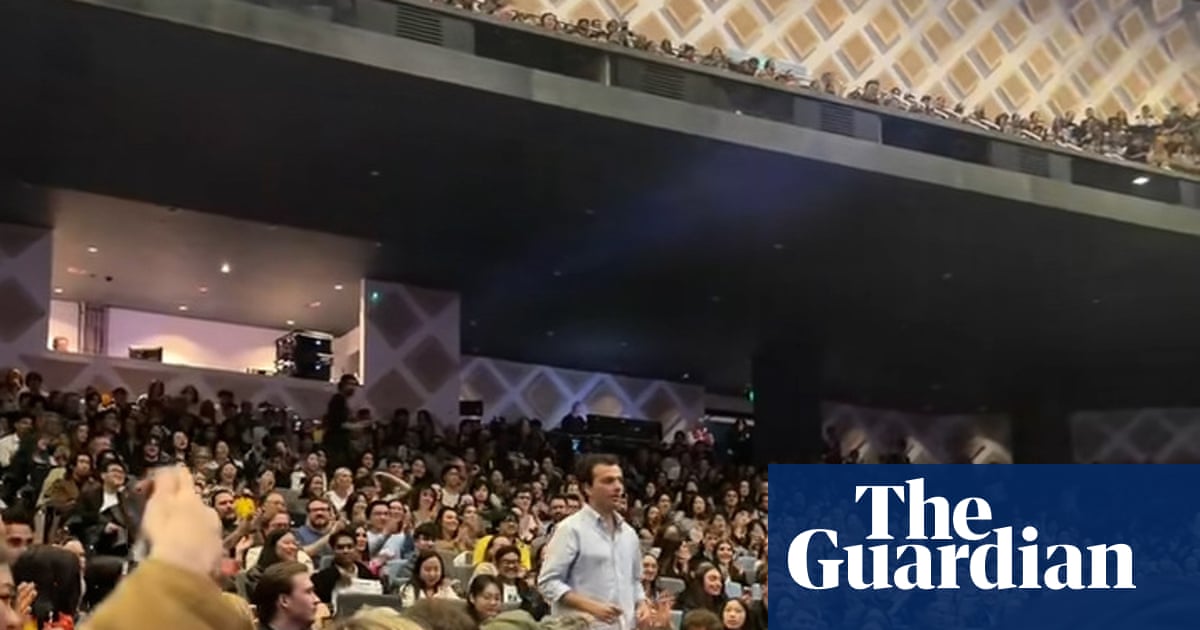
The Canadian prime minister, Mark Carney, inspired a wave of enthusiastic nodding among the cosmopolitan crowd gathered in Davos last month when he took to the podium and proclaimed that the world order underwritten by the United States, which prevailed in the west throughout the postwar era, was over.
The organizing principle that emerged from the ashes of the second world war, that interdependence would promote world peace by knitting nations’ interests together in a drive for common security and prosperity, no longer works. The US blew it up.
Donald Trump came to believe that every other country treated the US as a chump, free riding on its security guarantee and abusing its open market – no matter that the United States set most of the rules underpinning the postwar architecture, and broke them when it suited its interests, or that the rules enabled an era of remarkable American prosperity.
In an act of bravery not often experienced among the jet setters in the Swiss Alps, the Canadian prime minister challenged every other country to accept the loss of American leadership and build an alternative global architecture that might bypass the great powers intent on bending everybody else to their will.
“Great powers have begun using economic integration as weapons, tariffs as leverage, financial infrastructure as coercion, supply chains as vulnerabilities to be exploited,” he said. “You cannot live within the lie of mutual benefit through integration when integration becomes the source of your subordination.”
The analysis is catching like wildfire. A couple of weeks after Carney’s speech, the German chancellor, Friedrich Merz, opened the Munich Security Conference arguing that “the international order based on rights and rules is currently being destroyed”. He warned that the “leadership claim of the US is being challenged, perhaps already lost”.
The report prepared for the gathering in Munich articulated well the general feeling of America’s (erstwhile) friends. “For generations, US allies were not just able to rely on American power but on a broadly shared understanding of the principles underpinning the international order,” it noted. Washington has betrayed that understanding. “As a result, more than 80 years after construction began, the US-led post-1945 international order is now under destruction.”
European leaders seem to have accepted they must face the world alone. “Europe has to learn to become a geopolitical power,” the French president, Emmanuel Macron, said in Munich. Europeans, said the British prime minister, Keir Starmer, “must build our hard power, because that is the currency of the age. We must be able to deter aggression, and yes, if necessary, we must be ready to fight.”
But if the old order is behind us, what comes next? Is it possible to create an alternative order that’s liberal, multilateral, rules-based and resilient enough to withstand pressure from the US and China as they struggle for supremacy?
Carney posited the choice thus: “Compete with each other for favor, or combine to create a third path with impact.”
But things aren’t looking great for a third path. It is likely to prove extraordinarily onerous, if not impossible, to build the institutions needed to support an alternative liberal order based on values, where durable alliances are worth more than ad-hoc deals.
What’s likelier is that foreign policy will become harder in a world of hodgepodge dealmaking, as countries join potentially competing coalitions built around specific goals. Pragmatism, rather than ideological alignment or shared values, will be the main driver of international relations. Alliances will be less solid, more transactional.
And potential American aggression will loom over it all.

A rupture, not a transition
I asked Jorge Castañeda, Mexico’s former foreign minister, for his view on the potential for countries to follow that third path. “What Carney proposes is not viable,” he said. He doesn’t think there are too many countries with the wherewithal to join an endeavor that explicitly decouples from Washington’s preferred trajectory.
But some are trying, by engaging in a variety of uncoordinated efforts to build defenses against this more dangerous world, stalked by a newly aggressive America. New trade pacts and “strategic” agreements of uncertain scope or stability are sprouting up everywhere. Talk of financial decoupling from the dollar abounds, with Brussels and Beijing eager for the world to consider the euro or the yuan as alternatives.
Countries from Canada to south-east Asia, Brazil and South Africa have turned to China as a potential counterbalance to the United States. Korea and China have traded state visits since last fall. A few days before his speech in Davos, Carney was in Beijing. And Starmer visited a couple of weeks later.
Mistrust of Trump’s America is providing incentives for other potential alliances, too. In January the specter of Trump’s tariffs encouraged the European Union and India to sign a free-trade agreement that had been stuck in limbo for 20 years.
But despite the recent activity, even like-minded countries may have a hard time building concrete alliances. Last month, days after the European Union finally signed the trade agreement it reached in 2019 with the four founding members of South America’s trading bloc Mercosur, lawmakers in the European parliament bowed to opposition from the farm lobby, which fears competition from South America’s imposing agricultural industry, and challenged it in court, potentially derailing the deal.
And eager though Canada and other countries may be about the prospect of a world order that sidesteps the United States, losing America means losing a lot.
It’s true that the so-called rules-based western order the United States did so much to build over the last 80 years or so might have been hypocritical. In Latin America and beyond, the American commitment to market liberalism often took a back seat to its imperative to keep the red scare at bay by whatever means necessary. Much of its project was imposed at the point of a gun.
Still, the American-led order did provide a number of valuable public goods. They included a set of rules and dispute settlement mechanisms to undergird a liberal global economy that generated enormous prosperity. The US offered the dollar, a global means of exchange. It provided low-risk, liquid treasury bonds for governments and investors around the world to store their wealth. And it offered a regime of collective security – which helped manage conflict from the Balkans to the South Pacific.
Japan, still one of the world’s largest economies, is probably too dependent on America’s security guarantees to be able to truly annoy Washington. Even the European Union – which by some measures has as big an economy as the United States – may not be able to move out of Washington’s shadow, especially given its dependence on the US to thwart Russia’s ambitions to take Ukraine (and perhaps more).
Nato chief Mark Rutte, who is Dutch, probably didn’t make many friends when he argued that “if anyone thinks here, again, that the European Union, or Europe as a whole, can defend itself without the US, keep on dreaming. You can’t. We can’t. We need each other.”
The fact is that French dreams of strategic autonomy will need military hardware that Europe, today, does not make. As became evident with the recent turmoil over a planned Franco-German fighter jet, developing such hardware will require perhaps an unrealistic amount of political will.
Even Canada may not be able to pull it off. Two-thirds of Canada’s exports go to the United States, down from three-quarters a couple of years ago. It may rely less on American military protection. But its prosperity is tightly linked to the economy next door.
Given what’s at stake, it’s unsurprising that some world leaders still want to cling to the hope that the old order can be restored in some shape or form. Wolfgang Ischinger, the chair of the conference in Munich, said he hoped the event would help build a “constructive transatlantic reset”.
Merz challenged Trump to reconsider the value of the alliances he seems so keen to trash. “In the era of great power rivalry,” he said, “even the United States will not be powerful enough to go it alone.” European Union foreign policy chief Kaja Kallas argued that “the vast majority of countries also want the same thing: stability, growth, and prosperity for their people. The best way to get there is to go together.”
Democrats in the United States are also eager to push the idea that the Trump administration represents just a momentary lapse in American sense. “Donald Trump is temporary – he’ll be gone in three years,” Gavin Newsom, the California governor and potential Democratic 2028 presidential candidate told the Munich gathering. “It’s important for folks to understand the temporary nature of this current administration.” Representative Alexandria Ocasio-Cortez, another potential presidential contender, said that Democrats colleagues were “ready for the next chapter” and wanted to deepen relationships with allies.
And yet, Carney is probably right that Trump represents a “rupture not a transition.” The toothpaste can’t be pushed back into the tube. Whatever emerges from this moment will look less like a new order and more like a mess, where power will prevail over cooperation.

A world ripe for the taking
An alternative superpower is not about to enforce an alternative arrangement. China, the other power comparable to the United States, shows little interest in taking the mantle of global hegemony to protect some liberal multilateral order.
The Asian giant played a part in bringing us to this moment. Its wave of exports to the United States contributed to build the sense of grievance that turned American voters against the liberal, globalized order and into Trump’s embrace.
Its persistent mercantilistic tactics, from undervaluing its currency to subsidizing exporting firms even as it closes its market to imports from abroad, make clear it has no interest in making the sacrifices needed to be a global leader. From Europe to Latin America, countries swamped by Chinese exports will have a hard time trusting Beijing to lead.
It is also unclear whether it wants to confront the US at this stage, likely preferring to wait and see what it can salvage from the present global order that has brought it such prosperity. But it is probably not worried about the implosion of the postwar international institutional architecture – built by the western democracies under the aegis of the United States – that it perceives as hostile to its form of government and national interests, from the South Pacific to Taiwan.
In the absence of a leader capable of providing tools with which to build a new international architecture and draw others into some new global understanding, the world risks being pulled apart by many uncoordinated efforts as countries cut ad-hoc deals to gain markets and buy insurance against the riskier global environment. Such deals won’t be based on any sense of shared values and principles, but on narrow calculations of costs and benefits. Alliances will be transactional, fluid, prone to be reassessed and jettisoned at the flip of the coin. This is a world ripe for the taking.
Alexander Stubb, president of Finland, has emerged as a leading thinker about the world’s present quandary, cited approvingly in Carney’s speech as providing inspiration for Canada’s new principled yet pragmatic approach to the world. “We live in a new world of disorder,” Stubb argues, on the level of other historical watersheds – the first and second world wars, and the end of the cold war.
Each of these ushered in a new world order, which lasted for a few decades until the next inflection point. The next five to 10 years, Stubb thinks, will shape the world order over the next 30 to 50.
Stubb would prefer a world order based on values and multilateral rules, perhaps one less hypocritical than the one we are abandoning, but which affirms dialogue and cooperation as the main tool to address global challenges.
Achieving that, Stubb says, will require rebuilding many of the global institutions erected after the second world war – from the United Nations to the IMF, the World Bank and the World Trade Organization – to reduce the dominance of the United States and other western powers, and give more voice to nations from the global south such as Brazil, India and Indonesia.
But that will be hard to build without the United States. Success will depend on whether Washington wants to preserve a multilateral world order in which it would not exercise power as freely as it has over the last 80 years. The odds for that look very long.
Even if were Trump succeeded three years from now by a reasonable human being with some decency and an understanding of the value of win-win international relations, eager to mend the global institutions and the trust he has done so much to destroy, it would be extremely difficult to convince countries which will have spent four years trying to protect themselves from American aggression to simply accept Washington’s word and walk happily back into a US-led global tent.
A more likely outcome, at this stage, seems to be that the multilateral, globalized order we are leaving behind will be replaced by no order at all – a system with no agreed upon guidelines to conduct trade or international finance and no common legal understanding to guarantee rights like states’ sovereignty, let alone things like asylum or human rights.
Perhaps this splits the world into competing spheres of influence, with weaker countries shoehorned, whether voluntarily or less so, into rival blocks, likely revolving around the two great powers, China and the United States. Or maybe we get a free for all in which the mighty wander the world imposing their will on the relatively weak.
It is unclear where the European Union or other rich countries like Japan, South Korea or Australia would fit in this arrangement. They are most likely to try to restore a multilateral architecture – supporting efforts to consolidate a dispute settlement mechanism without the US under the umbrella of the WTO. They will try to maintain trade and financial links to both China and the United States.
Some bigger nations in the global south – like Brazil and India and maybe even Indonesia – may have the heft to maintain their independence, playing off the rival powers against each other, taking what’s best from relationships with either. But many developing nations will have no choice but become some sort of vassal state, with limited policy autonomy.
Brazil may have the heft – and the distance from the United States – to protect its vigorous trade with China, which buys much of its iron ore, beef and soya beans. Others won’t – Mexico just raised tariffs up to 50% on imports from China, a move largely believed to be about placating Trump. Panama’s supreme court just invalidated the longstanding contract with Hong Kong-based CK Hutchison to run ports at either end of the Panama canal.
This new world will be very different from that which emerged from the second world war, when the United States promoted a vision in which economic interdependence would tie countries together in the pursuit of shared prosperity.
The cost-benefit analysis has changed for good. Over coming decades, the search for new opportunities will be met with the fear of new vulnerabilities. This will stunt trade and temper investment, raising costs for businesses and consumers, and limiting entrepreneurs to opportunities close to home. The world will lose economies of scale and forfeit common insurance against risk, forcing each country to seek protection against the many threats the future will bring – economic, environmental, about health or security – largely on its own.
We will come to rue having taken this path. History seems pretty clear that a world of roaming great powers is not particularly safe nor prosperous. For all the flaws and the hypocrisy in the postwar order, rules-based multilateralism and cooperative problem-solving provide a better way for organizing the world’s affairs.
That ship seems to have sailed, though. Whatever institutional architecture emerges from this moment, it will be hard to escape the world lamented by Carney, ascribed to Thucydides, in which “the strong can do what they can, and the weak must suffer what they must”.
-
Eduardo Porter is a journalist focused on economics and politics. He is a Guardian US columnist and writes the newsletter Being There on Substack
-
Spot illustrations by Ryan Chapman