3 months ago
69
3 months ago
69
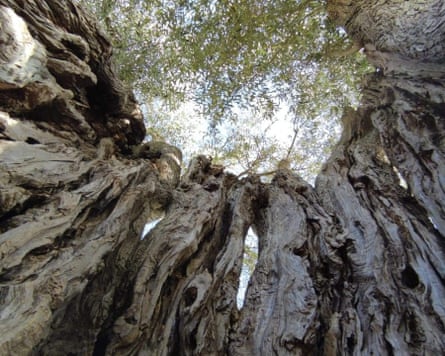
Abu Khaled al-Zoubi, 67, walks slowly through his orchard in Irbid, northern Jordan, his footsteps kicking up dust from the parched earth beneath centuries-old olive trees. He stops at a gnarled trunk, its bark split and peeling from months of unrelenting heat.
He points out that the branches should be sagging under the weight of ripening fruit, but instead they stretch upward, nearly bare, with only a few shrivelled olives clinging to the withered stems.
Zoubi has tended these trees for almost two decades, learning their rhythms through seasons of abundance and scarcity. But nothing prepared him for this harvest.
“I’ve never experienced anything like this before,” he tells the Guardian as he surveys the damage. “We’ve lost more than half of our crop before the harvest even started.”
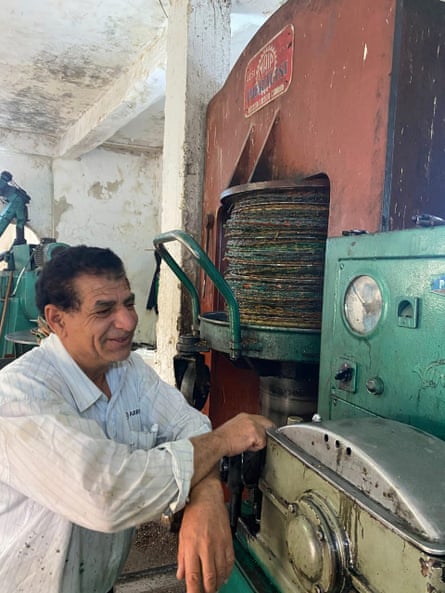
His story has become familiar across Jordan’s olive-growing heartland. The country is facing its weakest olive oil season in four decades, with production down as much as 70% compared with last year. In a typical year, the olive-picking season begins in late September, and mills start processing by mid-October. This year, the harvest did not begin until early November.
According to the National Agricultural Research Center, the crisis threatens a sector that supports 80,000 families and generates more than $1.4bn (£1bn) for Jordan’s economy annually. With an estimated 12 million productive olive trees concentrated in the northern regions of Irbid, Ajloun, Jerash and Mafraq, olive cultivation has been the backbone of rural life for generations. Jordan has long achieved near-total self-sufficiency in olive oil production, covering 98% of domestic needs and generating export revenue. That independence now hangs in the balance.
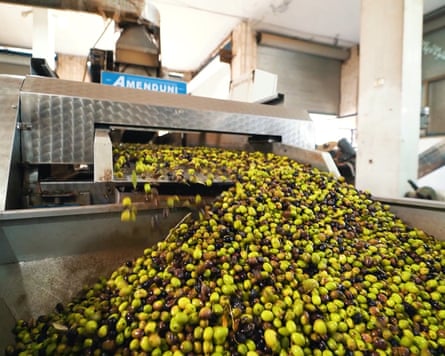
In the hardest-hit northern regions, output has collapsed to just 10% of the average 200,000 tonnes that typically yield 30,000 tonnes of oil. Prices have soared accordingly, with 20-litre containers of olive oil now fetching $190, up from $140 previously, while 16kg tins have reached 140 Jordanian dinars ($197) – a 40% increase over the normal range.
“This year, temperatures were 10-15C above average, delaying the winter harvest and affecting nearly every agricultural sector,” says Mahmoud al-Auran, the director of the Jordanian Farmers Union.
Climate records from the Jordanian meteorological department document the severity of 2025’s conditions, including a 13-day extreme heatwave from 12-24 August, the longest on record for the kingdom.
The 2024-25 rainfall season delivered a further blow, with precipitation levels ranging from just 15% of seasonal averages in Aqaba to 79% in parts of the southern Jordan valley. Northern and central regions received roughly 54% of normal precipitation, catastrophic for rain-fed olive groves that depend on seasonal water rather than irrigation systems.
“Olive trees here depend on rain to grow, not chemical fertilisers,” Auran explains. “Heat and drought give the trees less water, resulting in smaller fruits and oils of less quality.” The prolonged heat severely affected both fruit formation and oil composition, leaving farmers unable to compensate despite supplemental watering and fertilisers.
In response to the shortage, the government now allows West Bank visitors to bring five tins of olive oil into the kingdom, while the minister of agriculture has pledged to open imports if prices continue rising.
“Olive oil is woven into the fabric of Jordanian life,” says Amal al-Ghawanmeh, the head of al-Sendyan Land Association for Environmental Development. “When production decreases, every household suffers, because families must import oil at more expensive rates, disrupting customary traditions and meals.”
Fayad al-Zyoud, the chair of the Jordanian Association of Olive Producers and Exporters, says small olive groves that typically generate $5,000 in annual income now face severe losses. Women, who form the backbone of the harvest workforce, will see drastically reduced employment.
“Climatic extremes have created unprecedented declines in traditional cropping systems,” Ghawanmeh says. “Rainfall has been scant and irregular, and when storms did come, little replenishment occurred in our mineral-rich soils.”
Jordanian farmers are calling for drought-resistant olive varieties, improved irrigation infrastructure, and climate-smart agricultural practices.
“I fear the day will come when I or my grandchildren will be forced to abandon olive farming, the work our family has lived and breathed for generations,” says Zoubi. “Without real support, these trees may not survive … and neither will our way of life.”
This article is published in collaboration with Egab.