2 months ago
69
2 months ago
69
Pressure is mounting on the UK government to introduce a ban on social media for under-16s, after a decisive vote in House of Lords in favour of Australian-style restrictions.
Peers backed a Tory-led amendment to the children’s wellbeing and schools bill by 261 votes to 150, despite the government opposing the move. Ministers are already considering a ban as part of a consultation due to report by the summer and so the Lords amendment is unlikely to pass in the Commons. Starmer is also understood to want to wait until evidence from Australia’s ban, which came into force in December, has been assessed, though the Conservative leader, Kemi Badenoch, has urged him to “just get on with it”.
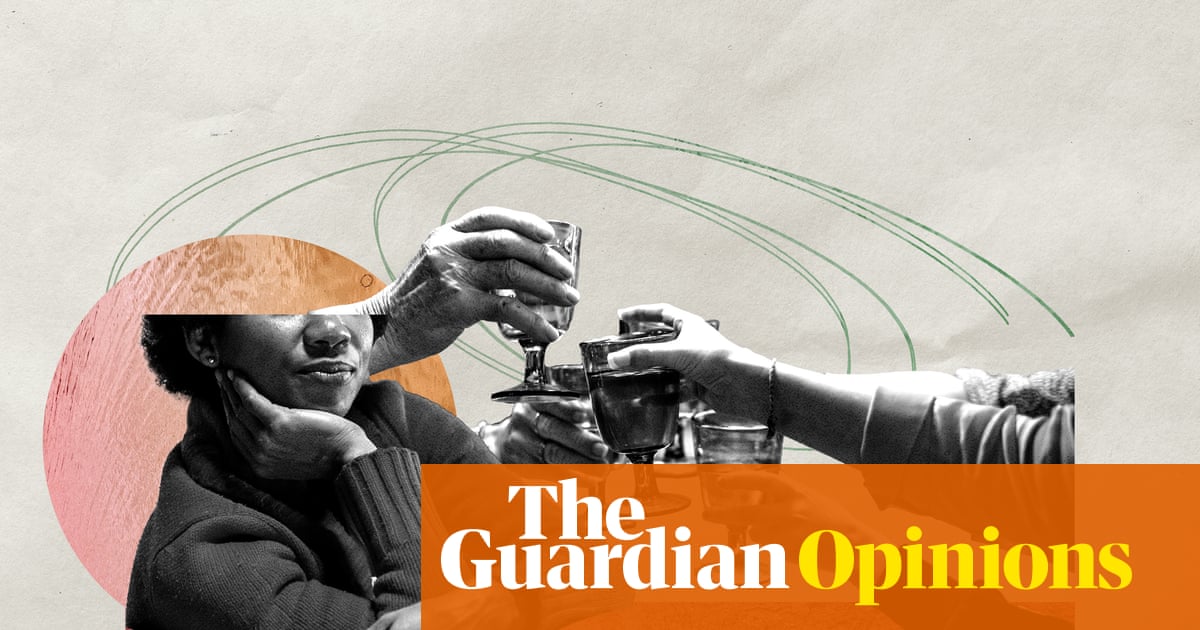
Here parents, teachers and young people share their views.
‘Leaving the decision to families exacerbates inequalities’
Laura, a parent from East Dunbartonshire, says the scale of harmful content circulating on social media has left many families feeling powerless. Laura, whose children are nine and 11, supports proposals to restrict children’s access to social media platforms, arguing that current safeguards leave too much exposure to chance.
“Concerns about what my children might see online keep me awake at night,” Laura says. While her own children do not have social media accounts, she says that does little to shield them. “They can see any and all content on their friends’ phones. That includes material which, in any other context, would be completely unacceptable for children.”
Laura has become involved in local campaigning, helping to set up a parent WhatsApp group that later linked into the Smartphone Free Childhood movement. “This can’t be left to individual families,” she says. “It creates a postcode lottery and exacerbates inequalities.”
Rachel, a secondary school English teacher in Derbyshire, says the impact of social media on pupils’ emotional wellbeing and concentration is now impossible to ignore. After more than 15 years in the classroom, she believes attention spans among younger students have noticeably deteriorated.
“I see the effect of social media and shrinking attention spans every day,” she says. “It’s getting worse and worse.”
In the classroom, sustaining focus has become increasingly difficult, with younger pupils struggling “to concentrate on anything for longer than a few minutes”, she says, adding that resilience is also lacking. “There’s a lot of giving up before you’ve even started.”
Rachel believes the use of social media has become entwined with children’s sense of identity. “It feels like it’s invaded their psyche,” she says.
When she mentioned the possibility of restrictions on social media use to a year 7 class, she says the reaction was immediate and emotional. “There was uproar,” she recalls. “I actually thought a couple of them were going to cry.”
Julia*, 20, says having a smartphone as a shy eight-year-old was helpful, but she believes an “overhaul” of social media is needed.
“I’ve never really known a world without a smartphone,” she says. “I was an anxious child, and when I was about 11, I found I could be myself and make friends online. But that doesn’t really help in real-life situations. I think it was a short-term solution for loneliness and confidence.”
From the age of 12 to 15, Julia, a student from Stirling, Scotland, says she “somehow found myself on the sexist side on Instagram” with the barrage of such content making her “terrified of making mistakes” and exacerbating her social anxiety.
“It really messed with my sense of self-worth, and I felt I had to be perfect,” she says. “I felt like I had to prove myself, to outdo myself, because at the time, the belief I had was that everybody thought women were less funny or less smart. I only started to come out of that self-hating mindset when I started to make real-life friends at the age of 16 or 17.”
But she is unconvinced that the proposed social media ban for under-16s is the solution.
“Rather than just focusing on the impact it has on children, there should be a social media overhaul that affects everyone, because in the long run, it would also improve the lives of young people.”
*Names have been changed
‘Parents of younger children are really pleased in Australia’
Tahnee, an occupational therapist based in Glasgow, says watching children’s lives move increasingly online has left her deeply uneasy. Originally from Australia, she has nieces and nephews in both the UK and Australia and says she has seen how social media can begin to dominate young people’s lives “from the age of 11 or 12, when the first phones arrive”.
Tahnee, who has an eight-year-old son, welcomed Australia’s decision to introduce restrictions on children’s social media use.
But feedback from friends and family back home suggests the reality has been more complicated. “Parents of younger children are really pleased,” she says. “Others were hopeful, but in reality the ban hasn’t been as effective as people hoped.” Enforcement, she adds, has been inconsistent.
She believes restrictions can nevertheless help parents hold boundaries that are otherwise difficult to maintain. “If your child is the only one in the class without a smartphone or social media, it’s incredibly hard,” she says. “But if it’s 20% or 30%, it suddenly feels much easier to say: actually, we’re not doing this right now.”
‘I’m concerned about the consequences of a ban’
AJ, 20, says they “understand the thinking” behind the proposed ban, but believe it is a flawed approach.
“I think it’s a broad-brush solution to a more complex problem,” they say. “It’s been clear to me so far that this conversation is being led by people who did not grow up with this technology, and I am frustrated with the way young people – especially young adults who experienced online childhoods – are being talked about and at, and rarely talked to.”
AJ, who lives in Devon, began using Tumblr from around the age of 12 until 15.
“I still look back on it now as a positive experience,” AJ says. “At that time in my life, I really needed what social media provided me with. I’m autistic, and it’s the first place where I really saw or interacted with, or not even interacted with, but I saw autistic adults, that there’s an autistic community and an autistic movement. These are things that were really formative to me, and I would not have had access to anywhere in my ‘real life’.”
They are concerned that a blanket ban for under-16s would remove that outlet for some children although they can see how a proposed ban could be used as leverage to pressure social media platforms.
“I absolutely believe that they’ll [the social media platforms] need to be pressured into doing the right thing,” they say.
‘Kids can just download a VPN’
Phil, a 47-year-old data scientist from Bedfordshire with two children aged 14 and 11, is sceptical that a proposed ban on children using social media will achieve what it promises. While he has little sympathy for tech companies, he is unconvinced the policy tackles the real problem.
In principle, Phil understands why governments want to intervene. In practice, he says, enforcement would be very difficult. “Existing parental controls can be complex and don’t always work as expected,” he says. “Kids can just download a VPN anyway,” he says, arguing this makes the UK’s Online Safety Act “fundamentally flawed”.
Phil describes himself as “pretty techie” and says he has managed to limit what his children access on their own phones. But he stresses that this only goes so far. He recalls his son being shown a graphic video of the Charlie Kirk shooting by another child at school. “Someone just put it in front of his face,” Phil says. “You can’t control that.”