3 months ago
68
3 months ago
68
Critics of the Trump administration have praised Vanity Fair’s interview with the White House chief of staff, and particularly the unvarnished photographs of Trump’s inner circle that accompanied it, as overdue scrutiny of a controversial cabinet even as his allies rallied to dismiss it as a hit piece.
Over what the magazine said was 11 separate interviews by reporter Chris Whipple, Susie Wiles spoke candidly about her colleagues, describing Trump as having “an alcoholic’s personality”, JD Vance, the vice-president, as being a “conspiracy theorist for a decade” and Russell Vought, the budget chief, as a “right-wing absolute zealot”.
The article made perhaps even bigger waves for its dramatic, high-contrast and close-up photographs of Trump’s top lieutenants, including Wiles, her deputy, Stephen Miller, the press secretary, Karoline Leavitt, and the secretary of state, Marco Rubio.
The photographs, by Christopher Anderson, were generally lauded by some for their unsparing qualities even as the images spread across social media without context, causing some confusion about whether the piece was an attempt to glamorize Trump’s top lieutenants, rather than interviews with Wiles that included some harsh criticism of them.
Wiles denounced the article as a “disingenuously framed hit piece”, while Rubio declared the magazine “deliberately manipulated pictures and reported statements without context to try and make the WH team look bad”. The defense secretary, Pete Hegseth, added: “This is what the Left does: trash & smear our best & most effective people.”
Their claims of manipulation were undercut by the New York Times report that Whipple had shared an audio recording of Wiles making comments about Elon Musk using ketamine, which she has since attempted to deny.
Anderson also rejected allegations that he or the magazine had altered the photographs. When asked by the Washington Post whether it was “unfair” to include images of Leavitt showing lip-filler injection marks, he said: “I didn’t put the injection sites on her. People seem to be shocked that I didn’t use Photoshop to retouch out blemishes and her injection marks. I find it shocking that someone would expect me to retouch out those things.”
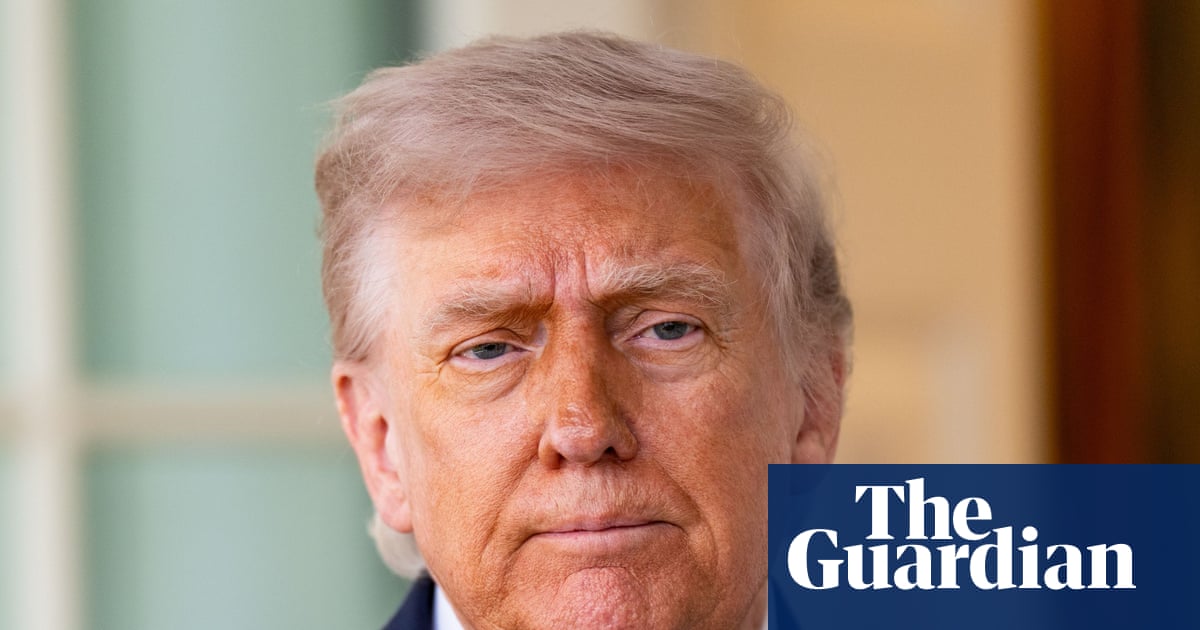
He noted that he had been doing close-up portraiture for many years, including an extreme close-up photograph of Trump that was on the cover of the New York Times Magazine in 2017, and said, “I have done it to all sides of the political spectrum, not just Republicans.”
One user on Threads captured the general tenor of the reaction, writing: “The way Christopher Anderson walked into the WH and absolutely CRUSHED this photoshoot should be studied. Not only did he capture their vision of US being clueless, classless and corrupt, but also monstrous and incapable of redemption in every. single. photo. And he did it better than any photographer I have ever seen!”
Another user wrote: “The best part about the Vanity Fair photo shoot are not the actual photos (although they are great.) Each one of these subjects legitimately believed this was a glam up photo shoot and that it would create the perception of power. The liars were deceived. They were tricked. They were duped. They got a taste of their own bullshit and that makes me feel good.”
As for Leavitt’s face, one noted the phenomenon of so-called “Mar-a-Lago face”, writing: “My hot take is no one’s skin is gonna look great this close up in that kind of lighting, but the point was capturing her injection marks & orange nose contour. With the cultural relevance of mar-a-lago face & nod to Trump’s signature bronzer, she was handing VF a visual narrative.”
Another person said on X: “It’s hard to square the image of Susie Wiles as this smart, disciplined operator with the person who decided to divulge all of the administration’s secrets to Vanity Fair in exchange for a photo shoot.”
Trump’s supporters, meanwhile, tended to come to the defense of the White House official and attacking the magazine for its journalism. “Quotes stripped of context. Narrative pre-written. Deliberately awful photos. Vanity Fair damaged more than its own credibility, they made life harder for the journalists who operate in good faith,” wrote one.
The FBI director, Kash Patel, who has himself come under fire for appearing on a podcast with his girlfriend to discuss their “love story” while a manhunt for the Brown University shooter remains underway, also defended Wiles. “Fake news comes after you when you’re effective… and there’s nobody in @realDonaldTrump’s team more effective than @SusieWiles,” he wrote on X.
Similarly, Steve Scalise, the Republican House majority leader, called the Vanity Fair article “another hack job from the mainstream media meant to smear president Trump by attacking his all-star team”. While Anna Paulina Luna, a Trump ally and Florida representative, called Leavitt’s photo “stunning! She is arguably one of the prettiest Press secretaries we’ve ever had!”
“My job is to go in and draw on my experience as a journalist and photograph what I see,” Anderson explained to the Post.
“I go in not with the mission of making someone look good or bad. Whether anyone believes me or not, that is not what my objective is. I go in wanting to make an image that truthfully portrays what I witnessed at the moment that I had that encounter with the subject.”