3 months ago
63
3 months ago
63
When Greenwich and Kent universities said this month they would merge to save money, the heart of their financial difficulties could be found in the UK government’s crackdown on immigration.
Tough restrictions on foreign students have sent the number of university applications from abroad plummeting, cutting lucrative tuition fees and leaving all universities facing the same squeeze.
Companies are in a similar quandary: construction companies, health trusts and care homes are among those with recruitment worries, after new rules curtailed a longstanding reliance on foreign skilled workers.
The latest official figures, released this week, documenting the number of visa applications to live and work in the UK showed a further slump in people successfully navigating the new rules.
Only three years ago, annual net migration soared to almost 1 million. This year the number of people entering the UK could fall to such an extent that it drops below the number moving in the opposite direction, sending the figure for net migration below zero for the first time since 1993.
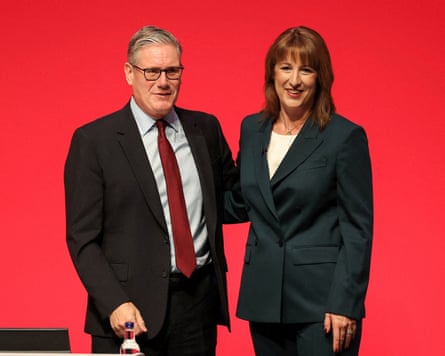
While the trend may ease pressure on Keir Starmer from Reform UK, for the chancellor, Rachel Reeves, the trend presents a significant headache, hurting both the businesses that rely on immigrants and a loss of expected tax receipts for the Treasury.
Last week, the National Institute of Economic and Social Research, a thinktank, likened the effect to Brexit, saying that if net migration fell to zero, it would knock 3.7% off the UK’s annual national income by 2040. According to the Treasury’s economic forecaster, the Office for Budget Responsibility, Brexit has set the economy back by 4%.
The political incentive
Rob Ford, the professor of political science at Manchester University, says zero net migration would provide Starmer with the opportunity to steer the domestic political agenda away from the core topic of interest for Reform UK supporters. Reform leader Nigel Farage backed billionaire industrialist Jim Ratcliffe, who said immigrants were “colonising” the UK. Ratcliffe later apologised, after public pressure from Starmer.
While most Britons’ attitudes to migration vary little over time, Ford believes it will tumble down the list of voters’ biggest concerns next year, as the downward trend feeds through into data and, eventually, public attitudes.
“It means that significant numbers of voters could peel away from the parties that make immigration a key element of their platform,” he says.
The data released this week showed that the fall in skilled worker applications which began last July continued in January. The figures will soon be followed by more detailed data giving a breakdown of visa applications, and how many were granted, from October to December 2025.
The expected downward trend will not reflect the government’s success or failure at stopping small boats crossing the Channel. Instead, the fall will largely follow a collapse in the number of immigrants entering the UK relative to the increasing number who are being denied a visa extension and must leave, many of them students.
The route to zero net migration
By the end of this year, the annual number of non-EU migrants entering the UK on visas could drop below 550,000 after reaching more than 1.1m in 2023, according to a report by a Warwick University data analyst, James Bowes. It argues this is the effect of a clampdown under the previous Conservative administration, and tighter rules brought in by Labour last year.
If the flow out of the country by non-EU nationals also accelerates, as expected, the emigration numbers could hit 430,000 by the end of the year, up from 88,000 in 2021.
With about 900,000 fewer immigrants this year than in 2023, it is possible that net migration of 860,000 in 2023 and 431,000 in 2024 could fall to 184,000 in 2025 and -60,000 this year.
The extent of the turnaround in migration since 2023 is a matter of contention, largely because poor government data allows analysts to fill the gaps in information with their own estimates, but the broader trend is not in dispute.
In March 2024, care workers were banned from bringing spouses and children with them to the UK, while in April of the same year the salary threshold increased for work visas and family visas from £20,480 to £33,400, with an opt-out for some categories of worker set at £25,000.
Most foreign postgraduate students were also told to leave their families behind. The minimum salary for a skilled worker visa increased from £26,200 to £38,700,
Madeleine Sumption, the head of the Migration Observatory at Oxford University, says: “It’s difficult to know exactly where we go next, mainly because we have a high number of people with temporary status and many of them might stay, or not.”

Before 2024, foreign students could finish their course and get a job with a salary that satisfied relatively low government thresholds to convert their student visa into a work visa.
Many would pay the price of a one-year master’s degree – which can be more than £30,000 – to get a student visa and within 18 months would be working in a care home.
A doubling of the salary thresholds makes it difficult to continue this route into work, says Bowes.
Last July, the qualification threshold for getting a skilled worker visa or health and care visa also increased. Starmer went further by stopping overseas recruitment of social care workers, shortening the list of jobs eligible for the visas and increasing application fees.
Sumption says the sponsors used by government to verify work visa applications have also faced a stricter regime.
“There is an ongoing crackdown on dodgy sponsors who declare they have firms on their books with jobs for people when they don’t exist. This is another measure restricting the number of successful visa applications,” she says.
The Observatory estimates that net migration will fall temporarily to a little over 250,000 this year before rising to 340,000 by the end of the decade.
“The thing that gets lost in the debate is that the current situation is temporary and the fall that is undoubtedly taking place at the moment will be reversed later in the decade,” says Sumption.
The economic impact
Jonathan Portes, an economics professor at King’s College London, says the impact could be limited by the weak state of the economy.
“We had large labour shortages during the pandemic but that is clearly not the case now,” he says.
Alan Manning, a professor at the London School of Economics, says the “fiscal impact” may be limited, especially in the longer term, if most of those leaving are in lower-paid jobs and their dependents.
Nevertheless, Portes says the draconian restrictions on migration are “an act of self-harm”.
Survey data and figures from HMRC documenting the pay that recent immigrants receive show they earn above average wages and generally have high skill levels in their field.
Manning says: “If we further restricted work visas – which would have to be done to get to net zero longer term – then that would be reducing the number of high earners and there would be a hit to the public finances from that.”
Jane Gratton, the deputy director of public policy at the British Chambers of Commerce, says recruiting from overseas was usually conducted as a last resort.
“The recent fall in net migration has had a particular impact on sectors such as hospitality and healthcare,” she adds.

She says BCC surveys show just 13% of member firms access the immigration system.
“However, it’s vital that the immigration system works for those employers who need it to fill urgent vacancies. Currently, firms tell us it is too expensive, restrictive and difficult.”
The OBR said last year it expected net migration of 262,000 in the year to mid-2026. That compares with the 47,000 Bowes believes is more realistic.
The 200,000 difference will translate into a shortfall of between £6bn and £8bn in the public finances, says Portes.
“The UK has benefited hugely from decades when it was an open economy that absorbed people arriving to do jobs and fill gaps in the labour market. What the Conservative and Labour party policies have done is reverse that, which is nothing short of self-harm,” Portes says.
Germany embraces migrants
Jean-Christophe Dumont, the head of the international migration division at the Organisation for Economic Co-operation and Development (OECD), says: “The UK Treasury has benefited from migrants, even when their use of all public goods and services are taken into account.”
OECD analysis shows immigrants working in the private sector have “proved positive for wages” though there are wide variations from one industry to another.
Dumont contrasts the UK with Germany.
The UK is moving towards what Portes describes as a “guest-worker approach” where immigrant workers have little chance of becoming permanent residents. Starmer has opened talks about increasing the number of EU citizens admitted to the UK under the youth mobility scheme, but this will only marginally affect the migration figures.

Dumont says Germany is moving firmly in the opposite direction, aware that it needs young people from outside the country to supplement its ageing population. AfD voters disagree, but the mainstream parties are fairly united in arguing that Germany’s survival depends on it, he says.
For instance Germany, like Spain, Austria and Switzerland, have opened apprenticeships to foreign-born labour in addition to the steady stream of German school leavers. The UK has an effective ban.
“People too often focus on the cost, but migrants contribute more on average than they cost,” he says.
If forecasts for zero net migration come to pass, it will prove to be a boon for Starmer and a problem for Reeves, who will count the cost in hard cash.