3 months ago
79
3 months ago
79
I grew up in San Andrés Tziróndaro, a Purépecha community on the shores of Lake Pátzcuaro in the Mexican state of Michoacán. My childhood was shaped by water, forests and music. The lake fed us. The forest protected us. In the afternoons, people gathered in the local square while bands passed through playing pirekua, our traditional music.
That way of life is now under threat as our land is extracted for profit.
Michoacán is one of Mexico’s leading export states for agricultural products. Avocados and berries are promoted internationally as symbols of healthy, sustainable consumption. Yet behind this lies a reality of land dispossession, environmental destruction and violence.
Most avocados and berries from Michoacán are exported to the US, though some also reach European markets, including the UK.
In San Andrés Tziróndaro, agribusiness companies rent land that is legally communal. This land is meant to guarantee food for our people, not profits for export. Pipes have been installed to extract water from Lake Pátzcuaro and divert it to plantations. During last year’s severe drought, the lake nearly dried up. Fish disappeared. A fishing community was suddenly unable to eat its own traditional food.
In the forests, avocado orchards consume enormous amounts of water and eliminate other forms of life. Forest fires, often deliberately set, clear land that is then quickly converted into plantations.
We have done everything we can to protect our land, but sadly this has led to threats, killings and disappearances.
Communities such as mine find ourselves caught between corporate interests, organised criminal actors and a state that repeatedly fails to protect us.
This pattern is not limited to agribusiness. In Michoacán’s coastal region, Indigenous Nahua communities have faced similar threats while opposing mining and steel-related projects imposed without consultation. In San Juan Huitzontla, the defence of communal territory brought defenders into direct confrontation with extractive interests linked to the steel industry. It was in this context that Eustacio Alcalá Díaz was murdered, and environmental defender José Gabriel Pelayo was forcibly disappeared. Both cases remain unresolved, emblematic of the dangers faced by those who challenge powerful economic interests.
I have not been immune to this violence.
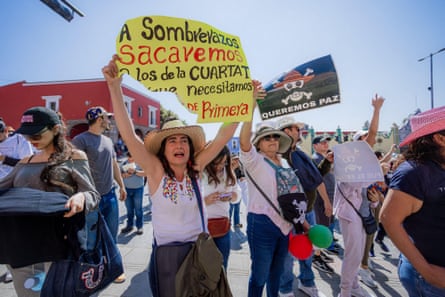
I have had to physically intervene when authorities have attacked community members, often traditional leaders.
One incident remains etched in my memory. Outside a government building in Michoacán, I noticed a police officer loitering near people organising a peaceful demonstration. When I asked him to identify himself, he stepped directly in front of me, using his height and strength to block me. I activated the emergency button provided by the authorities while he made mocking gestures. I stepped back and began writing my report, trying to hide that my hands were shaking.
The context has grown even more tense after the killing of Carlos Manzo, the mayor of Uruapan, who had launched a public confrontation with organised crime. His assassination in November took place during a public event in the central square of a city that is economically crucial as the capital of the world’s main avocado-exporting region. It has been reported that at least three mayors have been murdered this year. These killings create widespread fear and reveal how violence is used politically in Michoacán.
According to Global Witness, at least 36 defenders were attacked in Mexico between 2023 and 2024, most of them Indigenous. Few of these cases have seen meaningful progress in investigations. Carrying out sustained human rights work now means accepting serious personal risk.
In practice, protection does not come from the state but from strengthening community networks, international accompaniment and collective self-protection strategies.
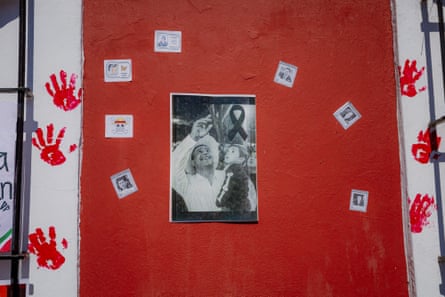
The emotional toll of this violence is collective. Many defenders, including myself, now live in forced displacement. We return to our communities only briefly, always alert. Violence is not only physical; it is psychological. The perpetrators are trying to fragment us; exhaust our resistance and corrode our hope.
Responsibility does not lie with Mexico alone. The US, the main destination for Michoacán’s avocados and berries, plays a central role in sustaining this model. European and British markets are also implicated through imports, corporate finance and trade relationships that prioritise profit while ignoring conditions locally.
If governments are serious about human rights and environmental protection, they must move beyond rhetoric. Importing countries should require binding human rights and environmental due diligence across agricultural and extractive supply chains. Indigenous peoples must be consulted, communal land and water rights respected, and defenders protected.
For us, defending the land is not an abstract environmental cause. It is about memory, survival and dignity. If the international community continues to enjoy the benefits of extraction while ignoring its costs, violence in places such as Michoacán will not end. It will simply remain out of sight.
-
Claudia Ignacio Álvarez is an Indigenous Purépecha human rights defender. Through the Red Solidaria de Derechos Humanos, she supports communities defending their territories from extractive industries and organised crime. Her work has been supported by Peace Brigades International since 2023.