2 months ago
47
2 months ago
47
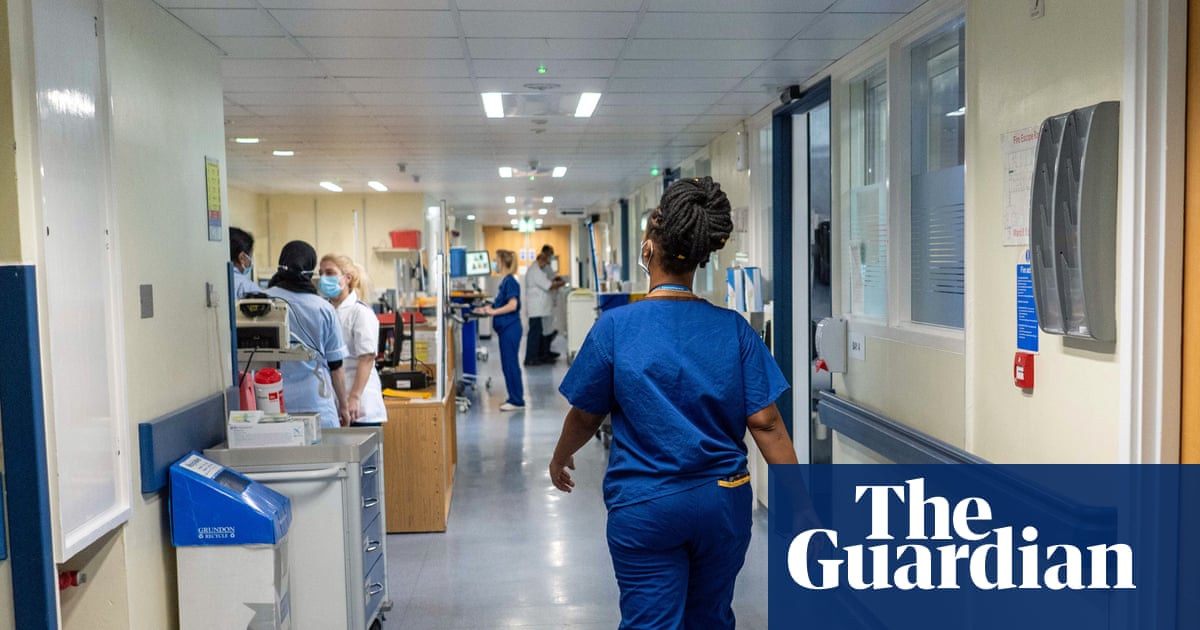
Four years ago Russian troops were a few kilometres away from Leleka maternity hospital, beyond a pine forest and a lake. Vladimir Putin’s plan to conquer Ukraine – wrapping it into a new Russian empire – began just down the road. They were meant to seize Kyiv and topple Volodymyr Zelenskyy’s pro-western government.
To the Kremlin’s surprise, Ukraine fought back. A Russian armoured column was destroyed in nearby Bucha. For five weeks a battle raged. Maternity staff treated wounded Ukrainian soldiers. Then, in March 2022, Russian troops pulled out of the Kyiv region. They left behind the bodies of hundreds of civilians they had killed, including fleeing families gunned down in their cars.
The hospital in the snowy health resort of Pushcha-Vodytsia has since returned to its original function: delivering babies. The war grinds on as Putin seemingly looks to the White House and Donald Trump to deliver a victory that has been elusive on the battlefield.
In eastern Ukraine, Russia continues to slowly push forward, but there is a price: in January, 35,000 of its soldiers were killed or wounded.
Moscow’s forces now occupy 20% of the country, including Crimea. It has taken 1.2 million dead and wounded for the army to advance 30 miles in the Donbas region, about the same number of casualties that the US suffered during the entire second world war.
“I don’t believe Ukraine will lose, ultimately. This is my internal feeling. Russia won’t defeat us,” said Valeriia Ivashchenko, who gave birth at the clinic. “So many people have lost friends and loved ones. There’s been so much destruction. It’s taken a toll on both countries. Ukraine won’t stop existing. Our life can’t be called normal, but we try to adapt.”
Ivashchenko was visiting the hospital with her 20-month-old daughter, Veronica, one of a new generation of Ukrainian children born during the conflict. In 2022, Russian shells damaged her family’s apartment building in the village of Horenka. Now enemy drones and ballistic missiles can be heard buzzing above their home, en route to the capital.

“It’s scary. You don’t know their direction. We hide at home between two walls. Veronica recognises the air-raid sirens,” Ivashchenko said. “When the invasion began, I didn’t have a kid. I want to continue to build our life here. War means you can only plan for the short or medium term.”
According to the UN refugee agency, 5.9 million Ukrainians have fled the country, and 3.7 million have been internally displaced. Many are women with children. After four years of all-out war, Ukraine has one of the lowest birthrates in the world, with about one birth for every three deaths. The hospital’s own figures illustrate the country’s stark demographic crisis. In 2020, there were 2,300 deliveries. In 2022, it was 868, and last year, 952.
Dr Valerii Zukin, Leleka’s chief executive, described the fall in numbers as “very sad for me”.
“I like the atmosphere in maternity clinics. It’s different from in a regular hospital, where there is pain and tragedy. Here, people come with positive emotions,” he said, adding: “We must learn to live and survive in these conditions. As Ernest Hemingway wrote: ‘It is silly not to hope.’”

Another mother, Ivanna Didur, said her growing family had decided to stay in Kyiv. In October 2025 she gave birth to her third child, Anastasia. “We are not leaving unless Russia is going to be on the doorstep,” she said. She described having a baby in wartime as a “patriotic act”. “I feel I owe it to people on the frontline to stay, raise kids and tell them about Ukraine,” she said.
Ukraine’s low birthrate was in line with European trends, she added. On top of that, many Ukrainians were struggling financially and felt they “could not afford” to have children. Now there is also a lack of security. Ivanna said she had taped up the windows on her son and daughters’ bedrooms, to protect them from flying glass.
She and her husband, Anatolii, try to give their children as normal a life as possible. Their eight-year-old, Anna, does acrobatics, while Andrii – five – plays football and attends scouts. They eat pizza and go to the cinema. The couple have bought power banks, so their flat stays warm during blackouts caused by bombing. “I don’t think Ukraine is losing. In Donbas the Russians are taking micro-steps,” she said.

Before the war, Ukraine’s population was 41 million. The estimated figure today is between 30 million and 32 million, excluding citizens living under Russian occupation. Kyrylo Ventskivsky, the former head of obstetrics at the Kyiv perinatal centre, said the demographic story was “complicated”. “Overall, the birthrate has decreased by maybe 30%. At the same time, some pregnant women who went abroad come back,” he said.
One of his patients recently returned from the US to Kyiv, where basic maternity services are free. “She estimated she could buy a studio apartment in the suburbs with the $30,000-$40,000 it would take to give birth in America,” he said.
One law exempts fathers with three children from fighting and allows them to leave the country. “Some women tell me they have a third child for this reason,” the doctor acknowledged.

If the low birthrate continues, demographers predict that by 2050 only 25 million people will live in Ukraine. The Verkhovna Rada, Ukraine’s parliament, has taken steps to address this alarming decline. In January it increased a one-off payment given to new mothers to 50,000 hryvnia (£858). It also introduced a new monthly subsidy of 7,000 hryvnia for pregnant women without a job.
Ventskivsky described himself as an optimist. “As a society we are changing. People are fighting, donating and trying to make things better ,” he said, predicting refugees would return in the event of peace. He added: “If there were no corruption, we could be a phenomenal country. We have sea, mountains, good food and great beer.”
For parents who have gone abroad, life can be tough. Ivashchenko said a lot of her friends who had left Ukraine “were struggling”. “It’s hard to adapt. You are considered a refugee and don’t have the same social status as at home. Here we have family, friends and a circle. There you have to start from scratch. It’s hard enough to have a child under normal conditions,” she said.
Ivashchenko said the outcome of the war in Ukraine would determine Europe’s future and the kind of world her daughter grew up in. “I don’t consider it to be a Russian-Ukrainian conflict. I think this is an attack on the whole liberal democratic system and on western values. The idea we live in a world based on rules and international law is an illusion. It doesn’t work any more,” she said.
Few believe the Russians intend to stop their bloody 12-year attempt to destroy Ukraine. “The invasion was a dumb thing to do. They are blinded by their own propaganda and lies,” Ivashchenko said. “The war has made Ukraine more united. We became more proud of our Ukrainian identity. And we are brave. A lot of nations are scared of Russians. We are not scared.”