3 months ago
69
3 months ago
69
The Trump administration has said repeatedly that the US needs to gain control of Greenland, a strategically-located, mineral-rich, largely self-governing part of Denmark with foreign and security policy run from Copenhagen.
The White House has said using the US military is “always an option”, but few analysts believe an armed operation is likely and France’s foreign minister has said the US secretary of state, Marco Rubio, has ruled out the possibility of an invasion.
Last weekend’s events in Venezuela and Donald Trump’s unpredictability mean nothing can ever really be excluded, however, and the US has other ways of fulfilling the president’s territorial ambitions. Here are some of the options.
Buy Greenland
The US first floated the idea of making Copenhagen an offer for the Arctic island in 1867 after purchasing Alaska from Russia. It reconsidered the idea in 1910, and in 1917 bought what are now the US Virgin Islands from Denmark for $25m (£18.5m).
As the cold war got underway, the Truman administration made a formal offer in 1946 – but only made public in 1991 – of $100m for the island, arguing it was “completely worthless to Denmark … and the control of Greenland is indispensable to the safety of the US”.
Copenhagen declined and since 2019, when Trump first expressed interest in the island, the Danish and Greenlandic governments have repeatedly said it is not for sale. Rubio, however, reportedly told members of Congress this week that the goal was to purchase the territory.
Legal and constitutional experts have noted that the era when countries could buy or barter others’ territories – and their people – is long gone. The international legal principle of self-determination makes an outright sale more or less impossible.
Under their 2009 self-rule law, Greenlanders can hold a referendum on independence. It is up to the island’s 57,000 inhabitants to decide their future. A poll in January found 85% did not want their homeland to become part of the US, with only 6% in favour.
Woo Greenland
Polls, not always reliable on such small numbers, suggest Greenlanders’ feelings about Trump’s promises to invest billions of dollars in the territory are less clear-cut, with the population almost evenly divided between seeing them as a threat and an opportunity.
The first step, already under way, is a hearts-and-minds campaign, investing in the island’s economic and educational development and intensifying diplomatic ties. The US consulate in Nuuk reopened in 2020 and a special envoy to Greenland was named last month.
Denmark also suspects Washington of more covert tactics, including an alleged influence campaign. Copenhagen believes this is intended to encourage the island’s growing independence movement, which is backed by a broad majority depending on the timescale.
With an independence referendum won and approved by the Danish parliament, the dealmaking could begin. On a visit to Nuuk in March, the US vice-president, JD Vance, said he hoped independent Greenlanders would “choose to partner with the United States”.

Greenland’s current four-party coalition government has strongly asserted that the island belongs to its people. Naleraq, the opposition party that came second in last year’s election, is also in favour of independence but is more open to dialogue with the US.
The party’s leader, Pele Broberg, has said he is not concerned by Trump’s recent threats and is confident the US would protect Greenland as an independent nation. “Besides, the US can’t do anything to us that Denmark hasn’t done already,” he said this week.
Sign a ‘free association deal’
Officials in Washington have reportedly been working for months on a possible “compact of free association” (Cofa) deal similar to the arrangement the US has with a number of small south Pacific nations, including the Marshall Islands.
Under such a compact, the smaller country retains its independence and is guaranteed Washington’s protection and a potentially lucrative duty-free trade deal, while the US military gets to operate more or less without restriction in a strategically important territory.
Many analysts see this as perhaps the most plausible longer-term outcome, with Greenland’s leaders – post-referendum – likely to see a Cofa or some other form of bilateral agreement as allowing them to combine independence with economic advantage.
Rely on existing treaties
One of the mysteries of the latest transatlantic tensions over Greenland is that the US already has wide military access and could easily have more. A 1951 US-Danish agreement allows it to “construct, install, maintain and operate” military bases across the territory.
The treaty, which was updated in 2004 and includes Greenland’s semi-autonomous government, also allows the US to “house personnel … and control landings, takeoffs, anchorages, moorings, movements and operation of ships, aircraft and waterborne craft”.
Copenhagen has repeatedly signalled its willingness to allow the US to significantly expand its military presence on Greenland, currently confined to the northern Pituffik space base, where about 500 personnel are reportedly stationed.
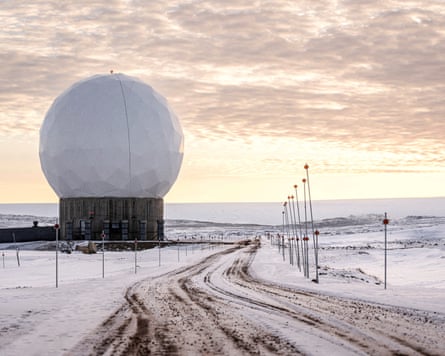
Another agreement, signed in December 2023 and in force since last year, gives the US unhindered access to Danish airbases and allows it to carry out military activities in and from Denmark. The US has similar agreements with Sweden, Finland and Norway.
Invade
If all else fails, US analysts have suggested a military takeover would not in principle be difficult. Greenland has no territorial army, and the handful of ships and helicopters and lone plane operated by Denmark’s joint Arctic command in Nuuk are for observation purposes.
They argue that US military presence on the island, potentially with the support of a few special forces, would theoretically be enough to capture Nuuk in a matter of minutes, and could simply declare Greenland US territory.
In practice, however, Danish analysts say it would be anything but straightforward – particularly in Greenland’s notoriously challenging weather conditions. And the fallout would be enormous.
Denmark’s prime minister, Mette Frederiksen, said this week that a US attack on Greenland, which is covered by Denmark’s Nato membership, would mean the end of the military alliance.
It would also explode “post-second world war security”, she said. Besides being entirely illegal, analysts also say a US military operation would instantly deprive Washington of its allies’ trust and potentially vital intelligence.
Jacob Kaarsbo, a former analyst at the Danish defence intelligence agency, said a US attack would face opposition. A “quick and dirty job”, seizing the control tower and strategic sites, might have have been possible in 2025, he said, but Denmark has ramped up its presence.
Winter weather would also make any operation very difficult, he said. “I hope the Europeans can convince the US that we will indeed shoot back,” he said. “US soldiers would come back to the US in bodybags.”