3 months ago
68
3 months ago
68
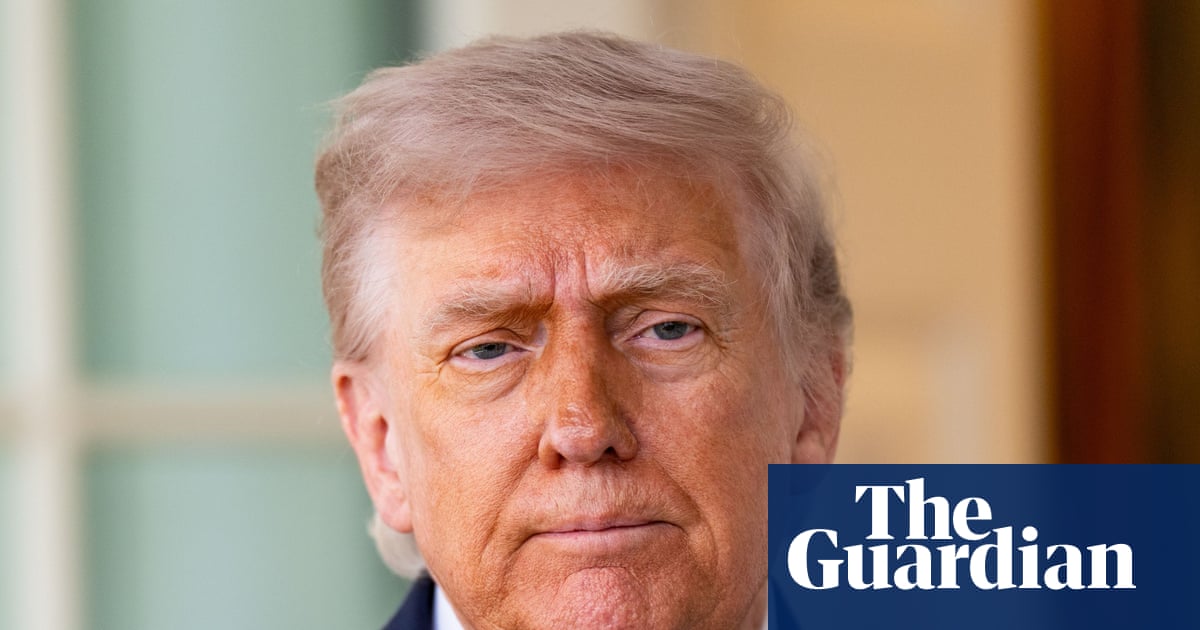
Is Donald Trump OK?
Recently, he’s looked tired. His famous fake tan is a bit more sallow than usual and seems painted on more thickly and clumsily than it was before. He appears to nod off in front of cameras more and more often, including in cabinet meetings and press events in the Oval Office. His public schedule is light: he is often at his golf clubs, has traveled around the country less frequently than at this point in his first term, and now only rarely holds the stadium rallies that once defined his preferred style of politics. He tends to sit, even when others are standing, and has shortened his daily schedule, often not conducting official duties before noon. A New York Times report found that his public appearances have declined by nearly 40% compared to his first year in office. He sometimes disappears from public view for days as he did in the late summer, and he and his administration have released unclear and conflicting information about his health. His right hand seems to be experiencing frequent injury or discoloration – it will often be covered with a band-aid or smeared with makeup; the White House has claimed, implausibly, that he is bruised from shaking too many hands. In some images, his ankles are visibly swollen.
Trump, at 79, is the oldest man to ever be elected to the presidency. And he ascended to the office after making his own harsh criticisms of Joe Biden, whose age became the subject of scandal after stiff, stumbling, and incoherent public appearances provoked speculation that his staff were concealing the extent of his decline. In 2024, Trump made Biden’s age and infirmity into a symbol of the inadequacy of the Democratic party, and the Washington elites’ unwillingness to combat America’s backward slide. When he took office early in 2025, he placed a picture of an autopen – the device that became a stand-in for Biden’s incapacity in the rightwing imagination – in the place where Biden’s official portrait would have been on the “presidential walk of fame” that Trump installed. The notion was that Biden, too old to hold the office, was out to lunch, running the administration on autopilot – a kind of virtual stand-in rather than a responsible wielder of power.
Now, questions about Trump’s own health and fitness for office are beginning to simmer. Trump revealed that he received an MRI in October, though he declined to elaborate on what his physicians were looking for, or what they found. “I have no idea what they analyzed,” he asserted to reporters on Air Force One. “But whatever they analyzed, they analyzed it well, and they said that I had as good a result as they’ve ever seen.” The president’s physician said in a letter that the scan was used to image Trump’s heart and abdomen, and that it was “preventative”. But experts countered that an MRI would not typically be used as preventative care, saying that the kind of scan that Trump received would usually be requested to monitor existing heart conditions or another underlying disease.
Trump also offered that “I took a cognitive test and I aced it.”
It’s not clear that anything is specifically wrong with Trump’s health, and it would be irresponsible to attempt to diagnose him here. But the speculation about his age and physical decline reflect a reality of his regime: that Trump is mortal, and that he is old. His reign—as the president, as the head of the Republican party, and as the gravitational center of American politics—is going to end.
It is possible that Trump’s health would not have become the subject of so much speculation if his polling was better. The president has experienced a dramatic cratering in the public’s esteem; recent polls show him underwater in a majority of states and with almost every demographic. The shock-and-awe first months of his second term, in which he made sweeping changes to the federal bureaucracy and attempted to use the force of the executive branch to impose huge cultural changes at universities, corporations and other institutions reliant on government funding, has given way to a more tepid era, in which Trump’s power has diminished as it becomes clear how shallow much of his support really is. People are more willing to push back on him when his approval rating is in the toilet, and this pushback in turn makes him seem less mighty, less effective.
If Trump seems weak physically, then, it might in part be because he is at his weakest politically. The changing winds of public opinion have now seemed to quiet Trump’s ambitions to seek an unconstitutional third term, at least for the time being: Republicans are less willing to stick their necks out to help Trump attempt something so obviously illegal when his own ability to pull it off seems so slim. And with that change has come a broad recognition that Trump is a lame duck.
US democracy – or what remains of it – is not safe. It would not be safe if Trump was still at his most formidable, and it would not be safe if he vacated his office tomorrow. But his increasingly obvious mortality is beginning to change everyone’s calculations. Even, it seems, his own. Trump seems increasingly ponderous and reflective in his old age, and lately, he’s been talking about death more often. “I think I’m not maybe heaven-bound,” he said in October. “I’m not sure if I’m going to be able to make heaven.”
-
Moira Donegan is a Guardian US columnist