3 months ago
75
3 months ago
75
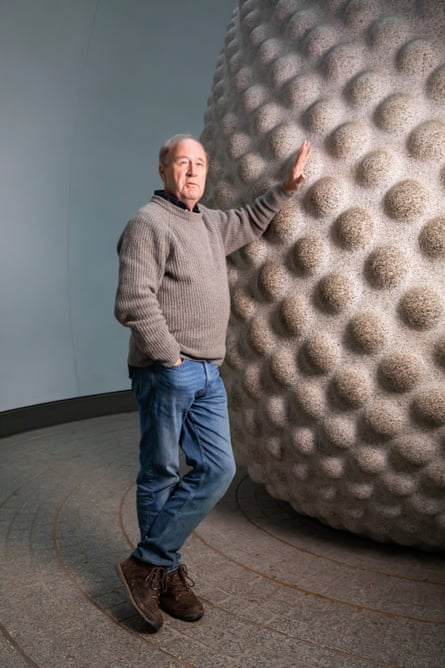
Sir Tim Smit says the world is in a better place than it was when he co-founded the Eden Project 25 years ago and he believes people are more attuned to the natural world.
Speaking as the project in Cornwall reaches its 25th anniversary, Smit describedextreme political views as the “roar” of people fearful that they cannot control the future but he said they would fade when people realised that good things were around the corner.
“When people see that some of that future is going to be amazing, they’ll cease to want to control it in quite the same way,” he said.
Smit, a visionary, outspoken and sometimes controversial figure, compared people’s support of Reform UK to a messy night out they would regret, then move on from.

“It’s like people going out for a stag night and feeling stupid the following day,” he said. “You wake up full of contrition. And then you think, actually, we should do things in a more moral way. I think it’s going to become a more moral period.
“Humans are very weird in the way they think the past was always some better place. In fact, today is pretty good and tomorrow is going to be even better.
“People are basically good. Fundamentally, the instincts of humans are those of tribal primates. We like to look after each other. We like to be gentle. We really adore laughing. And we only tend to be at our roughest when resources get less.”
Eden opened in 2001, with an aim to explore humans’ place in nature. The growing climate emergency was talked about but was not at the top of the agenda.
Smit said: “The main inspiration was that most people didn’t realise that without plants there’s no life on earth. Effectively, the Eden Project is a monument to the importance of plants.”
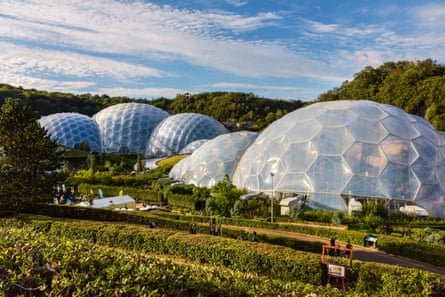
He said the “holy grail” at Eden was to create a “narrative arc” that made humans see the natural world as something to which they really belonged. “So if they damage the natural world, they damage themselves.”
Smit said the situation was perilous. “Our winters are getting wetter our summers are getting more arid. We know just a small amount of climate tipping may create things we can’t control. Our consumer culture is incredibly damaging to our ability to forward plan.
“We’re not conserving our water; we’re allowing people to poison our water. The privatisation of water was a complete mistake. It was to do with the dogma of ownership rather than the best use of things for the civic good.”
But he said there was hope, including from the world of plants such as advances in the understanding of mycelium: the thread-like network that forms the bulk of a fungus, which can be grown into building materials and clean up contaminated environments.
About 25 million people have visited Eden, not only to walk around its rainforest biome but to attend everything from gigs – next year’s lineup includes the Pixies and Becky Hill – to community events.
“I’ve always believed that gathering groups of people together is good,” Smit said. “It’s a spiritual experience with a small ‘s’. It’s special, hopeful.”
Smit said that as an island nation one of the things vital for Britain was reliable energy.
He said: “I find it utterly crazy there’s no British vision to become completely energy-independent. If you’ve got energy independence, there is nothing you cannot grow. And if there’s nothing you cannot grow, it means you’ve got two of the major planks – food and energy – under the control of your island nation. No matter what poverty you got into borrowing, you can feed yourself and rebuild and regenerate.”
Smit was criticised in 2022 for suggesting that Cornish people are not articulate and are over fond of looking back to imaginary “good old days”. Another of his schemes, to build an education centre for horticulture, agronomy and cookery on a hillside above the Cornish town of Lostwithiel attracted fierce protests and was rejected by councillors.
But Eden has brought many millions into the Cornish economy. The organisation put the figure at £2.2bn in 2019 and will give an updated total in the new year, which it says is much bigger.
There are plans to build new Edens on the seafront at Morecambe in Lancashire and in Dundee, Scotland. An “Oriental Eden” is open in Qingdao, eastern China.
Smit admitted that when Eden first opened its doors he resented the public coming in. “It had been our baby at the time. Now, I feel happy. I think it’s beautiful.
“The real magic of the natural world is the plants have adapted and created the same leaf structures they would in the rainforest, which shows there’s a pattern, there’s a system going on. Nature knows a thing or two but the absolute joy of the Eden Project is that young people who come here feel it gives them permission to dream.”