2 months ago
47
2 months ago
47
Mohamed Salah’s stature in Egypt means his every move dominates public discourse. It was therefore entirely predictable that the forward’s comments after Liverpool’s 3-3 draw at Leeds – where he was relegated to the bench for a third consecutive game – he would become the singular, all-consuming topic across his homeland’s sports media.
“Egyptian media was always going to stand by Salah,” says the Egyptian journalist and co-founder of the sports website KingFut, Adam Moustafa. “When you look at the content over the last five years or so of Egyptian football, 60-70% has been based around him. He’s a unique status that we’ve never had, for someone abroad to be so successful. He’s the golden child of Egypt.”
The true measure of Salah’s cultural weight became clear in the breadth of national conversation, as talk around his interview spilled beyond the confines of football punditry. One of Egypt’s most known news presenters, Amr Adib, whose loud, brash political and economic opinions often go viral for all the wrong reasons, staunchly came to Salah’s defence. Political commentators dissected Salah’s words through the lens of negotiation tactics. Even YouTube film critics and foodie TikTokers felt compelled to offer their analysis. “It feels as if every public voice has an opinion to air,” says the president of one of Liverpool’s oldest fanclubs in Egypt, Ahmed Fahmy. “The dramatics of it all proves that a crisis involving Salah is a crisis for the nation.”
Unlike in the UK, the consensus in Egypt was overwhelmingly supportive of Salah, with an almost uniform agreement he was justified in his public interview. “We’re getting two ends of the spectrum,” says Moustafa.
While British media were quick to describe Salah as disrespectful and selfish, in Egypt the main view was that his character and past form should give him enough credit in the bank for him to air his grievances. “The conversation about how Salah broke the sacred dressing-room code, that doesn’t really exist here,” says Fahmy. “Our football culture has always revered its stars – over managers, over clubs – and sees little benefit in keeping things quiet.”
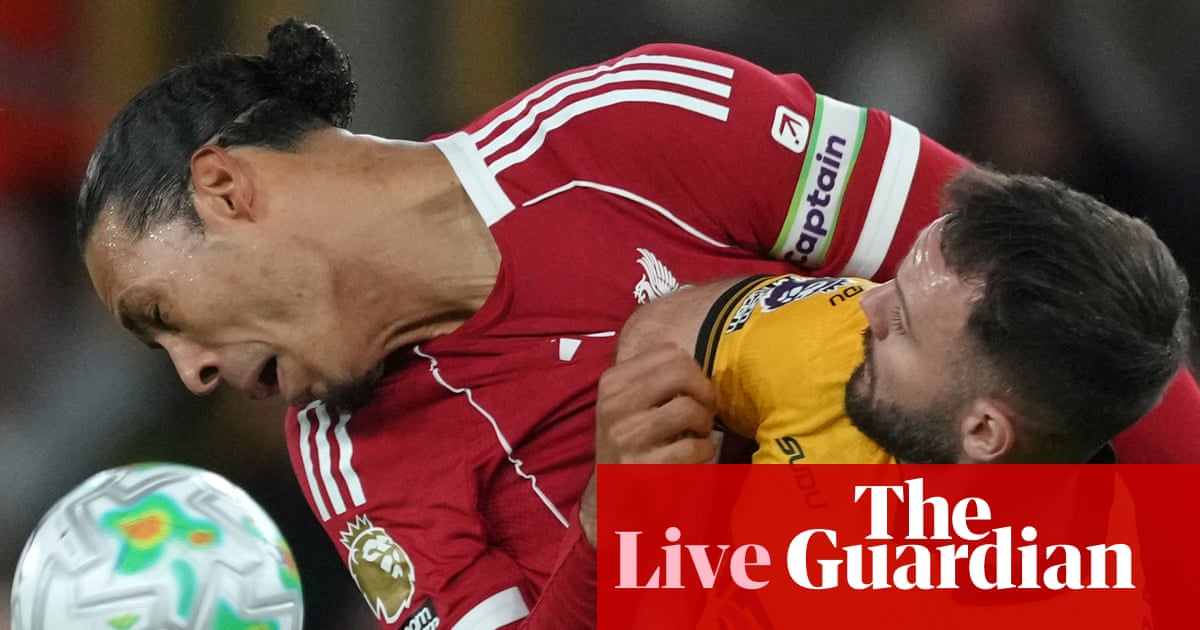
The finger of blame was quickly pointed at everyone but Salah. Online analyses on football websites blamed Arne Slot, with FilGoal labelling the Liverpool manager a “coward” and Salah an “opportunist” in the headline of a piece that said: “[Salah] is like a boxer who appears calm, dodging blows, then pounces and delivers his knockout punch, thus deciding the fight in his favour.” At Kooora, Slot was accused of “double standards” as Virgil van Dijk’s mistakes this season left the author wondering why the captain had not been dropped. Television pundits theorised that Michael Edwards, the chief executive of football at Liverpool’s owner, Fenway Sports Group, and the club’s sporting director, Richard Hughes, would have been unhappy with Salah’s public contract pleas last season and pondered whether they were who the Egyptian was referring to when he said “someone doesn’t want me at the club”.
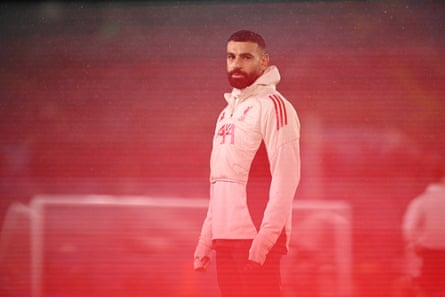
Jamie Carragher fanned the flames. On Sky Sports, he described Salah as a “Chelsea failure” who threw Trent Alexander-Arnold “under the bus for eight years” and questioned his lack of a trophy with Egypt. The former Egypt forward Mido, known in the UK for stints with Spurs and Middlesbrough, said Carragher “exploit[s] any situation to always be in the spotlight”.
Mido added: “He was a very average player … and tries to compensate for this by criticising star players. But this style of media has proven, throughout history, to be very short-lived. He would not be able to say those comments about an English player. I lived in England for years. English people are very kind but, unfortunately, in certain situations, they are harsh [on foreign players].”
Fahmy says: “Pundits have a responsibility to get their facts right. Especially if they go on live television to criticise a player. Carragher may think Salah was a Chelsea reject but Liverpool did not save Salah’s career. He was one of the best players in Serie A when he signed. Likewise, Jürgen Klopp would not have put up with him if he threw his right-back under the bus for seven seasons.”
A myriad of former Egypt players came to Salah’s defence alongside Mido, including Hazem Emam and Mohamed Aboutrika, the latter widely regarded as one of Africa’s greatest players. Both emphasised Carragher’s lack of context regarding Salah’s failure to win an Africa Cup of Nations. After Egypt won their most recent of seven Afcon titles in 2010, the country experienced extreme political turmoil. Seventy-four people died in the 2012 Port Said stadium riot – including a fan who died in Aboutrika’s arms.
A two-year suspension of the Egyptian Premier League followed which was detrimental given the team’s heavy reliance on domestic players. With most of the squad retiring and a lack of funding and resources, Egypt failed to qualify for the 2012, 2013 and 2015 editions of Afcon. Salah is widely agreed to be the catalyst for Egypt’s return to prominence, guiding them to two Afcon finals and qualifying for two World Cups, an achievement that eluded the previous golden generation.
“Even if I were to assume [Carragher’s] point was Salah needs a team to win titles,” says Fahmy, “his proof – what he was using to back up said point – was factually incorrect. If it is all false, does your argument hold merit?”
After Liverpool host Brighton on Saturday, Salah will join Egypt for his fifth Afcon campaign. “I think this is going to spur Salah to prove his point,” says Moustafa. “He’s going to want to redirect that anger and motivation on to the pitch.
“I don’t want to believe he wasn’t trying in past editions but I think he always had an eye on returning to Liverpool, and [now], maybe he’s not sure where he ends up. I think you’re going to see a man whose back is against the wall.”
The Pharaohs, drawn in Group B alongside Angola, South Africa and Zimbabwe, are expected to advance to the knockout stages. But there are persistent questions about whether Hossam Hassan, Egypt’s all-time top scorer and head coach since February 2024, can guide an ageing and uneven squad to the title with the lacklustre support of a failing federation.
One certainty remains: Egyptians will defend their captain vehemently until the end. In their eyes, Salah has long since earned their loyalty and respect and there is little that could make their commitment to him waver.