3 months ago
78
3 months ago
78
I’m not necessarily inclined towards what might typically be dubbed “feelgood”. No, you won’t find me seduced by a happy ending, nor am I partial to the oeuvre of Disney (in fact, I find all the talking animals and poreless princesses a bit grotesque). The raw edges and friction of feelbad have tended to be much better suited to my tastes: the porno chic slasher Knife+Heart, the sartorial murder of In Fabric and the snuff film-obsessed Thesis. Sex and gore, basically. For a long time, my favourite film was Crimes of the Future: a stomach-churning body horror about sexual-surgical experiments.
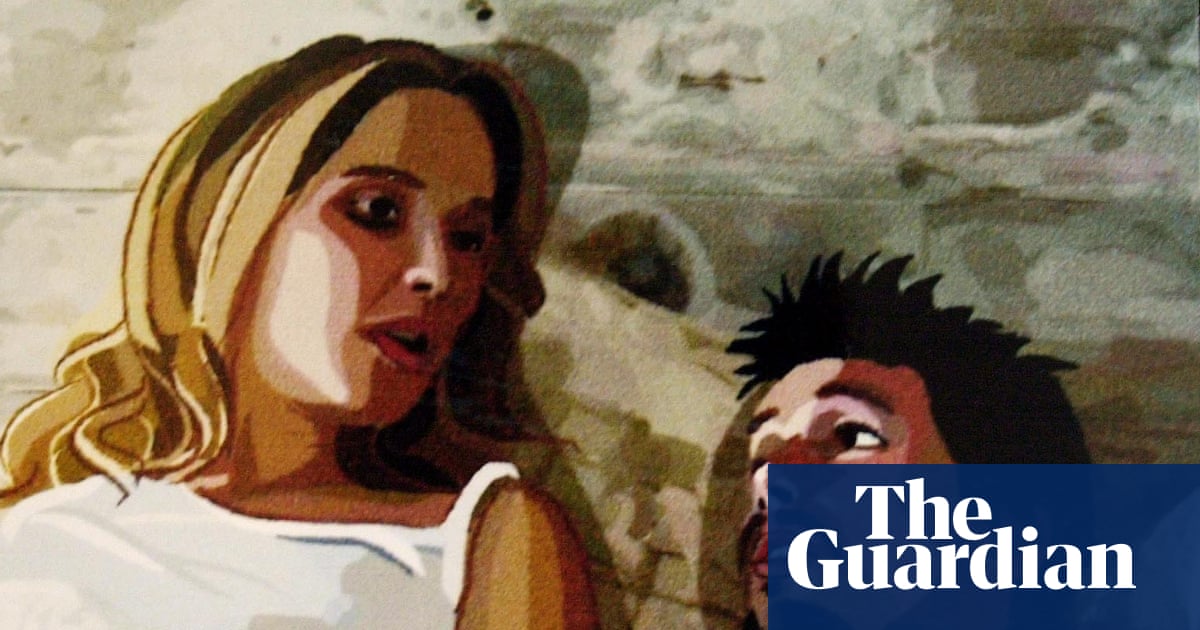
However, there is one movie that reveals a slightly soft(er)core side to my viewing habits, which I frequently return to in order to feel the gushy feelings and butterflies of a school crush. That film is Bound. The 1996 directorial debut from the Wachowski sisters, the plot revolves around an opposites-attract scenario which is both familiar and high stakes: plumber Corky, and mafia moll Violet. When their eyes meet across an elevator, the tiny vestibule becomes thick with sexual tension: it is so on.
Most of what makes this film work is the palpable chemistry between Corky, whose slick masculinity is embodied by Gina Gershon, and Violet, played with ultimate sex pot prowess by Jennifer Tilly. The whole thing is shot in the conventions of the sapphic gaze: we get plenty of closeups of Corky’s hands wrestling with pipes, snaking holes and unscrewing things in languorous, laborious detail.
Say what you will about how openly queer actors should play openly queer roles, but this film – starring two ostensibly cis, straight female leads – is a masterclass in lesbian eroticism. The two main actors so seamlessly embody a masc/femme dynamic, without the try-hard didacticism of many later cinematic attempts, to create a relationship that feels oddly real (except much, much hotter).
How do I love thee? Let me count the ways. Having just starred as the vamp Cristal Connors in the trash-cult, 1995 Vegas romp Showgirls, it’s uncanny to see Gershon undergo such a dramatic gender transformation to play a butch pin-up just one year later. It’s not a stretch to say that Corky has the kind of sly smirk and shaggy hair that no doubt served as the blueprint to The L Word’s Shane.
And then, well, there’s Jennifer Tilly. A porcelain doll: her sex appeal is painted on the surface of her pout and her whole-bosom sighs but, underneath, she has a strong and stony demeanour. A complex female protagonist who smolders and manipulates to get what she wants from men, and a femme imprisoned by her own beauty, Tilly delivers probably the most astute performance exploring the double life of a straight-passing lesbian which I have ever seen.
Anyway, back to the plot. What comes after our protagonists’ initial meeting is oh-so relatable: Corky, having just got out of prison, is particularly vulnerable to Violet’s high-femme charms. In a turn that can only be explained by unbridled lust, Corky agrees to help her in a mad caper to steal $2m from the mob and pin it on her boyfriend. I, too, fear that I would do whatever Violet asked me to.
But, to be honest, the crime plot is pretty inconsequential to me. What do I care if they pull it off or not? If you’re interested, however, there are some tired – almost femmephobic – overnotes, where Corky begins to doubt if Violet is really the lesbian she says she is, or if she will ditch her for a man the first chance she gets. But despite it all, they get their own happy ending.
Interestingly, the plot draws an equivalence between the prison time served by Corky and Violet’s very own sentence: the years she spends as a clandestine lesbian in straight relationships with men, for her own financial survival. At the end of the film, evading prison and with a stack of cash, they are both free: Corky of the criminal justice system, and Violet from the confines of cis-heterosexual society.
While this film came out about 30 years ago – in my birth year – it remains the most convincing depiction of dyke sexual dynamics I have ever seen on screen. While they weren’t out at the time, the Wachowski sisters (both trans lesbians) were cinematically brave: depicting the cheek, mischief and pleasure of sapphic relationships with Bound. I’m of a different generation to the directors, and I supposedly have access to a whole plethora of queer representation, but if it wasn’t for this film made by two trans women in the 90s, I wouldn’t have cinematic proof of my own sexuality.
-
Bound is available on Kanopy or to rent digitally in the US and to rent digitally in the UK and Australia