3 months ago
95
3 months ago
95
I used to love a heatwave. I was the sort of British person who acted like I was in the Mediterranean if the sun was slightly visible, coercing friends to take the outside restaurant table and eagerly working in the garden until my MacBook started to overheat rather than my internal organs. That was until I developed post-viral fatigue from the flu nine years ago.
Now, the heat means suffering rather than pleasure: less energy, more pain and worse breathing. This has only increased as heatwaves across Europe have soared. I have spent this week of record-high May temperatures in the UK largely in bed, with the blinds drawn and two 5ft-high fans looming over me like security guards at a club no one wants to get into.
Click on a news site in recent days and you’ll have seen headlines about how air conditioning (AC) is becoming Britain’s go-to tool to beat the heat. Four million households in the UK now have AC of some sort – double the amount there were just three years ago – as more of us work from home and temperatures rise.
And yet there is a fact that many have not yet wrestled with: the millions of homes now enjoying air conditioning don’t house most of the people who really need it.
While the wealthy and healthy can find tens of thousands of pounds to kit out their houses with built-in AC systems, disabled and chronically ill people – who are disproportionately on low wages or out of work long term – must make do with an Argos fan. Even the lower-cost portable AC units, which cost hundreds of pounds, are out of reach to many people relying solely on disability benefits. And then there are the swathes of disabled people who rent (if you have a disability, you’re less likely to own your own home) who won’t have the right to upgrade their properties.
It’s the British class system with a climate-crisis spin: the more someone requires air conditioning to survive heatwaves, the less likely they are to be able to afford it.
The situation will only get tougher as demand – and prices – for heat-related products increase: one industry expert told the Guardian the cost of AC in the UK has risen by up to 17% since just last month.
There are also many people vulnerable to extreme heat who don’t have control over their environment, from older people in care homes and children in schools to prisoners and hospital patients. They will be at the mercy of private companies and government ministers who decide whether or not to spend money to improve their living conditions.
For these Britons, a heatwave isn’t about being uncomfortable – it’s about being unsafe. In 2022, when temperatures spiked above 40C, more than 4,500 people in Britain died of causes associated with heat.
Every time I see a reel on social media of chronically ill people wearing eye masks in bed during the day because the sunlight physically hurts them, I wonder exactly how many “record hot bank holidays” we plan to put marginalised communities through without support.
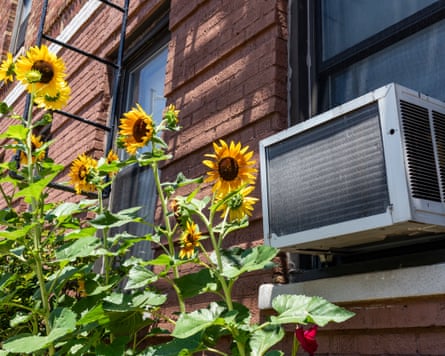
There is, of course, a short- and long-term way of tackling this, if there was political will. As climate activists reluctantly argued this week, AC needs to be urgently installed as an emergency measure in schools, care homes and other places where people vulnerable to heat live. Just as “heat hubs” are there for people who can’t afford heating in the winter, it’s surely time to also introduce “cool spaces” – public buildings with AC where anyone can come in and sit, such as those offered in New York.
And yet AC is not sustainable for ever. Its environmental impact means it is as much a cause as a solution to climate breakdown. In the coming decades, Britain needs to build homes – including social housing – that are designed to cope with hotter weather. Most existing British housing overheats in the summer, with minority ethnic people, people from low-income households and those with young children more likely to live in housing at risk from dangerous overheating.
It is also fundamental – stop me if you’ve heard this one before – to address the climate crisis that is actually causing our heatwaves, for example through reducing emissions and shifting to renewable energy.
Getting to grips with our new temperatures is not only necessary for public health but for the health of our politics. We have already seen how rightwing populists use extreme weather events to rile public anger, from Donald Trump’s response to the LA wildfires to the far-right Vox party’s reaction to Spain’s recent floods. This anger is then used against the very politicians who are enacting green policies.
In the UK, Reform is laying similar ground. Nigel Farage has already launched a war against Labour’s subsidies for heat pumps – technology that warms homes but is also a more environmentally friendly alternative to AC. As the nation sweated this week, former Labour prime minister Tony Blair came out against net zero.
I have bought AC for my bedroom that will be ready to use soon. I feel simultaneously guilty and lucky that I can afford it. Unlike millions of others, by the next heatwave, I will have a room to stay safe in. “The next heatwave.” It’s remarkable how quickly what was once unthinkable becomes the new normal.
-
Frances Ryan is a Guardian columnist