3 months ago
111
3 months ago
111
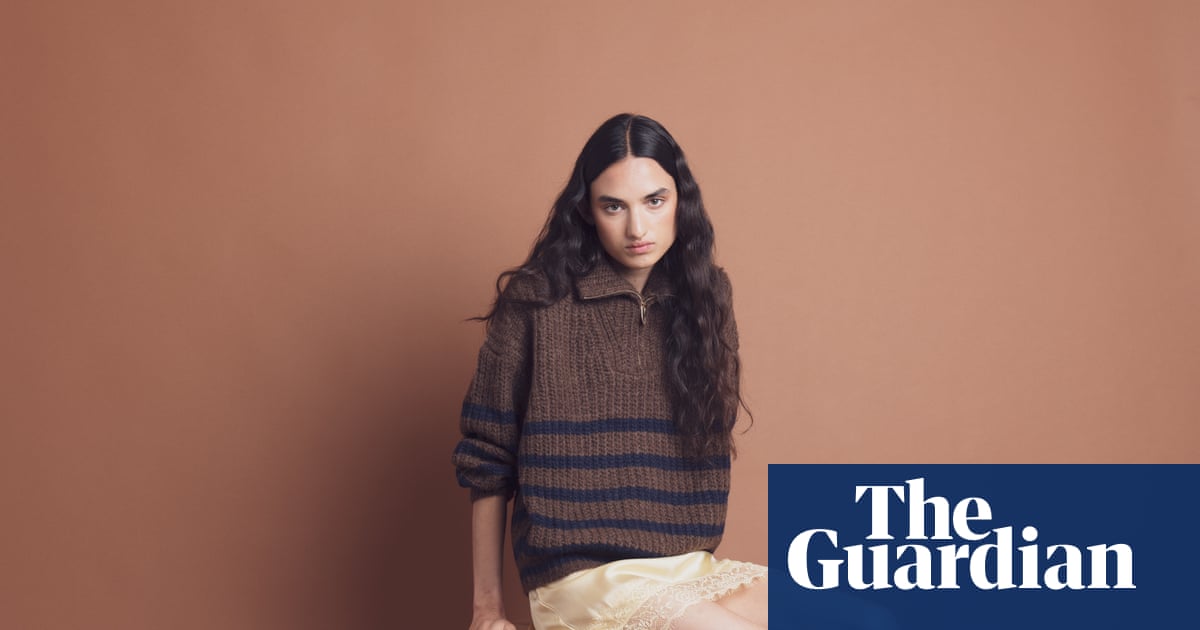
Mary Munson’s first non-surgical cosmetic treatment wasn’t the result of a plan, or a concrete decision. She describes it in terms of sating her curiosity. Munson, 41, was visiting a clinic to extend her lashes when a woman working there spoke to her about a procedure that she referred to as “baby Botox” – which was, in fact, Botox. Since deciding to try it, she hasn’t looked back.
“It was just a starter to see what it was like, and I realised that I enjoyed it. And to be honest I don’t feel like I see a huge change,” says Munson, who was 37 when she started treatments. While she thinks her Filipino and Scottish genes “give me good skin”, Munson started getting other treatments alongside regular Botox injections, including platelet-rich plasma (PRP) therapy (sometimes referred to as a vampire facial, in which platelets are drawn from a patient’s own blood), as well as platelet-rich fibrin (PRF), a similar treatment that stimulates collagen.
Munson is a teacher and mother of two. She is bubbly and friendly over the phone and thinks of herself, she says, as “very generic and run-of-the-mill”. Among her group of 11 friends, all in their early 40s, she says, three regularly use these procedures. She is part of a shift in which non-surgical cosmetic treatments – or the more muted “aesthetic interventions” – once associated with wealth and celebrity are becoming more commonplace, rewiring perceptions of beauty for ordinary women. Jowls and wrinkles, the everyday markers of ageing, are for a growing number of women becoming optional.
“I’ve not tried changing the shape of my face or anything drastic. I would prefer not to be too wrinkly.” Munson laughs. “I’m also getting married next year for the first time so I’m trying to get my skin the best it can be.”
Walking down the shopping strip in my neighbourhood in a once working-class part of Sydney that has become newly aspirational, I notice a dentist that lists cosmetic injectables, in san serif font, alongside wisdom teeth removal, a clinic – next to a pastry shop – curtains drawn, advertising the slogan “real change, real confidence”. Versions of this proliferate across shopping malls and high streets across the country. Last year, in the waiting room of an inner-city dermatologist, staffed by receptionists with impeccable eyebrows, I was puzzled, at first, by the presence of words like relax and refresh in a medical context. The neoliberal language of self-care was co-opted to describe non-surgical cosmetic treatments.
“For me, it is like having something nice or like going to the gym,” says Bianca Lorena Saldes, 38, who started using injectables when she began working as an aesthetic nurse, and now operates a clinic called BLC Aesthetics, where she first met Munson. She’s wary of the pressures that drive women to such treatments or make them feel they are necessary. “I don’t want to think, I need this to look amazing. It’s just like how we go and get a massage.”
A report by Grand View Research estimates the market for cosmetic injectables in Australia at US$2.7bn, projected to rise at a compound annual growth rate of 19.3% from 2024 to 2030. A survey by the International Society of Aesthetic Plastic Surgery found that 20.5 million non-surgical cosmetic procedures were conducted in 2024, up 44% from 2020, the year hours of watching ourselves watching others via Zoom fostered an increased self-surveillance of our own appearance. In June last year, the Australian Health Practitioner Regulation Agency tightened regulations, but because of the decentralised nature of the industry, conclusive statistics are difficult to find and there are strict rules about how these procedures can be advertised.
Women, of course, have always performed beauty work and grappled with the pressure to maintain the illusion of youth in a world in which older female bodies are considered less valuable, and less visible. For every silver-haired influencer, or Pamela Anderson appearing makeup-free, there is also a public horror of “natural ageing” – as in the pushback received by the actor Rachel Ward, 68, who in January, posted to social media an image of her unaltered face, creases reflecting the passage of time.
Dr Renae Fomiatti, a senior research fellow at the Australian Research Centre in Sex, Health and Society at La Trobe University has spent nearly two years studying the uptake of aesthetic interventions. “They’re easily available and people can go in their lunch break, there’s minimal downtime,” she says. “But this ignores how invasive the cultural messaging and imperative is around ageing.”
Fomiatti, a feminist scholar, believes that it is important to challenge the binary that there are unnatural and natural ways for women to age. “The body is social,” she says. “There’s always been aesthetic interventions.”
The role of many contemporary women has been described as that of “aesthetic entrepreneurs”, their bodies mirroring market logic in the neoliberal system.
“So many women I interviewed described feeling sensitive around ageing, in relation to the labour force and working opportunities as they got older,” Fomiatti says. “People are using these treatments to mediate their experience of suffering around ageing, but by doing this, they are also becoming aligned with dominant norms of white, youthful beauty and that makes people feel better.”
But it is no longer just about avoiding looking old and tired, Fomiatti says. We are confronted now, with a deluge of data that allows us to map our faces either virtually using AI, or physically with cosmetic treatments: “No part of the body or face is without the constant imperative to optimise, improve, enhance.”
Felicity West, who started her career at a high-end cosmetic clinic and now works in the Melbourne suburb of Brunswick, has noticed that as aesthetic treatments have become normalised and increasingly undetectable, they are also being taken up by a wider swathe of society.
“It’s not a secret among women in their 30s and 40s, they are discussing it with their friends, they are comparing practitioners,” says West, adding that men account for an increasing proportion of her clients. “It wasn’t that long ago where if you’ve had treatments … not a muscle moved on your face, but now we are leaning towards smaller, undetectable treatments and there is literally no one I don’t see: young women, mature women, lawyers, social workers, cafe workers.”
“Something about these new procedures is that they intentionally seem more attainable than before, but attainability can sometimes make women feel worse,” says Dr Jasmine Fardouly, a senior lecturer psychology at the University of Sydney. The arrival of aesthetic interventions at the dentist, the shopping mall – rather than the luxury clinic in the expensive postcode – has seen their air of exclusivity fade, but positioned treatments as an ordinary consumer choice, in the vein of a haircut or manicure.
“I think there is also a pushback against the amount of money and time women place on their appearance. It can create a class divide in that only women who can afford these procedures can meet these ideals.”
Munson says that, as a relief teacher, a day’s wage covers a single Botox treatment. “It is a big number for us, but my partner looks after the household,” she says. “I remember as a teenager going to get my eyebrows waxed. As you get older, you hit 20, you start doing some more intensive facials. This is just what you do.”
Tania Zanetich, 45, a finance professional who exudes a low-key glamour, tells me over Zoom that she’s observed aesthetic interventions have become more common among friends and peers.
“I’ve got friendships with women from all cultures, all ages and budgets and girlfriends with big lips, who look like they’ve had work done and want the perception of wealth, and some of us that are very subtle,” she says.
Zanetich has been getting Botox and fillers since her mid 30s. She was prompted, at first, by headaches and the frown lines she had noticed developing. “It was positioned to me as preventative of ageing, while also helping me clinically and I enjoyed the benefits.”
She perceives it now as projecting confidence and competence to the world.
“Joking the other day with my accountant, I said, surely Botox should be a tax deduction, because at work, I look like I can’t frown,” she laughs. “If someone says something in a meeting, I’m looking poised. I think in a corporate workplace, if you are a mother of two small children, when you present yourself with a certain decorum, that image translates to a level of competency that might extend to my ability to do my job well.”
Women who embrace or resist aesthetic interventions are often polarised in the cultural conversation. But the slow mainstreaming of these procedures speaks to a longer history of the way women have negotiated complex double-binds. What was once a far-flung option is being reframed as personal choice or professional statement.
“Women around me say, ‘if had to choose between my Botox or buying groceries, I would [cut back] on groceries’ because of how it makes them feel, and how [they are] able to tackle the day to day,” Zenetich smiles. “I don’t judge anybody. I think society judges women enough for us to judge each other.”