3 months ago
85
3 months ago
85
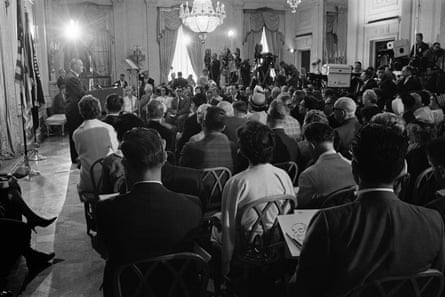
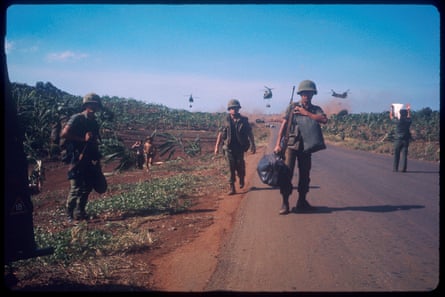
In a 1965 speech justifying the war in Vietnam, Lyndon B Johnson argued that the goal was to ensure “every country can shape its own destiny” since only in such a world could the US secure its own freedom. However, he also admitted “such were infirmities of man that force must often precede reason, and the waste of war, the works of peace”.
It was the kind of elegant justification of the country’s moral mission to which successive US presidential speechwriters have turned at times of war.
Assured by limitless military superiority and filled with such noble intent, US presidents have repeatedly been lured into launching wars only to find themselves confounded, ensnared and then broken by their inability to overpower an inferior opponent they wholly misjudged.
It seemed safe to assume that this was a fate that would never befall Donald Trump. He was implacably opposed to endless wars that seemed disconnected to the everyday lives of his supporters. He would never equate military power with military victory.
Yet Trump’s “little excursion to Iran”, judging by the drafts of the potential peace agreements that are circulating, is being universally perceived as a defeat. Almost regardless of the outcome – most likely a return to the old status quo – the war looks ill-conceived, a monument to confused objectives, bad planning and misplaced assumptions.
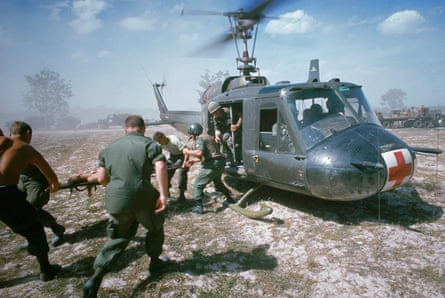
In scale, of course, the current conflict does not match the Vietnam war, which went on for years, led to the deaths of 58,220 US soldiers, and is often perceived as the totemic and unmatchable example of US hubris. By comparison with the Vietnam odyssey, Iran feels more like a day trip.
But in terms of consequence, it is still possible that the “excursion” will prove to be the bigger geopolitical turning point for the unrivalled superpower, the moment when the US will have to concede it mishandled a war not just because it had no convincing battle plan, but also no grand strategy to match how the contemporary world works. In an interconnected world, Trump believes progress is achieved through conflict, not cooperation.
Ironically for Trump, the shadow of Vietnam has always loomed large, and not just because he repeatedly dodged the draft. In many ways his political appeal is born of Vietnam. The Pulitzer prize-winning author Fredrik Logevall, professor of history at Harvard University, recently argued that “many of the troubles that plague America today – alienation, resentment, cynicism, the mistrust of government, the breakdown of civil discourse and of civic institutions, and the lack of accountability in powerful institutions – have their roots in the Vietnam war era”.
“You could argue that Americans went from naivety at the outset of the Vietnam era to cynicism – and cynicism that alienates us from the government, threatens democracy because it destroys the power of the people to believe in change, and to work for change,” he said.
It is in this polarised political ecosystem that Trump was to blossom.
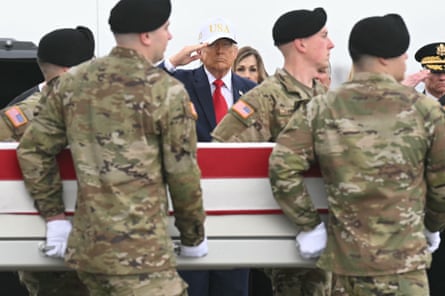
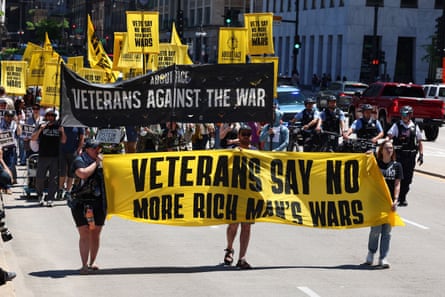
Clearly the domestic US consequences of Iran will never match Vietnam. True, the war was unpopular from the start, but society has not been torn apart by it. Only 13 body bags, each a personal tragedy, have been sent home. At the most, inflation caused by the energy shock will ensure an already unpopular president is punished in the midterms, something he professes not to concern him.
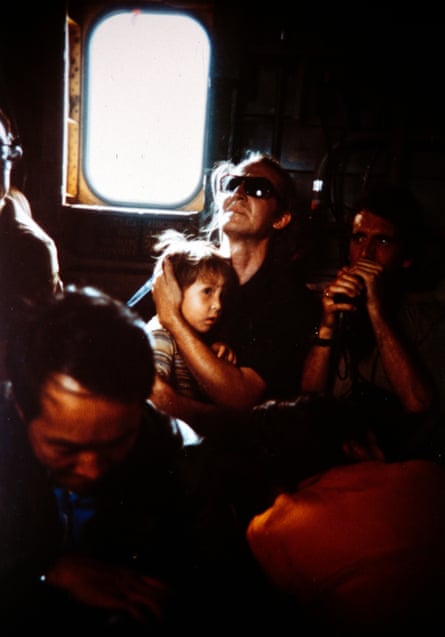
But it is arguable that the international consequences of the Iran war could yet prove more long lasting. The fall of Saigon in April 1975 did not have the widely forecast global fallout. The predicted “domino effect” of communism sweeping south-east Asia, as Henry Kissinger and Johnson feared, did not materialise, save in Cambodia and Laos.
By contrast, Trump’s war of choice looks to be a signal of defeat that will have an effect in several fields.
It marks the collapse of Israel’s 20-year Iran strategy to produce regime change and will accelerate the already rapid decline in the influence of this Israeli government in Washington. Danny Citrinowicz, the former head of an Iran branch of Israeli military intelligence, describes the war as an operational success but a strategic fiasco for Israel.
The war is also prompting Gulf monarchies to profoundly reappraise their geopolitical relationships, including the question of whether the existence of US bases brings the security required for their economies to diversify. Mojtaba Khamenei, the new Iranian supreme leader, may be indulging in wishful thinking in saying the clock can never be turned back to support for US bases. But equally, claims by Trump that countries such as Saudi Arabia or Qatar would now normalise relations with Israel, or join the Abraham accords, sound absurd – in the words of the former US ambassador to Israel Dan Shapiro: as “delusional as a moon made of green cheese”.
The Gulf states would prefer an imperfect peace because they see no other way out, Barbara Leaf, a former US undersecretary for the Middle East, told a seminar last week.
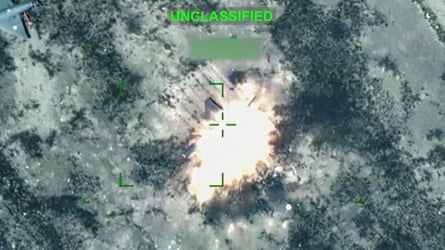
For students of war, the status of cheap drones as the great leveller in modern conflict has been confirmed – a lesson Iran learned from the Ukraine conflict better than the Pentagon. The US defence secretary, Pete Hegseth, promised “death and destruction from the sky”, hitting 13,000 targets in the first month alone, but it did not bring victory, only the alarming depletion of US missile stores and of the treasury.
The fallout is likely to hit Europe hard. As a squeeze on living standards seeps through the global economic system over the next year, centrist incumbents in France, Germany and the UK may face an electoral beating that tears at the architecture of the EU. The task of the incumbents will be made harder if Trump acts on his threat to withdraw US troops from Nato states in retribution for their “cowardly” refusal to come to his aid.
For the US foreign policy establishment, exemplified by the Council on Foreign Relations, the missteps in Iran are the final confirmation that Trump’s highly personalised, instinctive system of predatory diplomacy creates only more disorder.
Last week, the CFR launched a fundamental review of US strategy post-Trump. Its convener, Rebecca Lissner, has already warned the war “has delivered a potentially fatal blow to a US-led international order that was already on life support”. Allies are hedging, middle powers are forming their own coalitions, and regions once firmly in Washington’s orbit are shifting toward new power centres, she said. The former state department official Mira Rapp-Hooper was more brutal at Chatham House, describing it as superpower suicide.
In the short term, two questions from the Iran war have been thrust upon the Democrats, and in effect have already been answered. Has the US interest been furthered by being so close to Israel and its leadership? Would the US not be more powerful if it returned to alliances built on values, and the law, as well as self-interest?
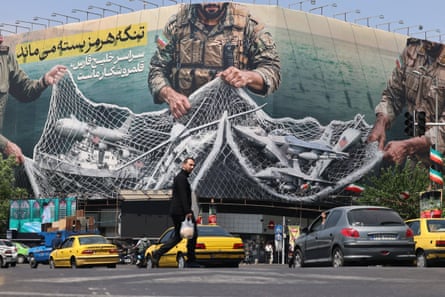
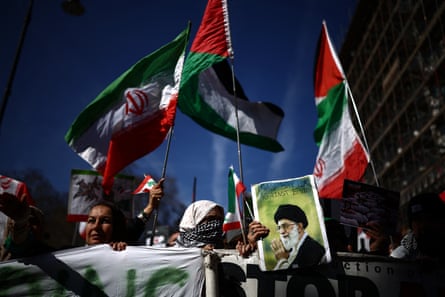
For Iran, weakened, impoverished and yet emboldened, the path is unclear. Tehran may yet have to make concessions in the talks on its nuclear programme, including many it was on the verge of offering in Geneva in February. Iran’s internal politics is unpredictable, but this is a more military government, and at the same time the hardest hardliners in parliament have been marginalised. Ali Vaez from the International Crisis Group says the war has given Iran three presents: ideological revitalisation, the discrediting inside Iran of foreign military intervention, and the repair of its deterrence strategy. The US deployed its ultimate deterrent on Iran – war – and it did not work. In the strait of Hormuz, Iran has realised how geography and globalisation have given it an immeasurable asset, one that it will take years of new pipeline construction to devalue.
Not surprisingly, so universally damning are the global verdicts on Trump’s war that he agonises and balks at signing a document that will in essence get him back to where he started, at a cost of $50bn. His predicament is reminiscent to the one Johnson described to his wife, Lady Bird, in 1965: “I have the choice to go in with great casualty lists or to get out with disgrace. It’s like being in an airplane and I have to choose between crashing the plane or jumping out. I do not have a parachute.”

Indeed, Trump seems in a few short few months to have raced through the various stages of grief that Vietnam caused, according to Gideon Rose from the CFR, writing in Foreign Affairs. Rose says Trump first replicated Johnson’s Vietnam story of “entry, escalation, frustrated stalemate, and negotiations”. Then he moved on to the Nixon-Kissinger administration’s approach of “blustery threats, followed by gradual realisation of the need to extricate via an unsatisfying fudged deal”.
Trump’s repeated threats to blow countries up have an eerie resemblance to Richard Nixon’s delirium, as described by the former White House chief of staff HR Haldeman in his memoirs.
Haldeman recalled Nixon explaining he “could force the North Vietnamese into legitimate peace negotiations. The threat was the key, and Nixon coined a phrase for his theory … He said: ‘I call it the Madman Theory, Bob. I want the North Vietnamese to believe I’ve reached the point where I might do anything to stop the war. We’ll just slip the word to them that, ‘for God’s sake, you know Nixon is obsessed about communism. We can’t restrain him when he’s angry – and he has his hand on the nuclear button’ – and Ho Chi Minh himself will be in Paris in two days begging for peace.”
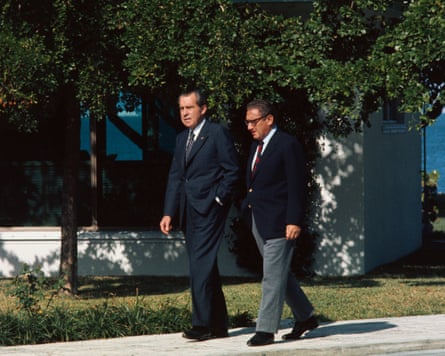
Trump also shares Kissinger’s confidence that countries such as Iran and Vietnam cannot resist indefinitely. “I can’t believe,” Kissinger told his team in 1969, “that a little fourth-rate power like North Vietnam doesn’t have a breaking point.” He wanted an “all-out punishing blow” and his team presented a range of attack scenarios, including use of a nuclear weapon to close the main supply route from China.
For Vietnam, see Iran. Once the regime survived the chaos of the wave of assassinations of its leadership, including the loss of its supreme leader, it sensed it did not have a breaking point. Indeed, resistance is part of the Iranian national culture. Iran’s leadership was also helped by Trump’s fixation on applying the Venezuela model by locating someone within country to take over, rather than fostering a wider, messier general insurrection that might have led to civil war. Implausible as it first sounded, it now seems likely Israel genuinely envisaged Mahmoud Ahmadinejad, the former firebrand president, taking over, preferring him to Reza Pahlavi, the exiled shah’s son.
Trump thought the downfall of the regime would happen within days and make the war self-explanatory. Once that did not happen, he flicked through a Rolodex of rationales, not making a TV address on the war until 2 April. By then, much of his audience, looking at the price of gasoline, was lost.
Johnson at least assiduously felt the need to explain why US servicemen were being sent abroad, and he saw it as his duty to try to unite the country in that cause. Indeed he renounced the presidency once he sensed he was a barrier to the country binding its wounds.
Trump’s fallback message that Iran must never have a nuclear weapon had several drawbacks. Iran had agreed to this in the deal signed in 2015 from which Trump withdrew during his first term. Moreover, Trump said he had completely and totally obliterated Iran’s ability to make such weapons in the attacks mounted in the brief war of June 2025. A succession of experts, including the former EU negotiator for the 2015 deal, Federica Mogherini, tore into Trump’s claim that Iran was close to possessing a bomb. “There was no evidence that Tehran posed an imminent nuclear threat or that diplomacy had been ineffective”.
As a result, she said, the war was illegal and reckless from the very first day. She said: “Analysts predicted that going to war with Iran would empower the country’s most conservative hardliners, spread conflict across the region, and drive global energy prices to punishing levels”. The analysts were largely right.
Increasingly exasperated White House briefers turned to the role Benjamin Netanyahu had played in persuading Trump to attack Iran. In a recent 60 Minutes interview, the Israeli prime minister insisted it was misleading to say he had forced Trump into war. Both he and Trump jointly weighed the risks, but he admitted “the problem of the Hormuz strait became understood as the war went on”.
This was an astonishing admission. Fatih Birol, the chief executive of the International Energy Agency, recently disclosed that in job interviews at the IEA, after asking candidates why they are applying for a job at the IEA, the second is: “What would you do if the strait of Hormuz was closed?” It was a commonplace doomsday scenario, yet the US had to improvise a response.
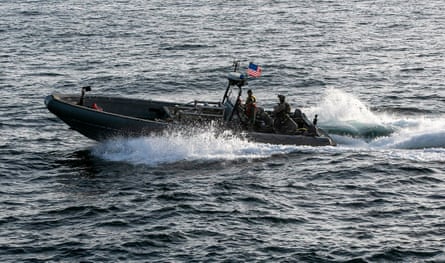
Equally few in the Pentagon foresaw the extent to which Iran would resort to “triangular coercion” – the attack on oil and gas facilities of the Gulf states, as well as exposed US bases.
International relations literature claims this is a relatively unstudied phenomenon whereby “a coercer who lacks direct leverage over a resilient target coerces a third party who does possess leverage over the target, and to whom the target is vulnerable, and manipulates it into a clash of interests with the target”.
In short, the war might not influence the US itself, but it might get to those that could. It was the alliance of Saudi Arabia, Turkey, Qatar, Egypt and Pakistan that last weekend foreclosed Trump’s return to conflict. They can now hold the reins in the Middle East, and it will be the relationship they can forge with Iran, independent of the US, that matters.