3 months ago
65
3 months ago
65
Famously, according to the advertising slogan anyway, Guinness is good for you. But for the past couple of years, Guinness has been practically inescapable.
Backed by its owner Diageo’s £2.7bn marketing war chest, the brand has shaken off its “old man” reputation, becoming a staple of gen Z pub culture, exploiting its Instagrammable colour scheme and social media trends such as the “splitting the G” drinking game.
The resulting increase in younger drinkers and women catapulted its market share in pubs to a new high of 17.5% in 2025, helping it retain top spot as the nation’s top-selling beer, with more than 2m pints pulled every day.
Such has been the clamour for the black stuff that pubs across the country triggered a panic in the run-up to Christmas 2024, when some reported a shortage and introduced rationing.
However, enterprising upstarts are increasingly muscling in, fuelling a boom in independent brewers of “nitro” stout.
Nitros take their name from the nitrogenation process, pioneered by Guinness in the 1950s, in which the beer is infused with the gas, alongside carbon dioxide. This innovation produces the creamy mouthfeel and the “cascading” white head that marks out Ireland’s most famous export from other mass-market beers.
Guinness is by far the dominant player in the nitro stout category. However, independent brewers, including Titanic Brewery in Staffordshire and Anspach & Hobday in London, have shown that a rising tide of dark-umber liquid can lift all boats.
Their aim is not to flatter Guinness by imitation but to provide an alternative that drinkers might prefer.
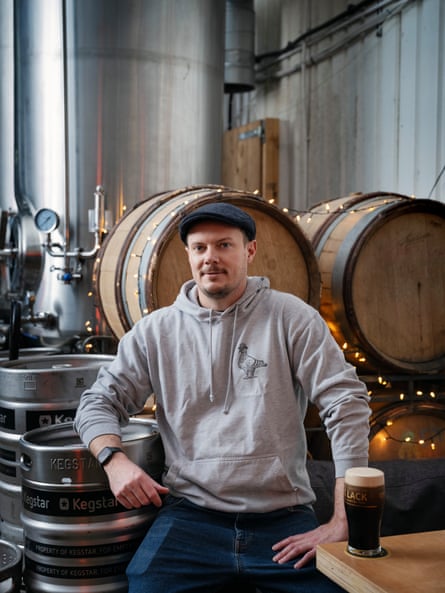
“A lot of brands haven’t used an original take on the recipe, they’ve just tried to make it as close to Guinness as possible,” says Jack Hobday, a co-founder of Anspach & Hobday. “Heineken tried it, BrewDog have tried it, and Camden [owned by the global brewing company AB InBev]. That’s been a mistake.”
Anspach & Hobday’s strategy has been to celebrate its own local heritage. Few dispute that Ireland is the global home of nitros – Heineken-owned Murphy’s and Guinness’s Diageo stablemate, Kilkenny cream ale, among them. However, Hobday points out that, while Guinness was founded in 1759, London’s history is just as integral to the development of dark beers.
Porter, the predecessor to stout, derived its name from the inky ale drunk by London workers who ferried goods around the city in the early 18th century.
This origin story was front of mind when, during the Covid lockdowns that plunged independent brewers into existential crisis, Anspach & Hobday decided to brew a nitro. The result, London Black, packs a punchier, more complex flavour profile than Guinness, he says, with richer notes of coffee and dark chocolate.
In the space of five years, it has grown rapidly to account for 70% of the brewery’s production, winning unlikely fans in the process.
“There’s nothing better than having an Irish person coming to our taproom and saying they love London Black,” Hobday says. “If you want a Guinness, have a Guinness – but we’re not trying to be that.”
Any such attempt would be unrealistic. Anspach & Hobday brews about 500,000 litres of London Black a year, which is some way ahead of even a well-known brand such as Murphy’s, which brews closer to 6,000. By comparison. Guinness makes about 1bn litres (1.8bn pints) every year.
Anspach & Hobday celebrated its second ever shipment to China last year. Contrast that with Guinness, which demonstrated its continent-straddling firepower by signing a deal to sponsor Premier League football.
Despite predictions that Guinness may be starting to lose its newfound cultural cachet, when Diageo was rumoured to be plotting a sale of the brand earlier this year, the estimated price tag put on it was £8bn.
Shortage rumours – the source of which is unclear but which certainly help feed the Guinness hype machine – now crop up on a regular basis. The only way to slow the Guinness juggernaut, it seems, is to steal it – exactly what thieves did that year, purloining a consignment from a logistics depot.
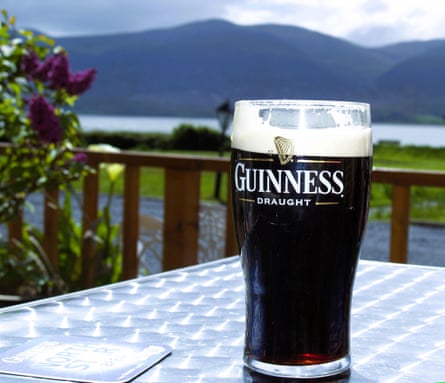
However, the independents are growing, too, nibbling at the edges of the Guinness territory and darker beers into the mainstream. Statistics from Siba, the trade body for indie brewers, found that 80% of its members now brew a stout or a porter, more than the 60% which brew a lager.
The value of “craft stout” sold in pubs by its members, including non-nitrogenated versions, more than doubled last year. Berkshire’s Siren Craft Brewery now brews a nitro, simply called Nitro Stout, for Marks & Spencer.
Titanic Brewery was an early exponent of nitro stouts and has found competing with the biggest player in the market hard going at times.
“Every time we’d gain a foothold in the free trade, we’d find that Colin demands his pint of Guinness and the landlord comes under pressure to go back to Big Bland,” says Titanic’s managing director, Keith Bott.
Titanic “soldiered on”, taking Guinness off the bar at its own small estate of pubs and serving its nitrogenated True Stout instead.
Its fruit-flavoured Plum Porter, the brewer’s bestselling beer, is also nitrogenated as of the beginning of 2024 and has been taken on by the Castle chain of pubs, owned by the UK’s largest hospitality company, Mitchells & Butlers.
“It’s an opportunity to try something that pours like Guinness but has a completely different flavour profile,” Bott says. “It’s about how we convince consumers to try something that might be a bit more challenging.”
The Devonshire Arms in London’s Piccadilly lays claim to selling the most Guinness of any pub in the UK or Ireland. Its proprietor, Oisin Rogers, thinks that competition matters less than conviviality in a these anxiety-inducing times.
“It’s non-political, it’s non-divisive,” he says. “People are craving shared experiences. Guinness has reappeared and completely taken over the sessionable booze market.
“Long may it keep going as a conversation starter and a point of interest for people. Especially the younger ones, to keep talking to each other.”