3 months ago
58
3 months ago
58
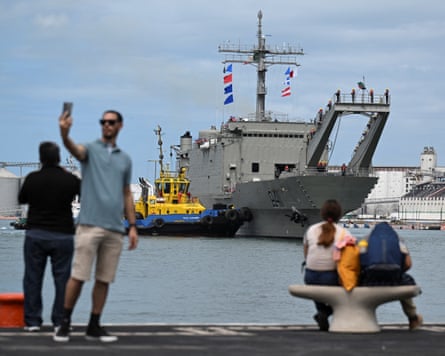
The Cuban Interior Ministry has said that border guards killed four gunmen and wounded six more on a speedboat bearing a Florida registration off Cayo Falcones in Cuba’s Villa Clara province.
The rare clash off Cuba’s coast, which took place on Tuesday, comes at a moment of heightened tensions between the United States and Cuba during an oil embargo that has led to an energy and humanitarian crisis on the island.
One border guard was injured in an exchange of gunfire, according to the ministry.
The Cuban government did not immediately specify the nationality of the gunmen who were killed and injured.
The Cuban embassy in the US said in a post on social media: “In the face of current challenges, Cuba reaffirms its determination to protect its territorial waters, based on the principle that national defense is a fundamental pillar of the Cuban State in safeguarding its sovereignty and ensuring stability in the region.”
The confrontation happened in an area where gentle farmland gives way to the Florida Straits in bleached beaches under swaying palms.
The scattered keys offshore are highly militarised as it is a common spot for Cubans seeking to escape to the US to launch their rafts, and also for people smugglers to land in fast boats.
There were several incidents in 2022, at the height of Cuba’s migration crisis. In June of that year, off Bahía Honda to Havana’s west, Cuban officials said they returned fire against a trafficking boat, killing one. That October, survivors said their boat was rammed by the coast guard nearby. Seven migrants died, including a two-year-old girl, Elizabeth Meizoso.
It is almost exactly 30 years to the day since the Cuban air force killed four people when it shot down two small planes belonging to Brothers to the Rescue, a Cuban exile group who were dropping leaflets on Havana. They claimed they were helping people flee the island.
That event, in which Carlos Alejandre, 45, Armando Costa, 29, Mario De la Peña, 24, and Pablo Morales, 29, died, ended a thaw between the US and Cuba.
The US soon increased its sanctions on the island through the Helms Burton Act that allows US companies that had property confiscated during the 1959 revolution to sue foreign companies using those properties.
It is one of the stickiest issues between the countries now, and two such cases are now being heard by the US supreme court. There are also moves in the US to bring charges against the former Cuban president Raúl Castro for the Brothers to the Rescue killings, in the hope of creating a similar pretext for intervention used for the abduction of Nicolás Maduro in Venezuela.
The Trump administration has moderately eased an embargo on the delivery of oil from Venezuela to Cuba due to the growing energy and humanitarian crisis on the island that has been exacerbated by a US blockade.
The Treasury Department on Wednesday said it would now allow American and some international companies to resell Venezuelan-origin oil and petroleum products in Cuba, opening a potential lifeline between Cuban households and private businesses that have been devastated by the cutoff of fuel imports from Venezuela.
The unusual guidance was made in “solidarity with the Cuban people” and was targeted at efforts to “improve living conditions and support independent economic activity”, the Treasury Department said.
Tensions have soared between Washington and Havana since the US launched an operation in January to capture Maduro, removing one of Cuba’s chief allies in the region.
Administration officials led by the secretary of state, Marco Rubio, the son of Cuban immigrants and a hawkish opponent of the communist Cuban government, have called for additional US pressure on Havana at a time when the US is flexing its muscle throughout Latin America.
The US cut a major lifeline to Cuba after its operation to capture Maduro, taking control of the export of Caracas’s substantial oil production. Before the raid against Maduro, Venezuela was a key supplier of oil to Cuba. The US has also threatened to slap tariffs on other critical suppliers such as Mexico to halt deliveries of oil and fuel to Cuba.
It is not yet clear how the new guidance will be enforced. The directives from the US Treasury and Commerce departments said that oil and petroleum products could be sold to businesses and private households but not to any government institutions, effectively relying on the Cuban government to respect the arrangement.
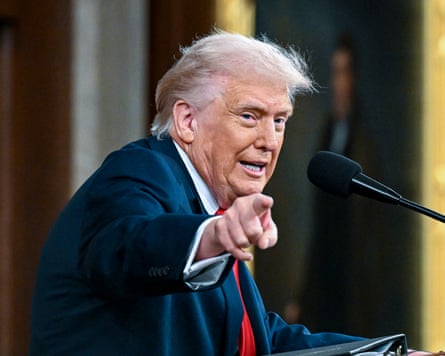
“This favourable licensing policy is directed towards transactions that support the Cuban people, including the Cuban private sector (eg, exports for commercial and humanitarian use in Cuba),” the guidance read, but banned transactions with “the Cuban military, intelligence services, or other government institutions”.
The embargo has led to an acute energy crisis on the island. Much of the country is affected by blackouts which can last from 12 to 20 hours a day. Regional leaders have warned that the blockade and resulting economic crisis could affect migration, security and economic stability elsewhere in the Caribbean.
Mexico’s foreign ministry announced on Wednesday that it had sent a second shipment of humanitarian aid on Tuesday, including beans and powdered milk. Canada for the first time also announced it provide would US $6.7m in food aid through the UN, rather than the Cuban government.
“This is Canadian foreign policy,” said Canadian foreign affairs minister Anita Anand. “We are focused on the humanitarian situation.”
The announcement came as Rubio was reassuring leaders at a meeting of the Caribbean Community (Caricom) on St Kitts and Nevis. The Jamaican prime minister and the outgoing Caricom chair, Andrew Holness, has said he supports “constructive dialogue between Cuba and the US aimed at de-escalation, reform and stability”.