3 months ago
69
3 months ago
69
In Britain we tend to separate political and popular theatre. The genius of Dario Fo, who was born 100 years ago on Tuesday, is that he brought them together in his multiple roles as dramatist, actor, director and designer. Along with his wife, Franca Rame, he took satire to the people and in plays such as Accidental Death of an Anarchist and Can’t Pay? Won’t Pay! he achieved a global reach that justly earned him the Nobel prize for literature in 1997.
You could say that protest and performance were in his genes. His father was a stationmaster and part-time actor whom he joined in wartime resistance to the Nazis in northern Italy, helping to smuggle Allied soldiers across the border to Switzerland. He became famous, however, in 1962 when he and his wife fronted a weekly TV variety show that attracted huge audiences: an engagement that was abruptly ended when they refused to accept censors’ cuts.
Eventually they formed their own theatre company, Nuova Scena, which in 1969 gave the first performance of Mistero Buffo, Fo’s much-travelled one-man show. Inspired by medieval texts, it satirised the ceremony, hierarchy and mysticism of the Catholic church. In one sketch, Christ was seen kicking pope Boniface VIII up the backside for his decadence and corruption, and when Fo performed Mistero Buffo on the box it was condemned by the Vatican as “the most blasphemous show in the history of television”.
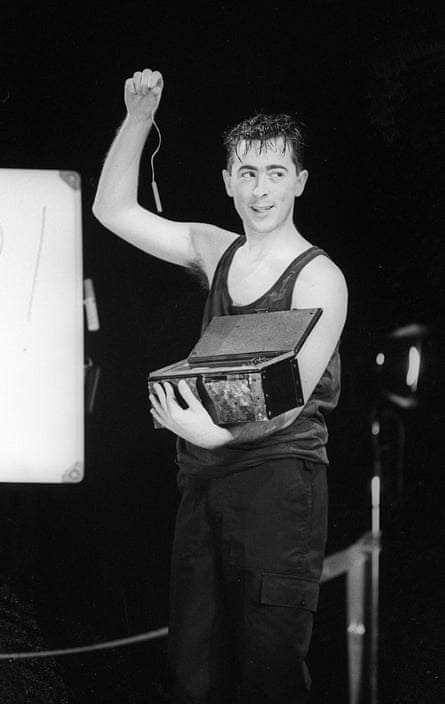
It was Fo’s plays, however, that injected new life into political theatre. The most famous remains Accidental Death which derived from the case of a Milanese railway worker who was falsely accused of planting bombs and who “fell” out of a fourth floor window at police HQ. I still remember the first London production with Alfred Molina, looking like Tommy Cooper on speed, giving a brilliant performance as the revolutionary figure who poses as an examining magistrate reopening the case. When the play was revived in 2023, in a Sheffield Crucible production that transferred to the West End, Daniel Rigby was just as breathlessly funny and the work had not dated one jot: we were reminded that in the UK more than 3,000 people had died in police custody since the play’s premiere in 1970.
While seamlessly blending comedy and ideology, one of Fo’s great gifts was providing juicy roles for actors. In Trumpets and Raspberries, which reached the West End via Watford, Griff Rhys Jones gave a virtuoso performance as a communist shop-steward who becomes facially indistinguishable from the Fiat boss, Gianni Agnelli, after the latter has undergone plastic surgery. There were good verbal gags (“At 14,” said Agnelli, “I was given a cowboy outfit – and I’ve been running it ever since”) but it was the sight of Rhys Jones switching from the goggle-eyed worker to the mummified tycoon that suggested we were watching a politicised Feydeau farce.
From an interview I did with Fo in London in 1983 two things stand out in the memory. One is, for all their popularity, just how much harassment Fo and Rame had to put up with over the years: aside from provoking the wrath of both the Catholic church and the Communist party and being subject to physical intimidation, they faced 45 prosecutions from the Italian police. The other thing to hit me was that for Fo, who died in 2016, comedy was a means to a political end. “At the root of everything I write,” he told me, “is tragedy. One must never forget that Accidental Death involves a man who has been thrown out of a window, and that Can’t Pay? Won’t Pay! hinges on a man who is starving. You must always be aware of this reality. The laughter is simply a means of making the audience confront the problem.”
It was a salutary reminder that Fo, while being one of theatre’s great entertainers, was also a man with a mission and that was to make us confront cruelty, injustice and oppression in all their forms.