3 months ago
77
3 months ago
77
Mayasa Mandia, a recent graduate living in the small Danish town of Kokkedal, will be voting for the left in Tuesday’s general election – but it won’t be for Mette Frederiksen’s Social Democrats.
The 23-year-old, a practising Muslim, says that under Frederiksen’s government far-right commentary has become normalised in the Danish mainstream. She has seen this, she says, at her own university, where there were discussions about banning prayers.
“There are more important issues to talk about than the skin tone of someone or whether or not they wear a scarf on their head and whether that scarf is reflective of our Danish values or not,” said Mandia.
But, under Frederiksen’s centrist coalition, anti-immigrant rhetoric and Islamophobia have become increasingly commonplace in Danish politics, she feels.
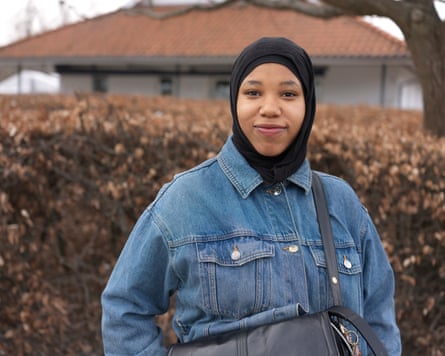
On Tuesday, in an election expected to give Frederiksen a third term as prime minister, Mandia will be giving her vote to one of the leftwing parties hoping to form a “red bloc” coalition with the Social Democrats.
Unusually in a continent where far-right forces are making unprecedented inroads, polling for the anti-immigration Danish People’s party (DPP) is relatively low – the party is forecast to garner about 7.5% of the vote, with smaller parties of a similar bent predicted to pick up a further 9%. Many feel that is not because their ideas have been vanquished, but because they have been co-opted by Frederiksen’s centre-left.
The prime minister’s hardline immigration policies – she came into government in 2019 saying she wanted to cut asylum seeker numbers to zero – have attracted global attention and inspired similar approaches across Europe, including in Sweden and, more recently, the UK. Domestically they have been stalling the growth of the far right, while at the same time pulling rightwing rhetoric and extremist ideas leftward into the mainstream, say analysts.
When, on the campaign trail, Frederiksen said she did not want Denmark to receive any refugees from Iran, which is under attack from the US and Israel, Mandia felt the prime minister was courting those rightwing voters. The difference in her approach to those fleeing war from Ukraine, she said, was “hypocritical” – and telling.
“We should be open to give asylum to them the same way we open to give asylum to western people affected by war,” she said.
Kokkedal, which lies north of Copenhagen in Zealand, became a DPP flashpoint back in 2012 after news spread of a decision by a housing association to not have a Christmas tree but spend money on a celebration for Eid. The association was accused of waging a “war on Christmas”.
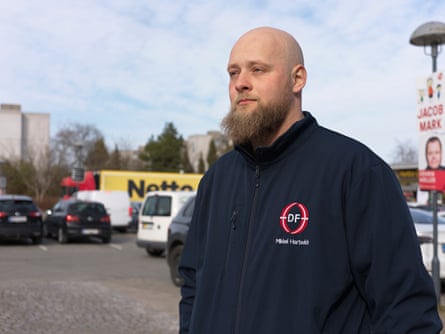
Flyering outside a branch of Lidl on Monday afternoon, close to the Egedalsvænge housing estate, DPP candidate Mikkel Hartwich said the row had contributed to his attraction to the party.
“We have to make sure that Denmark is still for the Danish guys and girls, and if you have to come to Denmark you have to contribute,” he said, holding a basket of mini Haribo sweets. “You have to be careful about what we are and you have to help with a lot of stuff.”
Michala Clante Bendixen, who runs the refugee advisory group Refugees Welcome Denmark and is Denmark’s country coordinator for the European Commission’s Migrant Integration Hub, said: “What we have seen is the Social Democrats copying the nationalist parties, especially the Danish People’s party (DPP), and every time they try to meet them, the nationalist parties will just take it one step further, then accuse the Social Democrats of not doing anything.”
The overall effect, she said, had pushed the whole of the political spectrum right on the issue of immigration. “What used to be extreme ideas that were not taken seriously by the major parties are now mainstream ideas in Denmark. So they have pushed the whole scene to the right.”
This was also reflected in polling, she said. “The general population in Denmark used to be very open-minded and tolerant compared to other countries in Europe, but now surveys show we have changed.”
Rune Stubager, a political science professor at Aarhus University, said that with the exception of 2015, when they exceeded 20%, “immigration-sceptic” parties had not been able to grow beyond about 15% of the overall vote.
“Had the mainstream parties not moved, I would have expected the immigration-sceptic parties to grow like we’ve seen in other countries where mainstream parties have not tightened immigration regulation to the same extent,” he added. “So, in that sense, they have not suppressed the immigration-sceptic parties, but they have prevented them from growing beyond a certain segment of the electorate.”
Frederiksen has been widely predicted to continue as prime minister after the election, but the last Verian poll, published on Monday, predicted that neither the red nor the blue bloc would be able to form a majority without the Moderates, putting the Moderates leader, Lars Løkke Rasmussen, in the position of kingmaker.
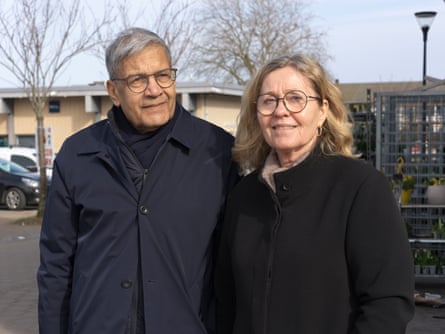
Pensioner Mohammad Iftikhar, 71, said he planned to vote for the Social Democrats. He liked Frederiksen, he said, particularly for her handling of the Greenland crisis when Donald Trump threatened to acquire the Arctic island.
The former university worker, who is from Pakistan and used to live in the UK, said it was no good Britain trying to copy Denmark’s immigration policies because it is so much bigger. “This is a small country,” he says. “They have eyes on everything. They can help everyone. Not in England.” His wife, Hanne Iftikhar, 62, who works for the union 3F, said the current coalition had done well, but that Frederiksen had gone “a little too far” on immigration.