4 hours ago
5
4 hours ago
5
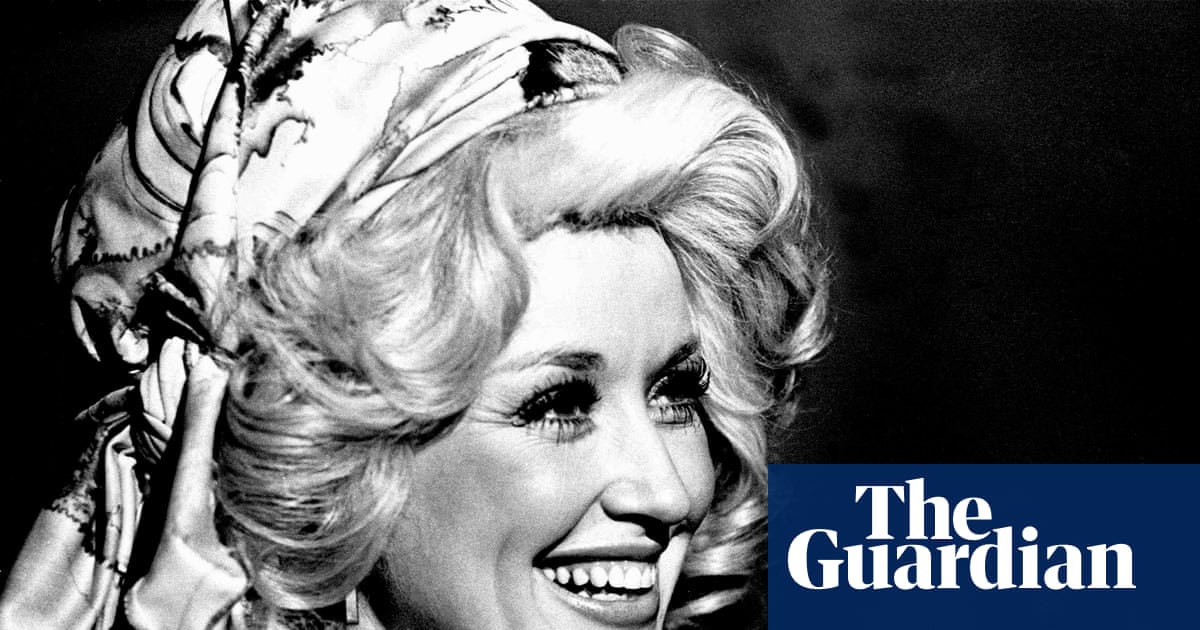
There are an awful lot of singers who take a shot at movie stardom. Most of them start out playing singing ingenues and trail off a few movies later, after their limitations become clear, the novelty wears off or their interests wander back to music. Dolly Parton, who died on 25 August at the age of 80, had the barest outline of such a film career: She had a big hit out of the gate with 9 to 5, endured a sizable flop about a decade later with 1992’s Straight Talk signaling the end of her movie phase, and had a couple of minor postscripts in the years that followed – more cameos-as-herself than fully fleshed-out roles. (Presumably she was busy releasing over a dozen albums, making countless TV appearances, sending books to children, and funding vaccine research, among other endeavors.) Yet within a modest filmography consisting of just half a dozen leading roles in theatrical releases (and more than one widely regarded as a minor disaster), she showed more genuine screen presence than countless other multihyphenates.
Maybe it helped that Parton introduced herself on screen in a non-musical role. Well, almost: 9 to 5, a 1980 workplace comedy where she starred alongside Lily Tomlin and Jane Fonda, did yield a number one charting theme song, the Oscar-nominated tune of the same name. (The titular theme from Fame won, but which one still gets played on the radio more often?) The movie itself, where Parton plays an office secretary whose piggish boss (Dabney Coleman) lusts after her and whose co-workers (initially including Tomlin and Fonda) suspect, incorrectly, that she has given in to his desires, is a far more relatable comedy, sort of a neo-screwball-meets-women’s-picture with an additional early-‘80s feminist spin.
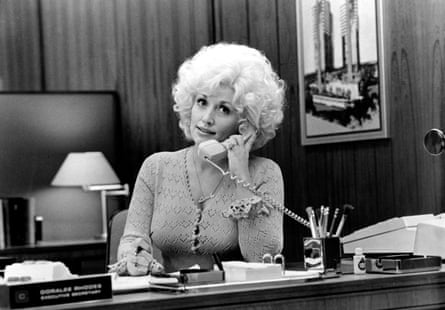
The trio of Tomlin, Fonda and Parton wind up bonding over their horrible boss – and eventually kidnapping him, with crowd-pleasing results. Another movie might have played the presence of the famously beautiful Parton around a workday office as something of a joke. But while 9 to 5 is quite funny, it has no choice but to take Parton’s character seriously, because her performance has such immediate, innate sweetness and sincerity. That’s not all there is to it, though; the introduction and establishment of her good-hearted patience is chased with a spitfire scene where she threatens to shoot Coleman in a way that would turn him “from a rooster into a hen”. She goes on to perform fine comic teamwork with Tomlin and Fonda. She has too much personality (and that distinctive twang) to let you entirely forget you’re watching Dolly Parton, but like a lot of more prominent movie stars, her work fuses her well-known public persona with the particular character at hand in a convincing, hooky way. If this had been her only movie, it would have been ample evidence of her big-screen worthiness.
Parton ended the decade with another non-musical hit burnishing that reputation: the 1989 comedy-drama Steel Magnolias, which again placed her in an all-star cast, this time including Sally Field, Shirley MacLaine, Olympia Dukakis, Daryl Hannah, and a young Julia Roberts. It would be easy enough to assume, based on her two biggest movie successes, that her fortunes were lifted by acting alongside various luminaries. But the truth is, Parton rose to meet the level of her more experienced co-stars. Most of the movies that seemed more specifically designed to play to her strengths weren’t as successful, for her or others involved. Perhaps most prominently, The Best Little Whorehouse in Texas followed 9 to 5, and shared with it director Colin Higgins. Given that pedigree, and arriving during a decade light in lavish musicals, it seems like this one should have been a genre highlight that would solidify Parton’s film career. Instead, she described the making of the film, which teamed her with the ever-mercurial Burt Reynolds, as a “miserable, spirit-numbing ordeal” in one of her books.
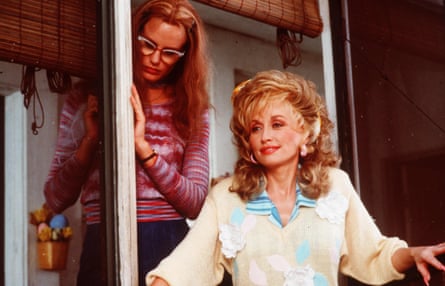
At least misery doesn’t exactly come through on screen in the movie itself, which was reoriented from its Broadway origins to focus more on Parton, as the madame in charge of the film’s house of ill repute, and Reynolds, as the local sheriff who’s been secretly wooing her for years. Parton provides rays of good cheer amidst a lugubrious interpretation of what’s supposed to be light entertainment – a fusion of tediously reheated ‘50s-style big-musical spectacle and ‘70s-style smut-snickering.
Again Parton inhabits her character by feeling at least partially like herself; years later, she’s about the only element of the movie that feels timeless. It helps that she contributed two of her own songs to the movie version of the musical: the cute duet Sneakin’ Around, performed with Reynolds, and a new version of her classic I Will Always Love You, which became a signature movie song … but not from this movie. Instead, Whitney Houston’s cover was a smash hit from the soundtrack of her film The Bodyguard in 1992, the same year that Parton had her last starring vehicle for ages, the little-seen comedy Straight Talk. Parton might have consoled herself that at least that project didn’t involve her singing with Reynolds or Sylvester Stallone, who starred opposite her in the ill-fated 1984 musical romance Rhinestone.
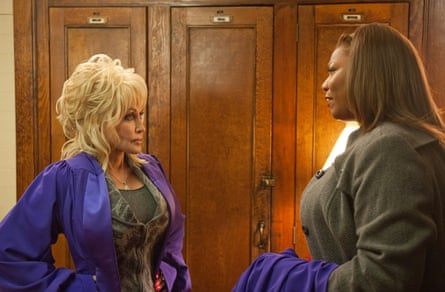
Parton’s best musical film came much later, and to less attention: The 2012 film Joyful Noise, where she was matched with another unusually successful musician-turned-actor. Queen Latifah plays a new choir director who reluctantly teams with the pastor’s recent widow (Parton) to kick their singers’ Christian-themed competitive singing up a notch. It’s pure formula stuff, but Latifah and Parton are fun to watch together – especially for the chance to see Parton sing again on screen, as a character who, despite her cartooniness, has a more human dimension than the embodiment of angelic presence, whether guardian or literally heavenly, that she tended to understandably inhabit for cameo parts.
Joyful Noise was an outlier for the last three decades of Parton’s life – her first film lead in 20 years and her last to be released in theaters. (She had a Netflix movie, Dolly Parton’s Christmas on the Square, in 2020.) But from its inclusive version of Christian values to its playful jokes about her character’s plastic surgery, it represents Parton well even as it allows her some space to play a character distinctive from those in 9 to 5 or Steel Magnolias. She wasn’t a master of disguise; as a movie star, she certainly had a preferred character type. But while that type might have had elements of Marilyn Monroe comic bombshell, Doris Day sunniness, and young Barbra Streisand scrappiness, the end result, in movies good and bad, was pure Dolly: impossible to imitate, easy to love.