2 months ago
43
2 months ago
43
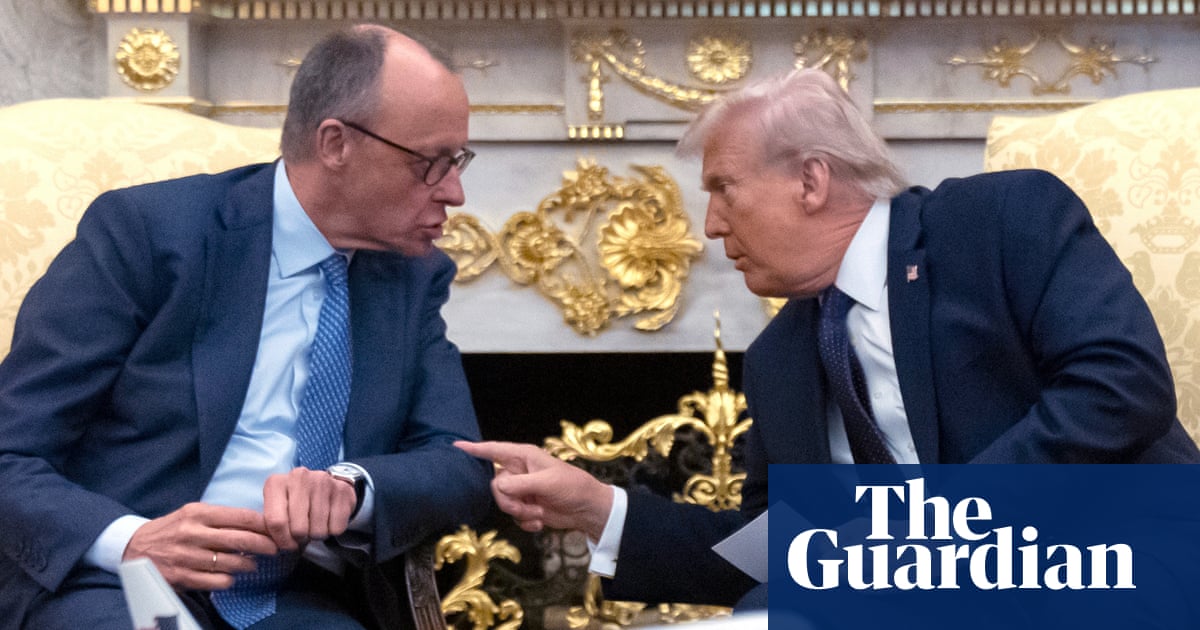
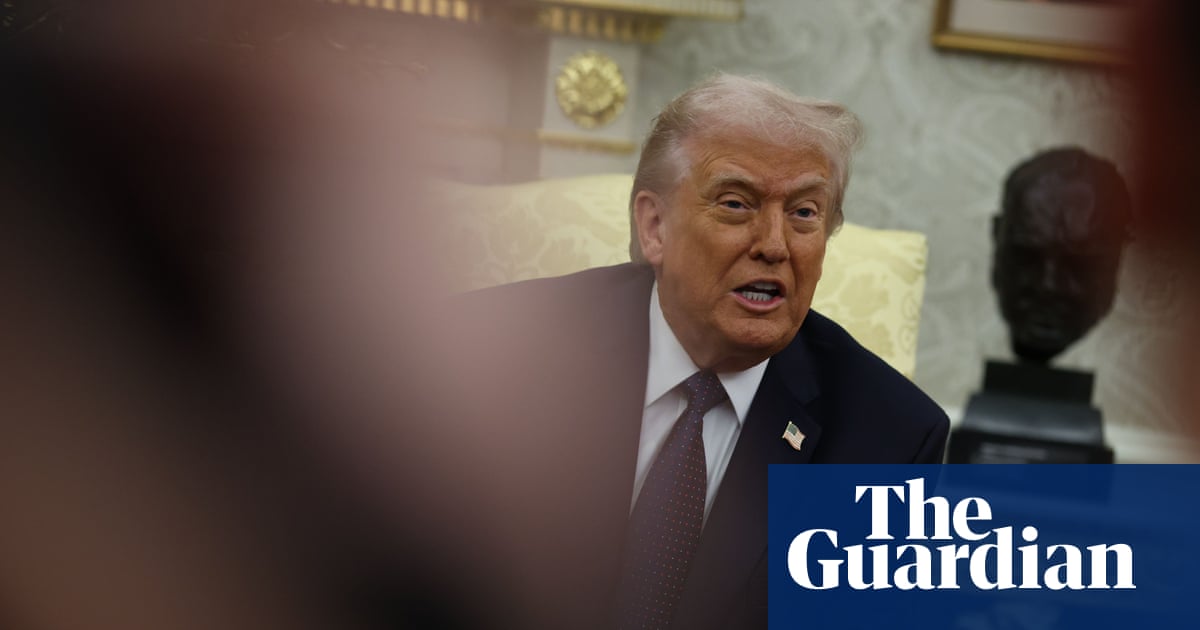
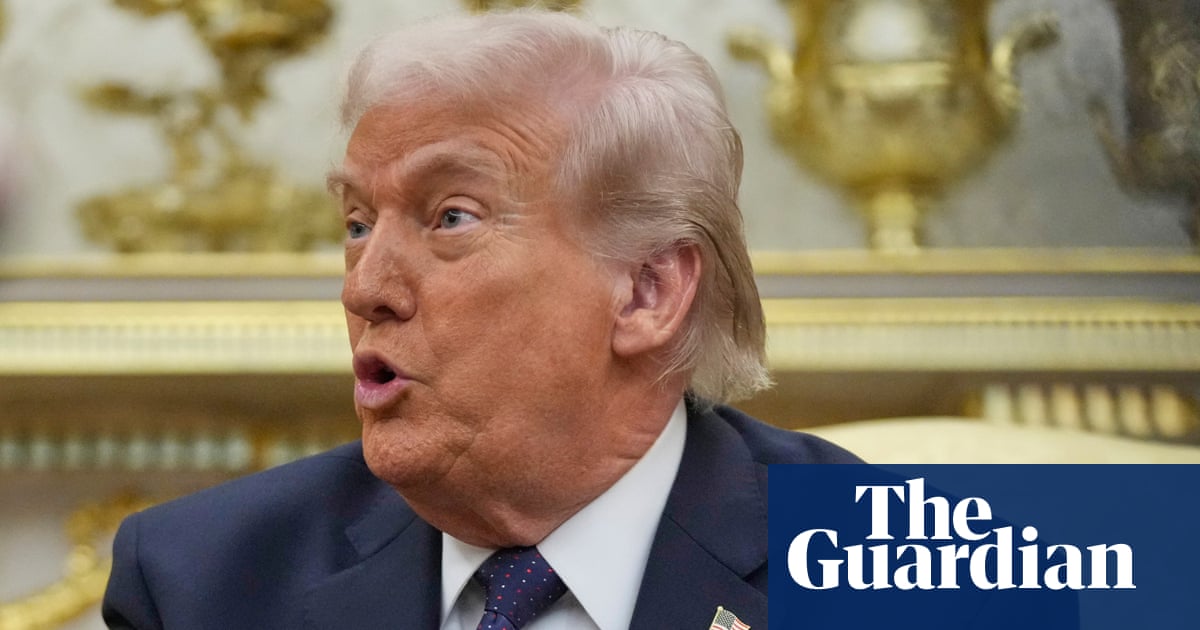
When are we going to get the message? I joked a few months back that, when it comes to Donald Trump, Europe needs to learn from Sex and the City’s Miranda Hobbes and realise that “He’s just not that into you”. After this past week, it’s clear that understates the problem. Trump’s America is not merely indifferent to Europe – it’s positively hostile to it. That has enormous implications for the continent and for Britain, which too many of our leaders still refuse to face.
The depth of US hostility was revealed most explicitly in the new US national security strategy, or NSS, a 29-page document that serves as a formal statement of the foreign policy of the second Trump administration. There is much there to lament, starting with the sceptical quote marks that appear around the sole reference to “climate change”, but the most striking passages are those that take aim at Europe.
China and Russia, which you’d think the US would see as genuine strategic threats worthy of serious attention, are addressed flatly and with relative brevity. It’s Europe that gets Team Trump’s blood up, against Europe that it unleashes its rhetorical firepower. It warns that economic stagnation, “censorship of free speech and suppression of political opposition, cratering birthrates” and above all, migration, raise “the stark prospect of civilizational erasure”.
You don’t need advanced decryption software to work out what that means. The NSS worries that soon some European countries “will become majority non-European”, which can only be a euphemism for non-white. Any doubt on that score was dispelled by the rambling speech the president delivered in Pennsylvania on Tuesday, in which he mused on how the US only takes people “from shithole countries” such as Somalia, asking plaintively: “Why can’t we have some people from Norway, Sweden … from Denmark?”
Perhaps this would not much matter if it merely confirmed that Trump and his circle view Europe through the same culture war lens that they apply to the US, blaming migration, DEI and “woke” for enfeebling societies that were stronger when they were solidly white and Christian (their understanding of “European”). But this is not merely a Fox News rant. It’s a plan.
The NSS makes clear that the Trump administration will not stand idly by as Europe allows itself to become “unrecognizable in 20 years or less”. It plans to join the fight, backing those far-right, ultranationalist parties it hails for their “resistance”. It says that “the growing influence of patriotic European parties” is cause for great optimism and the US will do what it can to help Europe “correct its current trajectory”. In other words, the US is set on pursuing regime change in Europe and will be throwing its weight behind the likes of Germany’s Alternative für Deutschland or AfD, France’s National Rally and, no doubt, Reform UK.
Trump’s defenders have sought to argue that the administration has no problem with Europe per se; it’s the European Union it can’t stand. A Europe of individual, sovereign nation-states would, they say, find a warm embrace in Trump’s Washington. It just so happens that that’s the precise preference of one Vladimir Putin, who has regarded the weakening or breakup of the EU as a strategic aim for decades. No wonder the Kremlin lavished praise on the new US plan, which it was delighted to see aligned with “our vision”.
Maybe talk of visions is too grand. Perhaps what leads Washington to share Moscow’s low opinion of the EU is not philosophy but something more basic. Note how a chorus of Trump officials chose to restate their anti-EU stance, always in the loftiest terms of course, straight after Brussels had slapped the former Trump appointee Elon Musk with a €120m fine for “deceptive” practices on his X platform. Could it be that what Trump and his acolytes really dislike about the EU is that it’s one of the few forces on the planet that can curb their power? The EU has muscle, and that alone infuriates the likes of Musk and Trump, especially when the common thread running through this second Trump term is the desire to remove or weaken any restraint on his ability to act. Far better a loose grouping of 27 states he can divide and conquer than a mighty bloc working together.
The motive hardly matters: whether the US regards the EU as an enemy for transactional or ideological reasons, it now sees it as an enemy. That much should have been clear within weeks of Trump returning to the White House, and certainly by February when he gave Volodymyr Zelenskyy a dressing down in the Oval Office. But now that the US government has spelled it out in black and white, it is incontrovertible.
The trouble is, Europe’s leaders still cannot quite face this painful new truth. The head of Nato, Mark Rutte, ominously announced on Thursday that “Russia has brought war back to Europe” and that “We are Russia’s next target.” He feared that too many don’t feel the urgency of the threat. But he failed to mention that, in this new war, Nato’s most powerful member, the US, has picked a side – and it is Russia.
Note how the US is piling the pressure on Ukraine to accept armistice terms congenial to Moscow, instructing Kyiv to withdraw even from those parts of the Donbas region that it still controls, with no guarantee that Russian forces would not simply move in and seize the vacated land. Via an interview with Politico, Trump told Ukraine it had to “play ball” since Russia had “the upper hand”.
Rutte warns of war, urging Europe to prepare itself, yet he has nothing to say about the one-time ally across the Atlantic now turned foe. On the contrary, only a few months ago the Nato boss was literally calling Trump “daddy”.
Few embody the contradiction more fully than Britain’s own Keir Starmer. He prides himself on his solidarity with Zelenskyy, but remains silent as Trump demonstrates his solidarity with Putin. The prime minister knows that the defence of Ukraine requires combining Europe’s military capabilities, yet last month he allowed the collapse of a plan for the UK to join a major European rearmament effort. The UK government had wanted to take part in the €150bn (£130bn) scheme, boosting Britain’s defence industry in the process, but balked at the entrance fee.
This week, Starmer ruled out rejoining the EU customs union, explaining that he didn’t want to unravel the trade deal secured earlier this year with the US. It’s the same choice, made over and over again, putting the US relationship ahead of the European one, even as the signals could not be any clearer: this love is unrequited.
It’s come to something when the sharpest geopolitical voice in Europe belongs to the pope. Leo criticised Trump for “trying to break apart” an Atlantic alliance that remained essential. In the current climate, even naming the problem counts as a radical act. Now it’s time for those leaders who do not speak in the name of God, but for the peoples of Europe, to be as brave.
-
Jonathan Freedland is a Guardian columnist
-
Do you have an opinion on the issues raised in this article? If you would like to submit a response of up to 300 words by email to be considered for publication in our letters section, please click here.