2 months ago
46
2 months ago
46
The survey of the new releases that my colleagues and I have enjoyed most in 2025 differs in one significant respect from the lists of previous years. This year’s top ten contains no operas. There has been a profound change in record companies’ policies of how and what they record. The glitzy, studio-based opera recordings of the last century now seem impossible to contemplate, and even releasing audio-only recordings taken directly from live opera-house performances often seems less viable than issuing DVDs of the same productions.
Some specialist labels devoted to specific areas of the operatic repertoire continue sterling work: operas feature prominently in Bru Zane’s mission on behalf of neglected French composers, while Opera Rara continues to crusade for forgotten, mostly 19th century, mostly Italian, scores which this year included the original 1857 version of Verdi’s Simon Boccanegra. Other companies continue to find treasures in Europe’s apparently inexhaustible baroque archives, while, on its own label, the London Symphony Orchestra has continued to release Simon Rattle’s Janáček series taken from his concert performances with the orchestra at the Barbican, the latest release being Jenůfa. If full-length operas are notably scarce in the schedules of the major companies, two exceptions this year were Decca’s release of the Oslo-sourced Flying Dutchman, with Lise Davidsen and Gerald Finley, and Deutsche Grammophon’s Lady Macbeth of Mtsensk, part of Andris Nelson’s Boston-based Shostakovich series, both of which proved less than overwhelming.
Other areas of the recorded repertory have continued to expand in their own, often cheerfully haphazard, ways. While the central symphonic repertoire generally remains oversubscribed, so that, say, a new cycle of Beethoven symphonies has to have a selling point other than its intrinsic musical worth, some composers do seem immune to overcrowding: at least two high-profile Mahler cycles are under way, and though the latest instalment of Semyon Bychkov’s series with the Czech Philharmonic, the Third Symphony, was disappointingly pallid, Simon Rattle’s account of the Seventh, with the Bavarian Radio Symphony was anything but, and belongs among the finest versions of this perplexing work available on disc.
The series of recordings of mostly British music from John Wilson and his Sinfonia of London often revisit well-explored territory, too, but the quality of the orchestral playing is invariably so high it justifies the release itself. The superlative standard of the performances on their own label from the Berlin Philharmonic under Kirill Petrenko similarly needs no excuse, but this year’s Schoenberg collection is exceptional even by the usual Berlin standards, for it includes an outstanding account of a real rarity, the oratorio Die Jakobsleiter, a torso which, as Petrenko shows, contains some of the greatest music of Schoenberg’s freely atonal period during the first world war.
As in almost every year, there are more superlative discs of piano music than can reasonably be included in a roundup such as this. There was no room, for instance, for Alice Sara Ott’s affectionate survey of John Field’s Nocturnes, Bertrand Chamayou’s glittering Ravel tribute or Tamara Stefanovich’s coruscating accounts of 20th-century piano sonatas by Shostakovich, Eisler, Bartók and Boulez. And the release on disc of the performance of Rachmaninov’s Third Piano Concerto with which Yunchan Lim won the 2022 Van Cliburn competition to launch himself internationally is a document for posterity, while Pierre-Laurent Aimard’s performances of a generous selection of the miniatures in György Kurtág’s Jatékok, recorded in the composer’s presence, have an unrepeatable authority.
Though there were plenty of concerts paying tribute to Pierre Boulez on his centenary, there were surprisingly few new discs marking the event, though Quatuor Diotima’s first ever recording of the final version of Livre pour Quatuor, and especially the coupling on Bastille Musique of the rarely recorded Éclat/Multiples and Sur Incises, were important additions to the Boulez discography. Luciano Berio’s centenary was shamefully neglected, both in the concert hall and on disc, but the Diotima’s recording did offer another birthday tribute that was equally significant, equally definitive, as they marked Helmut Lachenmann’s 90th birthday with impressively authoritative accounts of his three string quartets.
Andrew Clements
Our top 10 albums of 2025
1. Schoenberg: Violin Concerto, Verklärte Nacht, Die Jakobsleiter/Berlin Philharmonic/Petrenko
(Berliner Philharmoniker)
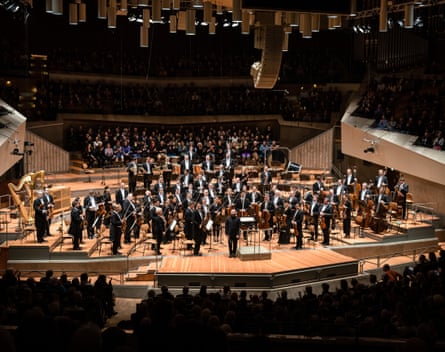
“An impressive collection … in a superb account of the Violin Concerto, the soloist, Patricia Kopatchinskaja, turns what can sometimes seem a rather four-square, dutifully conventional piece into something constantly surprising.” Read the full review.
2. Mahler: Symphony No 7/Bavarian Radio Symphony Orchestra/Rattle
(BR Klassik)
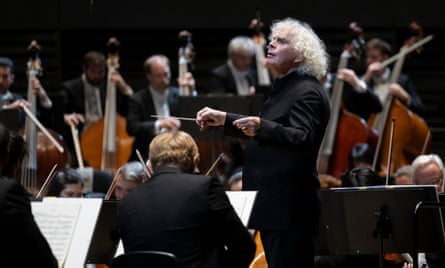
“It’s the sheer brilliance of the BRSO’s playing that grabs the attention, every detail and instrumental effect shiveringly vivid, and all perfectly captured in sound that is so much better than either of Rattle’s earlier versions.” Read the full review.
3. Kurtág: Játékok/Pierre-Laurent Aimard
(Pentatone)
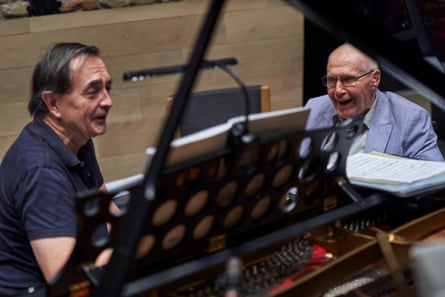
“Whole worlds of expression are encapsulated in just a few bars, and listening to Aimard’s exemplary performances provides as important an insight into Kurtág’s very personal musical thinking as any of his larger-scale, more ‘public’ pieces. Játékok is one of the major achievements of the last half century, and Aimard is the perfect guide.” Read the full review.
4. Tree/The Hermes Experiment
(Delphian)
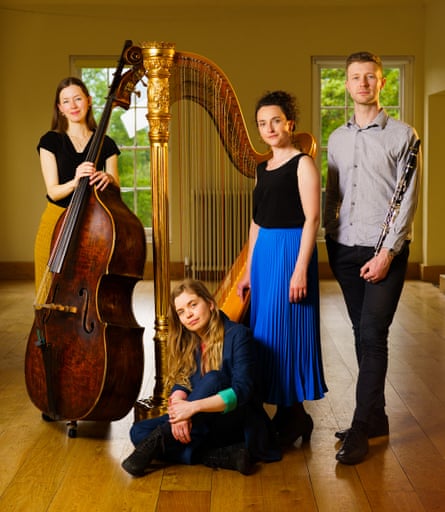
“Beautifully thought through and rewardingly eclectic … the Hermes Experiment have become a liberating force in contemporary music.” Read the full review.
5. Boulez: Éclat/Multiples/Collegium Novum Zürich/Wendeberg
(Bastille Musique)
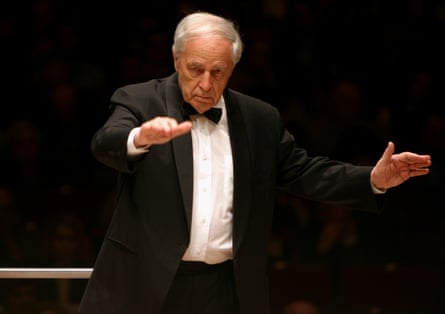
“Fabulous precision and incisiveness.” Read the full review.
6. Ravel: Nash Ensemble
(Onyx)
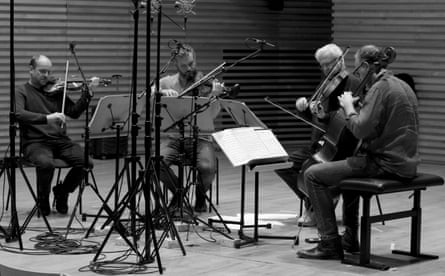
“It’s the attention to the details of colour and tone that really makes these performances take flight, the instruments combining to catch the dazzling light and intriguing shade that are such intrinsic features of Ravel’s music. Read the full review.
7. Walton: Symphony No 1; Cello Concerto, etc/Sinfonia of London/Wilson
(Chandos)
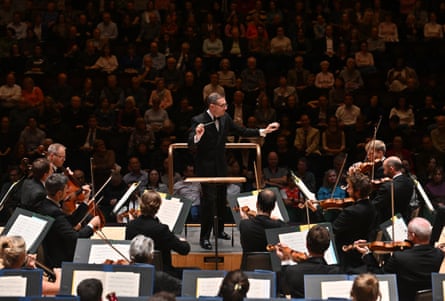
“John Wilson’s vital, yet penetrating, approach combines with the orchestra’s trademark lustre to fit Walton’s music like a glove.” Read the full review.
8. Bach: The Well-Tempered Clavier, Book 1/Mahan Esfahani
(Hyperion)
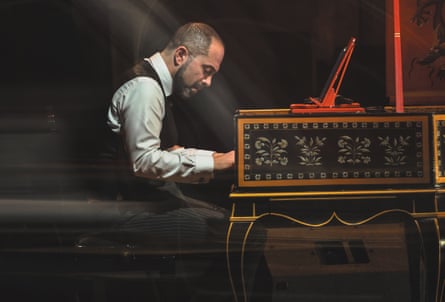
“Esfahani comes to these pieces with his own very personal ideas on how they should be presented and performed and there is a real sense in his performances of each prelude and fugue defining its own dramatic space … his choice of tempi is uncontroversial, his shaping of each movement wonderfully lucid.” Read the full review.
9. Lachenmann: String Quartets/Quatuor Diotima
(Pentatone)

“Quatuor Diotima have worked on this music with the composer for 25 years, and their performances have tremendous authority and confidence, drawing you into their strange and compelling world. It’s a fascinating experience.” Read the full review.
10. Chromatic Renaissance: Exaudi
(Winter & Winter)
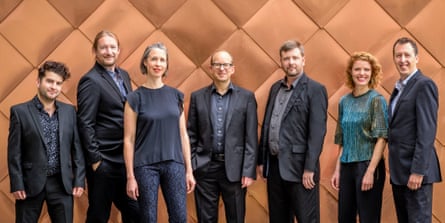
“This is a disc that becomes more fascinating and involving the more you listen to it.” Read the full review.
We also gave five-star reviews to:
Organised Delirium: Piano Sonatas by Boulez, Shostakovich, Bartók and Eisler/Tamara Stefanovich
(Pentatone)
“Stefanovich’s dazzling performance conveys a sense of total command and authority in every bar.” Read the full review
Víkingur Ólafsson: Opus 109
(Deutsche Grammophon)
“Traditionalists may wince, but for those prepared to go along with him, Ólafsson opens up a transcendent vista on to a brave new world.” Read the full review
Iberia/Royal Liverpool PO/Hindoyan
(Onyx)
“An hour and a quarter of musical sunshine.” Read the full review
Yunchan Lim: Rachmaninov Piano Concerto No 3
(Decca)
“Every technical challenge in the keyboard writing seems to be effortlessly negotiated, yet the brilliance is … always part of a bigger picture, without ever diminishing the thrill of such astonishing command.” Read the full review