3 months ago
85
3 months ago
85
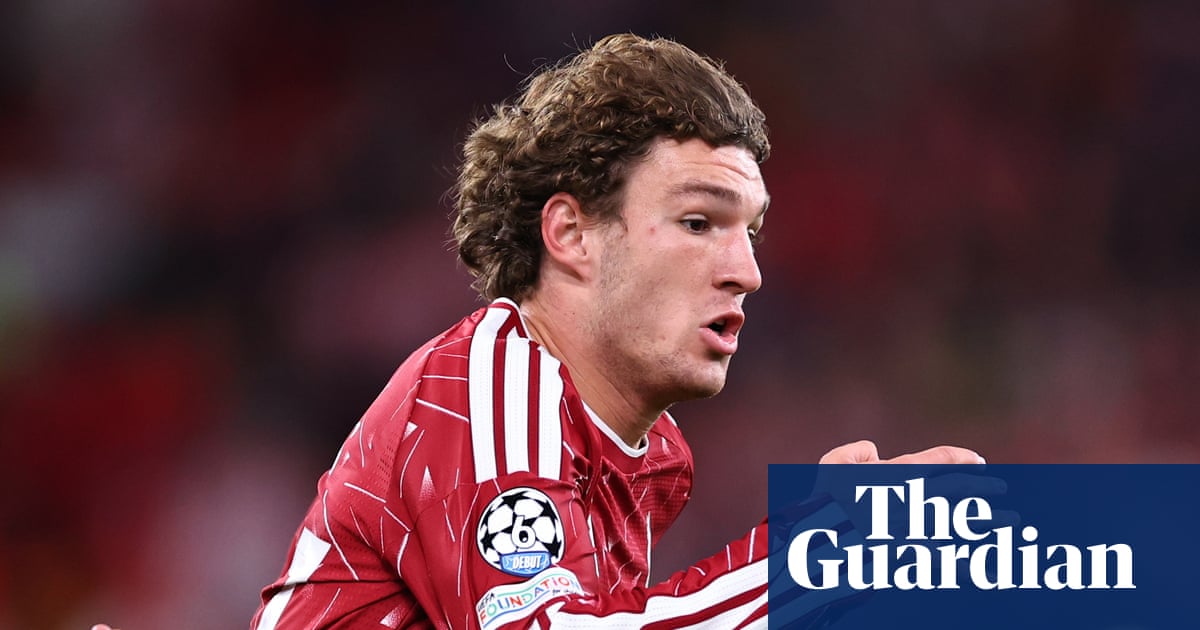
Mohamed Salah’s parting shot was to demand the return of heavy-metal football at Liverpool and, in their reasoning for sacking Arne Slot, the club’s hierarchy have concurred. It is a brutal, but understandable decision to remove Slot on the basis that Liverpool’s style must evolve, though responsibility for this season’s regression does not rest with the coach alone.
Liverpool have never sacked a title-winning manager on their title-winning watch before now. Sir Kenny Dalglish’s dismissal came in his second, League Cup-winning spell in charge. That underlines the scale of the decision to sack a head coach who won the club’s record-equalling 20th league title 13 months ago and who handled the unprecedented trauma of Diogo Jota’s death with dignity and professionalism last summer.
Slot deserved so much better than the vitriolic personal abuse that subsequently flowed down the sewage pipe of social media from many Liverpool supporters. He also deserved better than to feel he should be separate from the send-offs to Salah and Andy Robertson and the team’s traditional lap of honour after what proved to be his final game as head coach.
But the distance between Slot and the Anfield crowd six days ago, between the Dutchman and the Liverpool team, was symptomatic of the divide that appeared during the campaign. That divide also prompted Liverpool to act after their review into a season that featured 20 defeats in all competitions, including the Community Shield, and the club’s lowest points tally in a decade.
Fenway Sports Group, Liverpool’s owner, persevered with Brendan Rodgers going into that 2015-16 season despite the fans turning beforehand and sacked him in the October. Executives knew they were in a similar predicament with Slot, that the recent toxicity would have re-erupted at the first sign of trouble next season, and have reluctantly taken a different course of action this time.
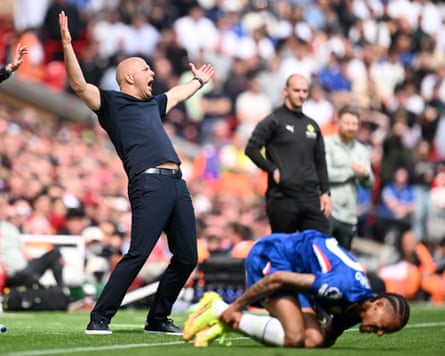
The club statement confirming Slot’s exit is effusive in its praise for his title achievement, his character and his conduct. Rightly so. But Anfield had turned and made its feelings clear in the penultimate home game of the season against Chelsea. It needed much more than the promise of signing a couple of talented wingers this summer to win back the faithful.
Slot struggled throughout the season to rectify Liverpool’s shortcomings at set pieces – their increasing importance in the Premier League at odds with his own approach – and to prevent opponents repeatedly hurting his team from open play. The amount of late goals conceded and in-game collapses invited criticism of the fitness levels.
There was also a distinct lack of leadership and character within the squad. Virgil van Dijk’s despondent admission that Liverpool gave up during their woeful FA Cup quarter-final defeat at Manchester City pointed to a wider malaise. The style of play was ineffective and, worse for an Anfield crowd, it was dull.
Slot was stung by descriptions of his team as boring. He strived for the complete opposite but drifted further and further away from a solution in his second campaign. Even with Champions League qualification secured by the final day’s draw against Brentford, there was little evidence that shortcomings were being addressed. In that respect, Liverpool had to act.
The mitigating factors for Liverpool’s decline were extensive. Jota’s death cast an inevitable pall over the season and the squad. There was an extensive and serious injury list that stretched resources in defence and attack. Having propelled Liverpool to an unexpected Premier League triumph in 2024-25, Salah suffered an unexpected loss of form that disrupted the entire team.
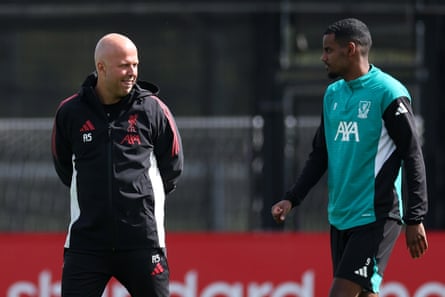
It was Slot’s misfortune to be the one to inform a legend that his time was up. Salah took the news gracelessly and made three public attempts to undermine his boss before leaving, despite being immediately recalled to the starting lineup after the Africa Cup of Nations. The decks have been cleared for Andoni Iraola or whoever Liverpool appoint as Slot’s successor in that regard.
But we must return to the summer that changed everything for Slot and Liverpool, when almost £450m was spent on new signings that made the reigning champions worse. It is here where blame rises above Slot’s role. He was named head coach for a reason. FSG and its chief executive of football, Michael Edwards, did not want a continuation of the all-powerful manager once Jürgen Klopp informed the owners of his decision to step down in late 2023. Slot slotted into the system. He had input into transfers but not to Klopp’s extent.
The most expensive recruitment drive in Liverpool’s history was led by Edwards and Richard Hughes, the sporting director who hired Iraola when he was at Bournemouth and retains a strong working relationship with his agent, Iñaki Ibáñez. They bought a £29.5m wingback, Jeremie Frimpong, for a team that do not operate with wingbacks. They spent all summer pursuing Alexander Isak, prompting the striker to in effect down tools at Newcastle throughout pre-season, before eventually paying £125m for a player who spent the first half of the campaign trying to get up to speed as a result of missing pre-season. And they paid £125m having already acquired Hugo Ekitiké, the only one to impress from an intake that also featured the £116m Florian Wirtz, the £40m Milos Kerkez and the £29m Giorgi Mamardashvili. Luis Díaz was not replaced and attempts to low-ball Crystal Palace over Marc Guéhi backfired badly.
Slot went into his final season with an imbalanced and inadequate squad as a result of decisions taken above him. There were some encouraging nights in the Champions League, along with the misfortune to draw Paris Saint-Germain in the knockout stages for a second successive season, but those moments were fleeting. Salah was not the only established player to endure a downturn in form nor the only one to complain.
Liverpool stood by Slot even after PSV Eindhoven inflicted a ninth defeat in 12 matches on his team, the club’s worst run of results in 71 years, and maintained they were behind their man for the best part of the six months that followed. Ultimately, however, Edwards, Hughes and FSG reached the conclusion they had to get Anfield back onside. And in that respect, and with respect, Slot had to go.