3 months ago
94
3 months ago
94
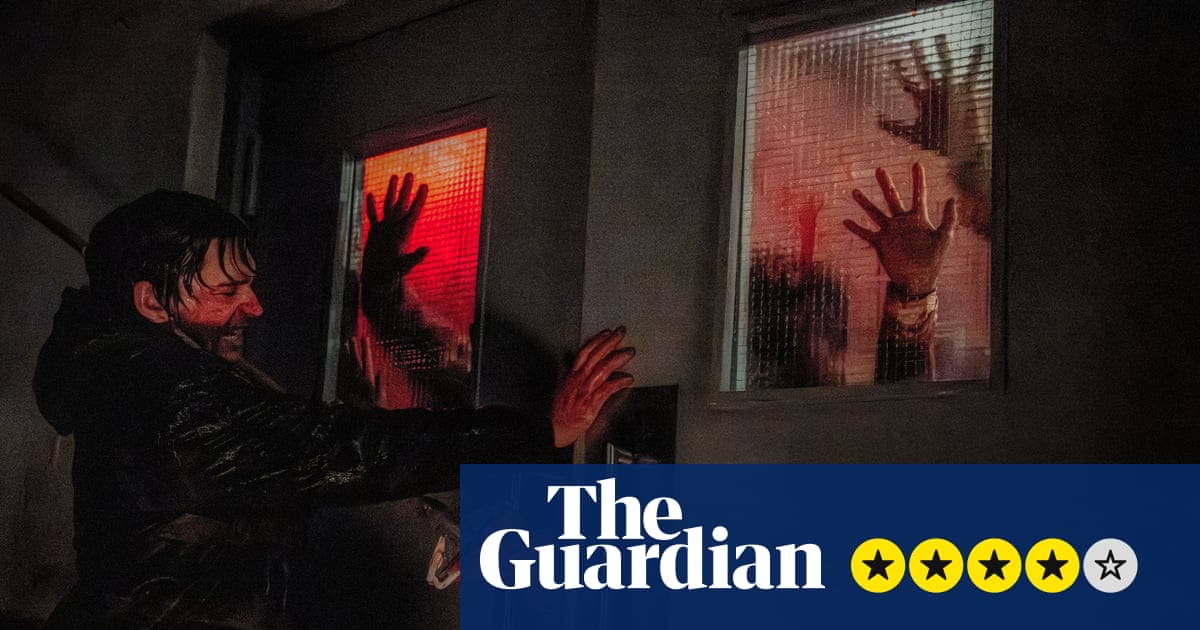
Ahead of the series finale, I didn’t think there was much more that Euphoria could do to shock me. Since season three of the HBO drama picked up its story five years after the group of teens graduated high school, Sam Levinson’s brainchild has made jaw-dropping scenes its raison d’etre. From Cassie (Sydney Sweeney) cosplaying as a dog and making mega bucks on OnlyFans, to Nate (Jacob Elordi) getting his fingers and toes chopped off before being buried alive, and Jules (Hunter Schafer) being mummified in plastic by her sugar daddy, the last eight episodes have demanded our attention in a media landscape where that very thing is valued above all else.
But as I watched the final episode, it once again delivered something unexpected. The 88-minute finale felt like a standalone feature film, with no shortage of biblical references. It even ended with the final words: “May God bless us all.” The sudden pivot into a nostalgic, star-spangled morality is indicative of a confused show that, right up until the last moment, hasn’t been sure what it’s trying to tell us. As a lesson in ethics, it falls flat. Yet looking more deeply, there is something more complicated going on.
On the face of it, the Euphoria finale featured everything you might expect. There were shocking and gruesome deaths, starting with Laurie (Martha Kelly) the monotone-speaking drug boss who hangs herself by leaping off a building when the feds show up to arrest her. Up until now, we’ve never been sure whether the terrifyingly calm drug queen feels anything at all, but right at the end we see that her greatest fear is losing her freedom. (That’s ironic, seeing as she has spent her life trapping drug users into the prison of addiction.)
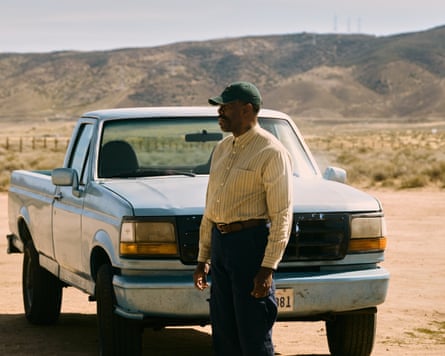
Next we see the most pivotal moment of all. After surviving many near-death experiences – including the finale’s western-style opening, where she’s lassoed by a man on horseback – Rue (Zendaya) succumbs to a fentanyl-related overdose. It’s an understated and predictable end for the character who has struggled with addiction since we met her as a teenager. Remarkably, Rue’s death happens 45 minutes into the 88-minute finale, leaving the show without its lead and narrator. In her absence, the baton is passed to Ali (Colman Domingo), Rue’s sponsor and mentor.
Ali becoming the voice of the show’s final act is odd, to put it mildly, because he’s only ever been a side character. By comparison, Jules – the character who shared the most with Rue – is barely acknowledged, except for a scene where she silently paints a portrait of Rue while her sugar daddy makes a coffee. Cassie, whose highly sexualised quest for online clout has dominated much of the season, is relegated too.
This highlights the central problem with Euphoria’s final season: that it was never sure what sort of show it wanted to be. Levinson was at his best when combining the show’s signature cinematography with an examination of how young people are being groomed by the algorithm into behaving in extreme ways. But his decision to centre a turf war between warring drug bosses Laurie and Alamo (Adewale Akinnuoye-Agbaje) made the show feel more like a gangster movie. It became harder to see what he was trying to say when we kept being dragged into Tarantino-style shootouts.
In that sense, the finale was a fittingly jumbled end. After Rue’s death, we spend almost 30 minutes at Alamo’s strip club, where Ali shows up dressed in a military uniform to avenge Rue’s death. And it’s not that any of these scenes don’t work individually – the showdown between Alamo and Ali was undeniably enthralling – but together it felt like being told a story by an extremely intoxicated person who keeps missing out key details and repeating themselves and jumping forward to the dramatic bits. That narrative style works in the club smoking area, but it’s jarring in a prestige HBO drama. As stunning as Domingo’s performance was, I would have preferred to learn how Jules feels about Rue’s death, or spent more time with Maddy and Cassie. It felt like a particularly disappointing machismo-fuelled end for a show that has always centred relationships between young women.
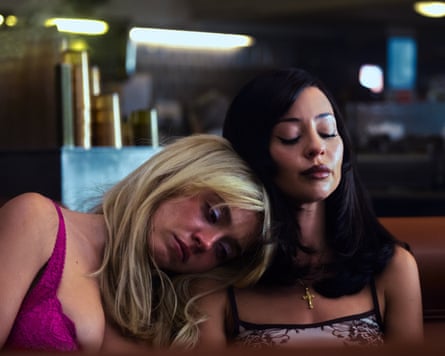
The motif of religion wasn’t what I expected from a show that, especially in its last season, has focused so strongly on a group of young people who have given up pretending that they have any value system whatsoever beyond making money. But perhaps that’s the point? In one of the most poignant monologues, Ali says that “everyone” is complicit in Rue’s fentanyl overdose, from the government to the shipping companies, the dockworkers, the cartels, the cookers, the corrupt cops, the bureaucrats, the non-profits, lawyers and politicians. There’s a parallel here with the online extremes we’ve seen Cassie and Maddy engaging in on OnlyFans, where they worked together to stage Bonnie Blue-style engagement-bait stunts. That’s a media environment that we’re all complicit in, which points to our wider addiction to outrage as we tap, tap, tap for more, more, more.
Beyond the distracting shootouts and drug cartel wars, season three of Euphoria was at its strongest when it reflected the increasingly nihilistic world young people are consuming online, where they’re being raised to believe that they either have to be the hunter or the prey. As the show ends with the American flag rippling in the wind, I was reminded of Trick Mirror – a 2019 book of essays by Jia Tolentino, where she argues that scamming is becoming central to American life. Tolentino writes that to be American is to learn that “one of the best bids a person can make for financial safety” is to get “really good at exploiting other people”. These dynamics are on full display at Alamo’s strip club, where the men treat women like disposable sex toys, or in the influencer sphere Cassie is navigating, where porn meets content creation. Cassie tells her sister that she’s turning her former marital home into a #content house, where OnlyFans performers can stay for free in return for a slice of the profits. In other words: she’s done being the prey.
Perhaps Euphoria’s finale wasn’t a lesson on morality at all, but a study in the hypocrisy of this new, algorithm-infused American Dream. It’s just a shame that, like the season as a whole, you have to look so hard – past so many gratuitous gunshots and subplots – to see what the show is trying to say.