3 months ago
67
3 months ago
67
According to UK Sport, 3,500 people have signed up to audition for their skeleton Talent ID programme in the past three days, an extraordinary surge of interest in what has never been what you might call the most accessible sport.
It is all after Matt Weston and Tabby Stoecker won Great Britain’s 10th and 11th Olympic medals in the sport, continuing a lineage that reaches back to 1928, when it was the winter sport of choice for the most reckless of a set of aristocratic adventurers. The 11th Earl of Northesk won bronze ahead of his teammate, and the pre-race favourite, Lord Brabazon of Tara. It is some legacy. After a century of competition, skeleton is the only Winter Olympic sport in which Britain lead the all-time medal table.
Which figures. Skeleton is, believe it or not, a British invention even though there is not a track or enough snow to dust the hundred or so miles of ski pistes in the country. Like so much else about modern sport, it is all down to the Victorians, who took it up on the natural ice track in St Moritz when the town was a regular stop on the Grand Tour. In the early 20th century, the speed limit on British roads was capped at 20mph. If you wanted to go really fast, you needed to get to St Moritz and the legendary Cresta Run.
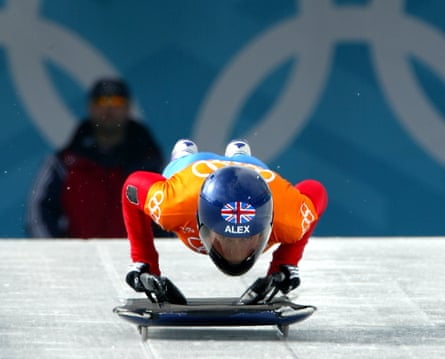
Back then, the Cresta was the only skeleton venue in the world, which is why the sport was included in the programme when Games were hosted in St Moritz. The International Olympic Committee decided to make it a regular event from the 2002 Games in Salt Lake City onwards and the small British federation secured just enough funding from UK Sport to set up a training base and employ the Austrian former world champion Andi Schmid as head coach. It paid off when the former track athlete Alex Coomber won bronze in the women’s event that year.
Great Britain won two medals at those Games and, because the UK had just brought in performance-related funding, Coomber’s bronze meant the programme secured the money it needed to build 140 metres of concrete practice track at the University of Bath and set up a Talent ID scheme. For years, British sliding sports had relied on the close links between that original Cresta set and the armed forces for its athletes, Coomber was a serving RAF member, but now it was opened up to anyone who was fit and willing to have a go.
Which is how Amy Williams, Lizzy Yarnold, Shelley Rudman, Laura Deas, Dom Parsons, Weston and Stoecker came to the sport. Skeleton is well suited to this sort of late take-up. Luge racers go feet first from a seated start, which means it is considered safer at an earlier age, and the racers that excel at it have been doing it since they were children. A skeleton racer, on the other hand, needs three things.
One is explosive launching ability, another is an extraordinary sense of proprioception, the body’s unconscious, eighth sense, that allows them to make the tiny steering adjustments they need to stay on the right line when they are travelling at 90mph. Weston developed his in taekwondo. Stoecker learned hers in circus school.
Here is the awkward bit. The third thing is money. Because a lot of it is all about the kit Great Britain puts more money into all this than almost any other nation. Skeleton got its name because the sled was so rudimentary, but these days the British programme is a very hi-tech endeavour.
UK Sport spent £5.8m on it during this past Olympic cycle and that money paid for the services of the man widely regarded as the world’s greatest skeleton racer, the Latvian six-time world champion Martins Dukurs and all his proprietary sled tech, as well as cutting-edge sleds, suits and training tools. That includes a flight simulator and what Weston describes as “the secret stuff” he has used in his preparation. The money also means, Weston says, “we’re unusual in the way we operate compared to other nations”. GB can afford to run a centralised programme that continues through the summer.
The German team run a similar sort of budget and unlike Great Britain they have the benefit of having four functioning ice tracks to practise on. They also have €50m worth of research and design input, although it is spread between luge, skeleton and bobsled, which they utterly dominate. But some of the other countries competing here are living off scraps.
Skeleton is expensive: it costs just over $50,000 (£36,600) a year to practise it in the US and a lot of the athletes have to raise that money themselves through crowdfunding. They are living off charity in Canada, too, after cuts to the funding for the Canadian federation.
Some of the men and women the British athletes are competing against in Cortina are riding old sleds held together with gaffer tape and because funding for these sports always depends on performance, it all becomes grimly cyclical: the worse you do, the less you get; the less you get, the worse you do.
Money matters. So long as it keeps flowing there is probably another British Olympic champion or two waiting somewhere among those 3,500 volunteers.