3 months ago
80
3 months ago
80
There has been a huge rise in factory-style dairy farming of “battery cows” in the UK as farmers struggle with increasing costs and face selling milk at a loss.
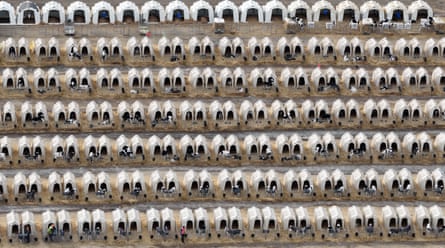
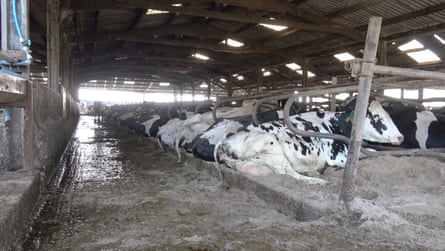
The number of intensive dairy farms that permanently confine some of their cattle indoors has more than doubled in the past 10 years, an investigation by the Bureau of Investigative Journalism (BIJ) has found. Data suggests there are now at least 180 dairy farms where cows have no access to the outdoors, up from about 70 in 2015.
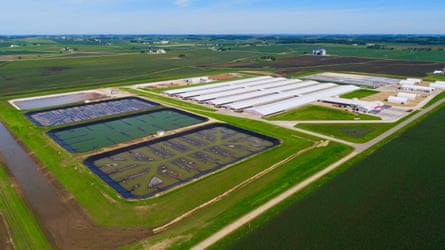
In the same period, there has also been a doubling in the number of “mega dairies”, which house more than 700 cows. There are 40 such farms, the largest of which contain 2,600 cows.
While intensive poultry and pig farms are regulated, large dairy units in the UK are not required to hold an environmental permit. This means the government does not know how many there are, or where.
The number of megafarms is increasing as farmers in the UK struggle to make ends meet. There is evidence of high levels of pollution linked to dairy and beef cattle farms in recent years.
Shortages of essentials including fertiliser, fuel and feed have caused costs to shoot up in recent months. Some farmers have had to sell milk for as little as 28p a litre, despite it costing about 40p a litre to produce.
In the latest crisis to hit the industry, many farmers have said they were forced to “go big” and adopt more-intensive systems to boost productivity. “They feel like they’ve got to do it,” said one farmer, who asked to remain anonymous.
Some of the intensive dairy units have supplied big players in the dairy industry such as Arla, Müller and Saputo that in turn supply UK supermarkets, in some cases raking in huge profits. Arla Group, for example, which makes Anchor butter and supplies branded milk to Asda, recorded a net profit of €415m in 2025.
Danny Chambers, a Liberal Democrat MP, said: “We have a handful of powerful retailers at the top [and] a number of processors and distributors in the middle exploiting the hundreds of thousands of farmers stuck at the bottom. After the more powerful players take their cut, the farmers get whatever is left.”
Using public and industry records, satellite images and drone footage, the BIJ identified 42 factory units across the UK. The major dairy-producing regions of Devon, Cornwall, Dorset and Cheshire were hotspots for factory-style production.
Of the 42 mega dairies, 16 were found to confine at least 1,000 cows. The largest were in Pembrokeshire, Lancashire and Cheshire. The average UK dairy herd is only 160 cows; these farms all held more than 2,000.
Farmers are divided over the direction that parts of the UK’s dairy industry is now taking. Many maintain that these “year-round housed” systems allow greater productivity and enable the cows’ health to be closely monitored. They deny animal welfare and environmental standards are compromised in the units.
But others expressed concern at the increase in so-called “battery cows”. One organic farmer said: “There’s not a close enough connection between consumers [and the way] food is produced on farms.”
Campaigners have raised concerns over the economic impacts on smaller farms, the lack of grazing and fears about pollution.
One dairy farmer said that in the challenging conditions, “the only way to make more money is to produce more milk”. He used to run an intensive unit where he milked cows housed indoors three times a day, but he switched to outdoor grazing, in part because of the stress involved in intensive farming. He has now diversified his business in order to remain viable.
The move towards factory-style dairy production reflects a wider pattern across the UK’s livestock sector over the past decade.
In 2017, an investigation by the BIJ and the Guardian revealed the spread of hundreds of poultry and pig megafarms across the country. A year later, we revealed US-style intensive beef “feedlots” had arrived on UK soil – and that the government wasn’t monitoring them either.
Chambers said: “When cost margins are made so tight by retailers, farmers feel they have no choice but to find every way they can to make the numbers add up or face losing their business entirely.”
He is one of a group of MPs calling for further legislation to ensure fairer treatment and prices for farmers within supply chains.
Tim Lang, a professor of food policy at City University and one of the country’s leading supply chain experts, said the situation was “unacceptable yet normal”.
“The consuming public would be genuinely shocked to learn the returns on dairy work are so low,” he said. “Artisanal producers have tried to build alternative models: shorter supply chains, niche markets, high quality, high welfare. But their products are inevitably more costly.”
The trend toward intensive farming has raised concerns about the welfare of animals housed permanently indoors. Patrick Holden, the head of the Sustainable Food Trust and an organic dairy farmer, said: “The euphemism of ‘fully housed’ should be replaced by ‘battery dairy cows’. We managed to ban battery eggs; why not battery cows? It is shameful that we subject cows … to these conditions of confinement.”
Prof Jude Capper, a livestock expert at Harper Adams University, argued there was no inherently good or bad system. “Although the pastoral image of cattle grazing a sunny, lush pasture is aesthetically appealing, as consumers we often forget that there are just as many days of driving rain, high winds, low temperatures or drought in the UK that can have adverse effects on health and welfare.”
Late last year, the government signalled it would consult on plans to extend its environmental permitting scheme to include dairy farms, as well as “intensive beef” units, in part responding to concerns that the cattle sector was responsible for significant numbers of pollution incidents.
Farms with a permit are subject to more frequent inspections and must take action to mitigate environmental impacts, but farming chiefs have expressed serious concerns over the potential permit scheme extension, saying the additional red tape and costs could be detrimental to farms already struggling to stay profitable.
In relation to concerns over pollution, the Department for Environment, Food and Rural Affairs (Defra) said cattle farms were significant polluters of water and air. It said it would “explore fair and proportionate approaches that seek to maximise environmental benefits and minimise costs and administrative burden for farmers”.
Judith Bryans, the chief executive of Dairy UK, the industry association that represents processors including Arla, Müller and Saputo, said the UK had some of the world’s highest animal welfare, food quality and environmental standards. She said there were rules in place to ensure a fair and transparent milk trade, but that the sector needed to stay financially viable to ensure investments in environmental improvements, processing innovations and the rising costs of doing business.
“Currently there is more milk being produced than the market needs, both in the UK and globally, while wider economic pressures are also impacting the industry. When there is oversupply, prices tend to fall until the market balances again,” she said.
Tesco said all its dairy met welfare standards that exceeded government requirements. It said it used transparent pricing structures to buy its milk, which ensured farmers got consistent and fair prices.
Andrew Opie, the director of food and sustainability at the British Retail Consortium, which represents supermarkets, said: “Retailers take their responsibilities to animal welfare very seriously and they ensure it is a key part of the production standards for all the products they sell. All products must meet the same stringent animal welfare requirements, and our members work rigorously with trusted suppliers to ensure high welfare standards are upheld.
“They are committed to supporting British dairy farmers and have invested heavily in UK agriculture through partnerships, dedicated programmes and additional support. Supply chains are also strictly regulated by the groceries code adjudicator to ensure suppliers are treated fairly.”
Defra said it had a database of all livestock farms in England and kept a record of all their cattle through its “robust” tracing system.
Hayley Campbell-Gibbons, the chief executive of the Royal Association of British Dairy Farmers, said the group was “keen to explore an industry-led approach to reducing pollution incidents, alongside understanding how a permitting approach could feasibly operate and be properly resourced in a sector as large and diverse as dairy”.
She added: “Nobody would disagree that one pollution incident from farming is one too many; it’s about finding the solution that will have the best environmental outcome.”
-
Andrew Wasley is food and agriculture reporter at the Bureau of Investigative Journalism