3 months ago
85
3 months ago
85
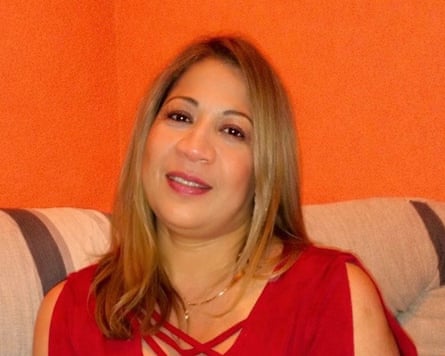
Lauris Saldana has visible scars on her face, neck, arms, hand – and many, many more hidden beneath her clothing. They are a reminder of the horrific attack in 2022 at the hands of her ex-partner that she narrowly survived, an attack in which her mother, Yolanda Saldana Feliz, was killed.
It was an unlawful killing that would have been preventable, a coroner ruled, had the Metropolitan police taken Lauris’s domestic abuse case seriously. Had they come to her aid when she repeatedly begged them for help with evidence her estranged husband was a violent stalker, her “superhero” mother would probably still be alive today.
Earlier this month, the senior coroner for east London, Graeme Irvine, wrote to the home secretary, the mayor of London and Mark Rowley, the Met commissioner, issuing a prevention of future deaths report highlighting a string of serious police failures that led to Yolanda’s killing at the hands of Miguel Angel Florentino.
Lauris met Florentino in her home country, the Dominican Republic, when she moved into an apartment owned by a member of his family in 2016. They got married in 2019 and planned to live in London together, where he had been working. But by the time the paperwork was approved in 2021, she had misgivings.
He would fly into jealous rages and had been hospitalised in Spain, where his mother lived, due to his mental health. He had been in trouble with the law in the Dominican Republic and in Spain.
The relationship broke down, but the visa had been expensive and Lauris wanted to make the most of the opportunity to travel. She asked her mother to come with her, to stay with Florentino.

Yolanda was a “good, good mother” with a kind heart, who had worked as a care home nurse in the Dominican Republic, Lauris told the Guardian through a Spanish interpreter.
“I was just looking forward to starting my life here,” she said. “I was taking lots of selfies [around London].” But Florentino was increasingly aggressive and emotional, and immediately she and Yolanda felt “uncomfortable” in his presence.
She quietly asked the landlord if he knew of other accommodation, and he helped them move to a room in a shared flat in Stratford, where they met other recent immigrants to the UK. They were like “one family”, she says. “The flatmates were very kind. We would share the weekends together.”
It was not an easy life. Lauris worked three jobs as a kitchen porter, sometimes getting home from one job at 11pm and needing to leave three hours later at 2am.
A month later, Florentino had managed to acquire Yolanda and Lauris’s address. “This is where all the problems started,” said Lauris, who was 31 at the time.
The first was that Florentino, 38, had access to her immigration documents, which he tried to use to control her. A solicitor helped her disentangle herself from him. “I had my documents, everything was legal. For a few months I was in peace, he wasn’t bothering me.”
During this time, in March 2022, she got a call from one of Florentino’s housemates, who told her her ex-partner had been arrested for threatening his housemates with a knife. They had hidden in their rooms to escape him. This was when Lauris began to seriously worry about her safety.
After he was released from police custody, he went back to the mental health unit in Spain. Weeks later, he returned to London and his stalking behaviour intensified. “I remember I was very stressed out. I lost some weight and I didn’t want to eat,” said Lauris. “On many occasions he took my phone and broke my phone.”
In August 2022, he was arrested for harassment but was released without questioning. Over the following months he threatened Lauris, and physically assaulted and drugged her. “I was in fear because he was already threatening to kill me,” she said.
Yolanda began walking her daughter to the train station in the hope of protecting her, but he had also threatened Yolanda’s life, believing she was keeping her daughter from going back to him.
Lauris twice went to a police station in person after Florentino’s stalking made it difficult for her to get to work, but the officer told her she needed to contact a different officer.
In heart-wrenching emails to a police officer, which were never responded to, Lauris explained that she was being chased by Florentino, having to hide from him and finding him outside her home when she opened the door to leave for work.
She gathered videos of being chased by him – one only 11 days before the attack – and made records of contacts from more than 24 different numbers he was using. “I was there asking for help by showing proof to the police. And I know in every country, any country, the police has to help with this. Even in my country, they do help you out,” she said.
In each email, one sent three weeks before the fatal attack, she attached screenshots of obsessive, paranoid and threatening messages from Florentino.
She urged the officer to help her get a restraining order or have him deported to Spain, where he holds a passport. She told the officer she was working overtime to make enough money so that they could move house, to somewhere she felt safe. “I can’t take it any more, please,” she begged.
In the early hours of 23 October 2022, Florentino entered the flat – the kitchen door could not be properly locked – made his way to the bedroom in which the mother and daughter were sleeping and launched a savage attack.
Lauris has only a few memories of that day. She thinks the trauma is blocking her from reliving any more. “I remember when he was killing my mother, my mother was really screaming very loudly, and [I was] as well,” she said.
She remembers being slashed with a knife while he held her by the neck on the floor. Her next memory is seeing him go to leave, before returning to kick her twice in the abdomen and in the neck.
Lauris said she remembered him turning back to look at her and her mother on the floor. She stayed as still as possible and held her breath. Did she think he thought they were both dead? “Yes,” she said.
Yolanda sustained 40 stab wounds, which were unsurvivable. She was declared dead at the scene.
Lauris was taken to hospital, where she spent more than two months undergoing surgery. One of her few memories from hospital is the doctors telling her sister they may have to amputate her arm because the tendons were severed and she had no movement.
It was remarkable Lauris survived the attack and that, painfully, over time, she regained the use of her arm. Almost four years on, it is the death of her mother, who was 53, that Lauris will never recover from.
Florentino robbed her of any justice by killing himself later that day. His body was found in a canal in Newham, where police had last seen him on CCTV, five days after he murdered Yolanda.
During the two-week inquest into Yolanda’s death, failing after failing was uncovered. These included handing Lauris’s case to a trainee officer who had not even started on the team and had not been trained on domestic violence cases, not responding to Lauris as a victim of crime, and letting Florentino walk free without questioning him, despite all the evidence that he was a dangerous man.
“I remember when I was in court, the police, they were there, and they were not feeling guilty,” she said. “They were always justifying themselves, saying they had too many other things to do, they were busy. But they don’t know my pain, how I was feeling in that moment, trapped and having no way to come out of there. It was the failure of those people – they neglected those things – and then my life totally changed.”
A police apology has still not arrived.
Her solicitor, Robert Hamill from Gold Jennings, said: “They had two weeks at the inquest to apologise and no one apologised.
“Yolanda died at the hands of a domestic abuser who bears the responsibility for this appalling crime. But her tragic death has also exposed a series of shocking inadequacies in the investigation of domestic abuse and the safeguarding of vulnerable victims.”
The gaps in policing that led to Yolanda’s death could easily happen to another person, Lauris said. She wonders if it was the language barrier, or the fact they were immigrants to the UK, that meant the help was not there when she needed it.
Despite her extreme trauma, Lauris has been housed in unsafe local authority accommodation that makes it incredibly difficult for her to move on. A neighbour was selling drugs, she said, which meant many men entered the building late at night. “At night I don’t sleep because they slam the door all night.”
But perhaps worse, she can often hear sounds of domestic violence in the building and has called the police a number of times. “I start having flashbacks,” she said.
She added: “I’m not even half of what I used to be before.”
A Metropolitan police spokesperson said: “Our thoughts remain with Yolanda’s family following her death, and officers will be reaching out to them shortly to discuss the mistakes made in the handling of this investigation.
“Since 2022, we have worked to systematically improve the way we investigate stalking and domestic abuse offences. Our public protection teams have increased by 565 officers and staff to manage the high levels of reported domestic abuse offences and to better enable officers to safeguard victims and survivors, target predatory men, and use innovative tactics to detect and prevent harm.
“We are committed to continuing this work will examine the recommendations from the coroner to identify and implement further learnings.”