3 months ago
81
3 months ago
81
If anyone needed a reminder of the enduring cultural clout of the Beatles, the past few weeks have provided a glut. Firstly, there’s the small matter of The Boys of Dungeon Lane, Paul McCartney’s 20th solo album, billed as “an adventurous and limber take on guitar music” by the Guardian.
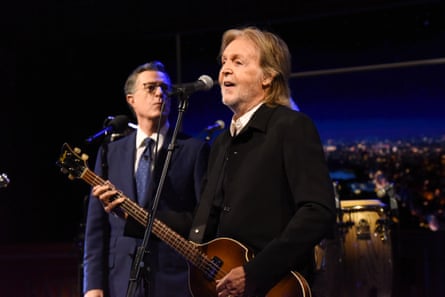
When England announced their World Cup squad, the soundtrack was Come Together, played alongside a film of fashionable young people in New York and a clip of a young, puckish John Lennon. The same week Stephen Colbert was played off from his final episode of the Late Show by a Paul McCartney rendition of Hello Goodbye.
In the less showbiz locale of Felixstowe, 70 people got together to campaign for a “Beatles Day” by recreating the cover of Sgt Peppers, while barely a week passes without a “new” discovery of memorabilia and artefacts connected to the Fab Four.
On the other end of the scale, Peter Murrell, the disgraced former SNP chief executive who admitted embezzlement this week, is a fan – and used party funds to buy a special edition Beatles pen set for £1,475.
Ian Leslie, the bestselling author of John and Paul: A Love Story in Songs, said the UK was in the middle of a new wave of Beatlemania that was reminiscent of the 1990s revival. “We’re only just starting to come to terms with how big a cultural phenomenon they were,” said Leslie, who thinks the group were wrongly measured up against the Rolling Stones for decades.
“That rivalry is irrelevant; they moved on to a plane of their own. You think about Shakespeare: we’re still reading Marlowe and the other Elizabethan playwrights, but the bard is – like the Beatles – in a whole separate category.”
The Beatles occupy a unique place in the British cultural imagination. Their songs have soundtracked lives for the past 60 years, while the band’s friendships, breakups and tragedies provided a psychodrama that still captivates today.
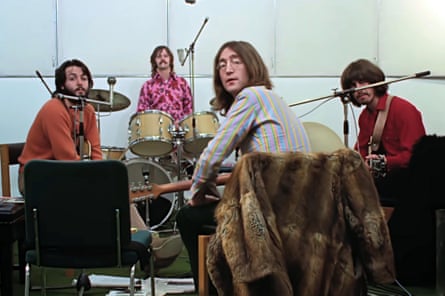
Leslie said the latest wave of interest could be traced back to Peter Jackson’s eight-hour documentary Get Back, which gave viewers an intimate and intense look at the group. No doubt the biggest upcoming Beatles event will be Sam Mendes’ four biopics dedicated to the group’s members, which are due in 2028, looming large over the cultural landscape and looking set to eclipse Jackson’s films in terms of impact.
The Mendes films, each one dedicated to a different band member, appear set to rekindle conversations about the rivalries and partnerships, with Paul Mescal as Paul McCartney, Harris Dickinson as John Lennon, Joseph Quinn as George Harrison and Barry Keoghan as Ringo Starr. Its not the only film project currently in the works: Christian Schwochow’s BBC drama series Hamburg Days is also in production.
The cultural critic Simon Reynolds, whose book Still In A Dream is out in June, said the group’s transformation from pop stars to psychedelic travellers in less than a decade had made them “the greatest adventure that ever happened in pop music”.
They had also embodied a changing Britain that was culturally punching way above its weight. Reynolds said. “Here’s this shabby, worn-out, repressed little culture thousands of miles away that is unexpectedly sparring with and even – I would say, with Stones and Beatles – eclipsing the source nation.”
When it comes to the Fab Four and their portrayal in the films, feelings are already running high. Pattie Boyd, the ex-wife of George Harrison, who will be portrayed in the forthcoming biopics by Aimee Lou Wood, was furious at not being contacted by Mendes or his team.
Leslie said that if the drumbeat of Beatles content felt loud now, it would be turned up to 11 when Mendes’ films were released. “It’ll be like a second wave of Beatlemania,” he said.
“It’s absolutely crazy. They’re a pop band that people were saying, in 1963, would be lucky to last a year. Now 60 years on they’ll be the biggest cultural moment of the year. It’ll be like Barbenheimer all over again.”