3 months ago
83
3 months ago
83
At the cheesemakers in the village of Franois, eastern France, a stream of what looks like runny, beige gloop is being potted, packaged and dispatched for delivery as fast as it can be made. The freezer room, normally piled high with pallets of the product, is almost empty.
For what must be the first time in the history of cancoillotte – a cheese product that until recently was little known outside the eastern Franche-Comté – there was talk of a “rupture” in supplies, and an unprecedented shortage.
France may be what Charles de Gaulle described as an ungovernable country of 246 kinds of cheese, but only one of them can claim to have won the hearts of fitness fanatics and social media influencers.
In just a few weeks, word has spread about cancoillotte – pronounced con-qwy-yotte – among those who want to have their cheese and eat it without melting toned muscles or sending cholesterol soaring.
Unlike most cheeses, cancoillotte is low in fat, high in protein, cheap and until recently something of a niche product outside the Franche-Comté, the region flanking France’s border with Switzerland.
Now, local producers are hoping to capitalise on its sudden success.
Julie Morin, director of the Poitrey la Belle Étoile fromagerie near Besançon, and president of the Association for the Promotion of Cancoillotte, said the sudden demand had taken her and the region’s 22 cancoillotte producers by surprise.
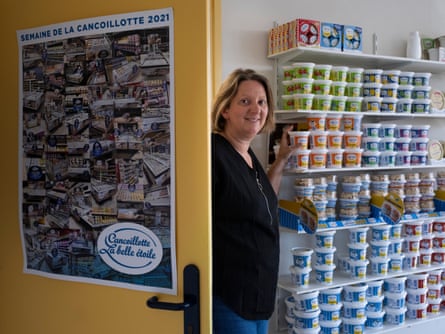
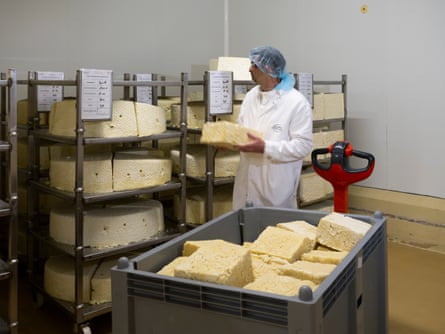
“There’s been a slow progression in sales of cancoillotte over the last seven years, but the influencers have produced a big boom, which we didn’t expect,” said Morin during a tour of the fromagerie established almost 150 years ago.
“What with all the new enthusiasm for the cheese and the May bank holidays we couldn’t produce as much as usual so we had a bit of a shortfall, but we’re making it up.
“Until now, it has been a product that was difficult to advertise. So we are surprised and happy it’s become something of a craze and hoping it will last.”
The boom in sales is the result of social media influencers, particularly those promoting health and fitness, discovering the cheese.
Johan Papz, a content creator with 1.5 million followers on TikTok, said it was “the best day” of his life when he tasted cancoillotte, adding: “My eating has changed forever”.
Pouring a tub of the cheese over a plate of “disgusting” potatoes he said: “How is it scientifically possible that a melted cheese that is so delicious has almost no fat in it? I can eat this and still have these,” he added, lifting his T-shirt to show off his abs.
Influencer Itscindyoff has made 178 TikTok videos lauding cancoillotte and travelled 500km to the Franche-Comté to buy as many different flavours as possible.
The cheese even has its own eating competition. Last year’s winner, Maximilien Reverchon, put away 1.75kg at Larians-et-Munans in the Franche-Comté without the help of bread or biscuits.
Nicknamed “the glue” by some local people because of its sticky consistency, the history of cancoillotte is said to date from the middle ages in the Jura mountains. It went into production around the first world war when it became popular with soldiers on the frontline.
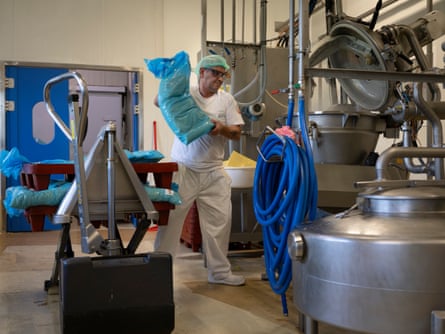
It is made from metton, itself a fermented cheese produced from skimmed cows’ milk from which all fat has been removed to produce butter, cream or other cheeses. What remains is the metton, which is fat free; it is then coagulated, dried and matured until it resembles blocks of crumbly cheese but with little taste. To make cancoillotte, the metton is melted at a high temperature in an industrial pressure cooke. Butter and salt are then added to give the smooth, almost liquid, more flavoursome cheese.
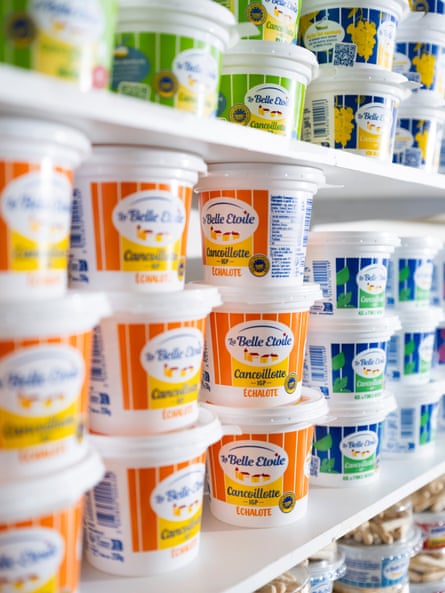
Onion, shallots, mushroom and garlic are often added to the cancoillotte. The resulting cheese is high in protein and, depending on the amount of butter added, has between 7 and 15g of fat. By comparison, mature cheddar has almost 35% fat, edam has 25%, and blue cheese just under 28%.
In 2022, the EU recognised cancoillotte as an IGP – a unique geographical product – meaning the milk from which the metton is made must come from within the specific region.
But the question is: is cancoillotte really cheese? Guardian columnist Emma Beddington referred to it as “a low-fat lactose ectoplasm”.
“Well, we call it a cheese product,” Morin said. “Metton is cheese, but if you add butter and other things, it is technically a cheese product.”
Last year, cancoillotte makers in Franche-Comté region produced almost 6,500 tonnes of the cheese, which is most often eaten melted over potatoes or with local sausage. As a result of interest generated by influencers, this year they expect to produce an extra 500 tonnes, though Morin does not currently export to the UK.
“In fact there are a lot of other uses,” Morin said. “You can have it as an aperitif with dips, you can put it in a quiche, on a pizza, you can heat it or have it cold. We have a pesto cancoillotte you can have with pasta and an onion one that is delicious on steak.”
She added: “In terms of health, it’s not fatty and is rich in proteins, so is obviously good for those who are sporty who can eat it without breaking their diet.”
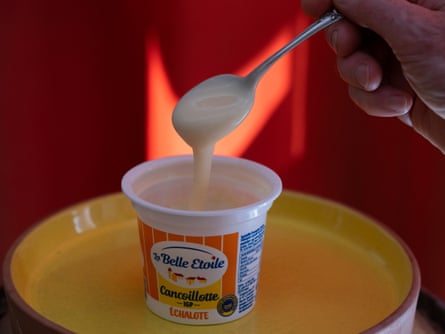
Not everything works. Morin said one producer made chocolate and fruit-flavoured cancoillotte.
She said: “It was a disaster. People just didn’t like them, so it was dropped. Some people said it could be used as a spread on toast in the morning, like Nutella, but it seems it couldn’t.
“But I’m delighted by the craze. It’s a great product.”