3 months ago
90
3 months ago
90
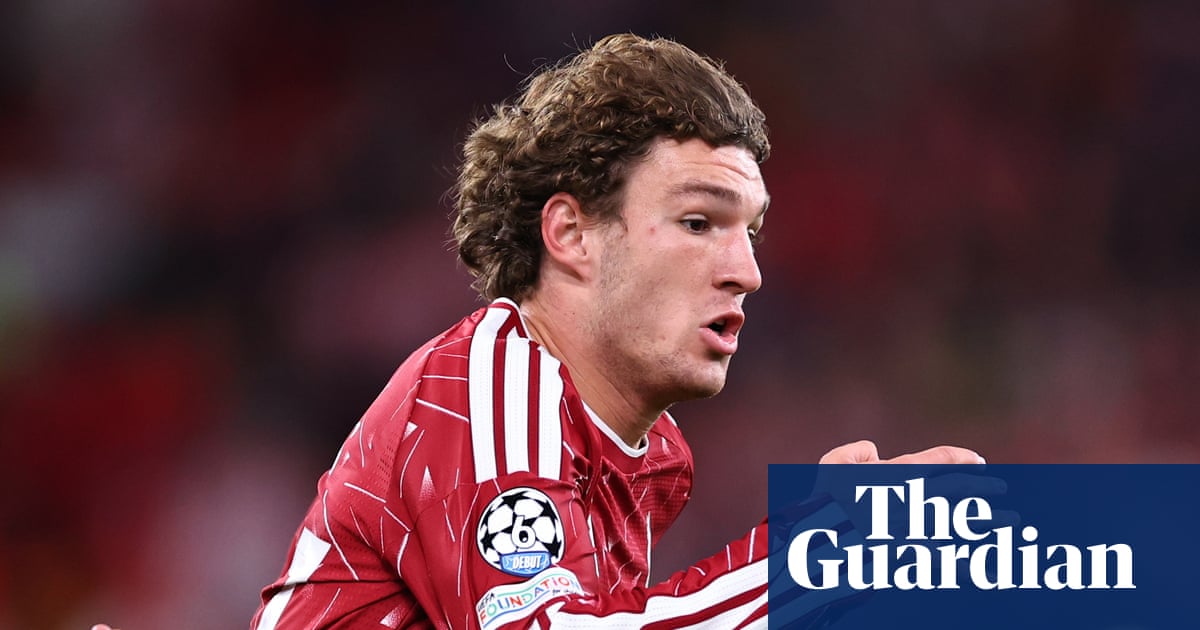
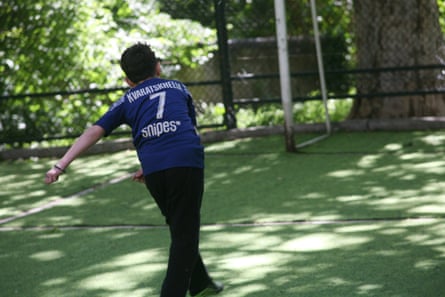
The cage where Khvicha Kvaratskhelia’s love for football began is still buzzing with life today. Sandwiched between the vast Soviet apartment blocks of Dighmis Masivi, children scream, “Kvaraaaa!” as they strike the ball, replica shirts bearing his name stretched proudly across their backs.
This same “stadium”, as locals call it, fills each evening – like many across Tbilisi – with children playing football for hours, stopping only when mothers lean from balconies and shout that dinner is ready.
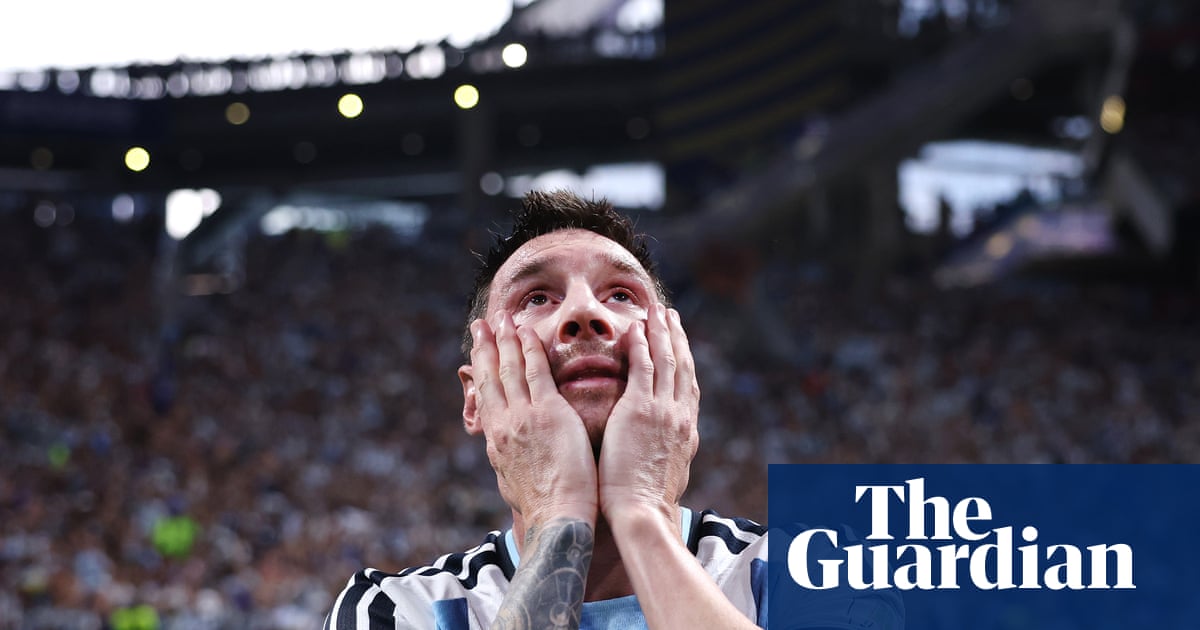
There is a buzz about the neighbourhood, as they wait to watch their native son try to win a second straight Champions League when he plays for Paris Saint-Germain against Arsenal in Budapest on Saturday. There is also a buzz about how far his stardom can reach and whether it is possible he could take home the Ballon d’Or in October.
Among those who once played here with Kvaratskhelia was Giorgi Bliadze, a childhood friend and former classmate. “It would be a dream come true as much for me as it would for him,” he says. “It would mean seeing the same dream we spoke about as kids become reality … proof that dedication and childhood ambition can turn into history.”
For Bliadze, the possibility of Kvaratskhelia winning the Ballon d’Or is about more than individual success. “It would also be a huge moment of pride for our whole neighbourhood,” he says. “Ever since seeing him in those cages, everyone knew he was going to become something special. The whole community has been waiting for his success.”
It is not only those personally close to Kvaratskhelia who want him to take home the Ballon d’Or. Tengiz, who has lived in the area for decades, says: “Out of millions of people, it’s fate that our neighbour is better than them all.”
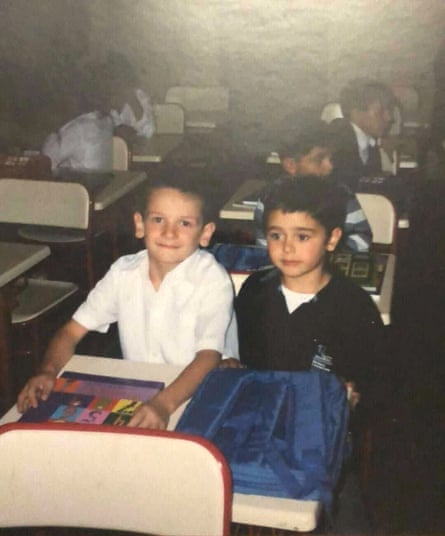
Tengiz talks about the history of Georgia, how back in the days of the Soviet Union, Dinamo Tbilisi won the 1981 Cup Winners’ Cup. “Back then it took a whole team to put Georgia on the map,” he says. “Now just one man can do it. It is unbelievable.”
To understand Georgia’s eagerness for Kvaratskhelia to lift the Ballon d’Or, you have to understand the country. In a state with a population of 3.9 million and which, in its modern form, is younger than Cristiano Ronaldo, Kvaratskhelia’s rise extends far beyond football.
In many ways, Georgians speak about him less as a footballer and more as a representative of the country; a figure whose global success reflects on the nation, much like Luka Modric’s symbolic importance in Croatia or Mohamed Salah’s in Egypt.
“He is the revolutionary of Georgian football,” says Tsotne Kinkladze, who played with Kvaratskhelia in the Dinamo academy and is a football pundit for Georgia’s national broadcaster. “Imagine how much his success has already changed the country. Now imagine what would happen if he became the best player in the world. That is the level of impact and achievement he has brought to Georgia. Neither the country nor Georgian football will ever truly be able to repay what he has done for us.”
Saba Sapanadze, one of the country’s leading sports journalists, agrees. “For Georgia, this would be … I don’t even know. Even imagining it gives me goosebumps. At just 25 years old, he is already our greatest player of all time and if he could win the Ballon d’Or, it would cement his legend for ever.”
Kinkladze remembers how distant this level of success once felt. “During our childhood, it was impossible to imagine that a Georgian footballer could ever reach these heights,” he says. “At the time, most Georgian players were limited to post-Soviet leagues. In Europe’s top five leagues, there was basically only Levan Mchedlidze [a forward who spent over a decade at Empoli].”
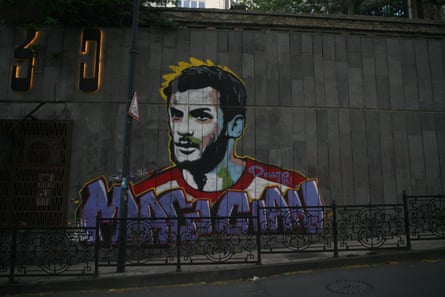
Giorgi Sirbiladze, also from Kvaratskhelia’s old neighbourhood, is part of Dinamo’s academy now. “If he wins the final and plays how he should play, he has to win it,” he says of the Ballon d’Or. “I really look up to him. His success makes me dream too.” And with that Sirbiladze goes back to kicking his signed Kvaratskhelia ball around.
Kvaratskhelia has been arguably the dominant force in this season’s Champions League, scoring 10 goals and setting up six in 15 games and becoming the first player to record a goal contribution in seven consecutive knockout matches. At home to Chelsea on game two of that run he scored twice and assisted another goal in a 5-2 win.
Sapanadze has been the driving force behind the campaign for the ‘Kvara d’Or’, as he calls it. “After that dominant performance against Chelsea, I started saying it. I started believing he would become a leading candidate for the Ballon d’Or,” Sapanadze says. “Of course, then he went on to do the same to Liverpool and then Bayern [Munich] … his first goal against Bayern was out of this world, and he was the main difference in both games.”
Back in Dighmis Masivi, the kids are still playing, rattling the ball against the cage. They dream of replicating the success of the man who was in their same position 15 years ago. Kvaratskhelia was then under the guidance of Manana Merabishvili, the head of his class in school.
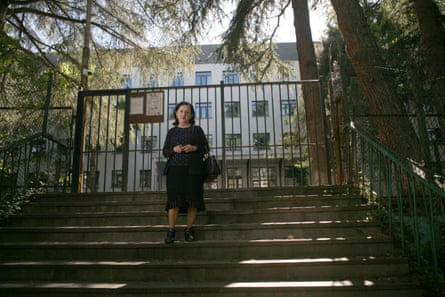
“Let’s not only speak of Khvicha as a player, but as a person,” Merabishvili says. “Since childhood, he was humble and talented … he used to show up the day before and pass all the exams.
“A large amount of it was genetic, as his father was also a footballer and his younger brother is now playing for Dinamo. However, of course I believe I played some part. In the younger ages when he would become lazy I would give him a little slap around the head to keep him focused.”
A lot of factors are in play regarding whether Kvaratskhelia will win the Ballon d’Or; it is a World Cup year after all and Georgia failed to qualify. But if PSG win the final and he produces another stellar performance, he would have to be in with a shout.
Before Kvaratskhelia, kids playing in Dighmis Masivi would have associated the Ballon d’Or with distant footballing superpowers. Now, the idea of a Georgian winner feels imaginable in neighbourhoods such as this, all over Tbilisi.