3 months ago
89
3 months ago
89
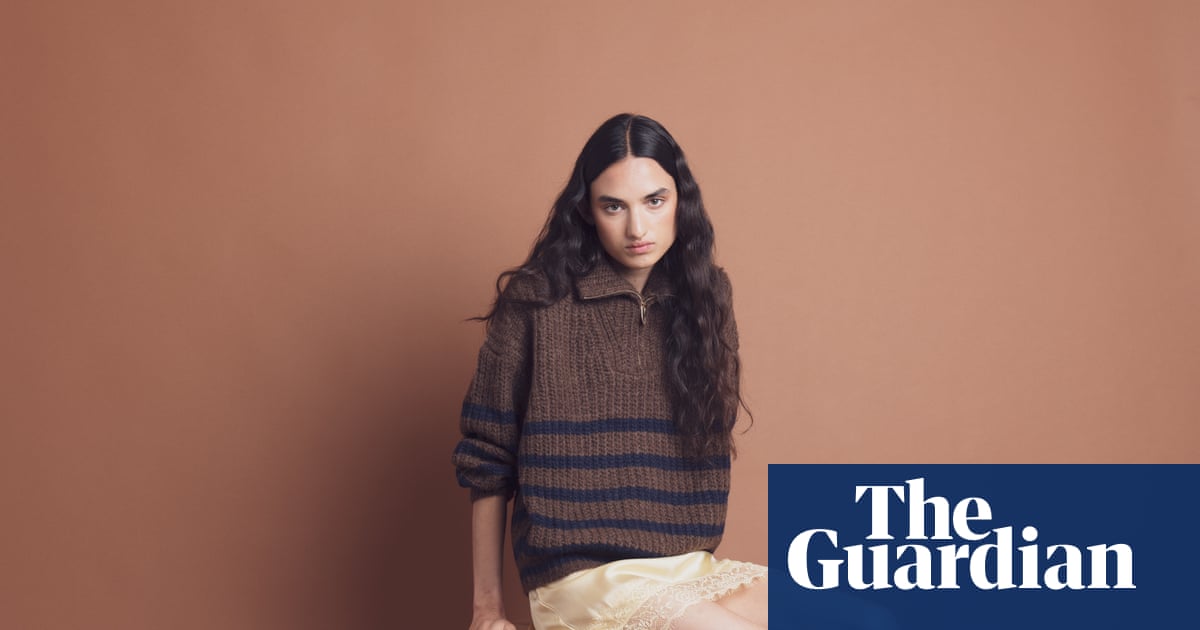
Downtown Los Angeles’s fashion district, the largest apparel manufacturing hub in the United States, is a neighborhood in freefall. While 83% of clothing cut and sewn in the United States is made here, the district has suffered in recent years as visitation and sales have plummeted.
“I went from making $2,000 a day to making now $500, sometimes $700,” said Fernando Carmona, who owns the women’s dress store AP Design by Rocca. He added that rent for his store is $8,250 a month.
On a recent Tuesday afternoon, Carmona was hustling. Glittering dresses in red, blue and black lined the walls from ceiling to floor. On the street, foot traffic was a slow trickle.
These days, Carmona said he can’t slack off for even a moment, or he might lose precious business.
Fernando’s shop is located in the 107-block neighborhood made up of storefronts, showrooms and factories, and is known for its local businesses that sell everything from tailored tuxedos to flower bouquets at cheap prices.
Carmona, who opened his store in another location before the pandemic, said foot traffic has never been as bad as it is now. Immigration enforcement raids ordered by the Trump administration last summer have left a scar on workers across the district, who are afraid to go to work. And, he said, sales haven’t bounced back to their pre-pandemic levels.
But there’s a glimmer of hope on the horizon.
In two years, LA will host the Olympic Games, and leaders are hopeful the global event will be a boon for the city. The Games are expected to bring millions of visitors and generate billions of dollars in income to a city still reeling from a year of turbulent events including last year’s wildfires. Leaders across the fashion district, as well as LA’s broader fashion industry, have hopes that the Games can bring a life-saving shock to the area.
“The Olympics has been the light at the end of the tunnel,” said Anthony Rodriguez, CEO and president of the LA Fashion District, a body that works with local governments to manage the neighborhood.
An Olympic ‘jump-start’
In the run-up to the Games, every host city is required to put on a “cultural Olympiad,” a suite of events and activities that highlight the cultural richness of the host city. LA is no different – but it is behind. LA28 delivered its cultural plan six months past its self-imposed deadline, with few details about what events it plans to produce. The department of cultural affairs, a city department that is facilitating cultural planning between the city and LA28, released a shortlist of neighborhoods it plans to designate as “cultural hubs,” places that will likely be funded to host cultural activities and events.
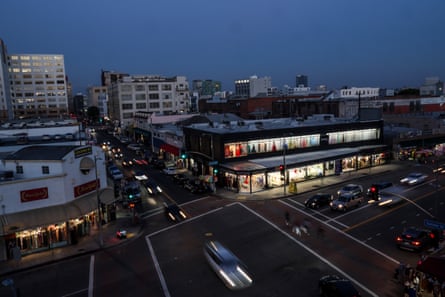
The fashion district isn’t on the list, but Rodriguez thinks an official cultural hub designation would help “jump-start” his neighborhood. He said he wants the Olympics to be an opportunity for Angelenos to rediscover how cool the fashion district is.
“We’re in this weird place right now,” he said. “There’s so many things working against us, and by the time we figure one of those out and how to navigate past that, that progress is erased because we got three other things lining up to set us back.”
The global atelier
LA hosted the Olympics in 1984, and its legacy is still felt today. During the Olympic arts festival that preceded those Games, a series of opera performances were so successful that they inspired a group to establish the LA Opera, among the top 10 largest opera houses in the United States. After the Games ended, the city was left with a surplus large enough to fund an organization that to this day supports youth sports across the region.
Neighborhoods are already gearing up for an influx of visitors and their dollars. Downtown Los Angeles’s convention center, which will host fencing and wrestling, is undergoing a $2.62bn renovation. Earlier this year, the city approved the creation of a special arts district that will offer entertainment packages for people visiting from out of town.
Nick Griffin, the executive vice president of the DTLA Alliance, a consortium of business owners in downtown, said the Games will bring unparalleled attention to downtown in the form of visitors and viewership.
“The economic opportunity that that represents is incalculable. You cannot buy that kind of advertising,” he said.
Rodriguez isn’t the only one who wants to ensure that the Olympics are a major economic driver to the fashion district. Jonathan Saven, a fashion industry veteran, has ambitious plans for the Olympics. He recently presented a sprawling proposal to LA28 that includes multiple events across the city and features LA as a “global atelier.” Saven, the CEO of LA-based women’s wear brand L’Agence, said he’s already had conversations with leaders at YouTube about the possibility of livestreaming parts of it.
Saven is also the co-founder of the Denim Institute, a museum and denim school opening in the fashion district next year. Through the school, he and his co-founder, Loren Cronk, want to bring students from other countries to LA to learn about local manufacturing.
Ultimately, Saven said LA28 told him they would not officially sanction his proposal, but he’s hoping to galvanize LA’s fashion community to produce something that highlights the brands that are still manufacturing locally. LA28 declined to be interviewed for this story.
“It’s shocking for people to learn that so many of the garments that we buy at different retailers are still produced in the United States and being produced in Los Angeles,” said Daisy Gonzalez, who is the campaigns director at the Garment Workers Center, an organization that advocates for more than 40,000 garment workers across LA.
Offshoring production to foreign countries, wage theft and recent immigration enforcement raids have led to a decline in workers. Gonzalez said the Olympics should be an opportunity to make event merchandise here, which could lead to much-needed jobs.
Rodriguez said the district has historically been a key economic driver for the city. And he wants to keep it that way.
“This isn’t something that I want just for the fashion district. This is something that I want for all of downtown,” he said. “This is the last corner of LA where people can live out their dreams.”