3 months ago
78
3 months ago
78
If Lisa Bloom had been advising Peter Mandelson or the then Prince Andrew before their calamitous attempts at reputation-salvaging television interviews, she would have encouraged them to listen beforehand to Jeffrey Epstein’s victims – or, at the very least, to their lawyers – to understand something of what the women endured.
“Or even just watch some of the powerful documentaries that have been made, centering the victims, telling their stories,” Bloom says, pausing for a moment, closing her eyes and shaking her head to convey silent incredulity. “I’d have wanted them to become really enlightened about it. But you really can’t instil compassion in someone if they don’t have compassion. It’s hard to implant it in there.”
Bloom, the California-based lawyer who has specialised in representing victims of sexual misconduct cases for 40 years, is acting for 11 of Epstein’s victims. In December, she launched new proceedings against the FBI on behalf of eight of her clients, which argue that the organisation failed to investigate credible reports of Epstein’s sexual misconduct involving minors going back as far as 1996. Had the FBI acted with due diligence, the complaint argues, hundreds more women could have been protected from abuse.
Instead, the lawsuit claims, an FBI official hung up the telephone on one of the first women to try to report Epstein. “Despite being the most elite and prestigious law enforcement agency in the United States and perhaps the world … the FBI never called back or followed up … in any manner,” the legal argument notes.
The readiness of powerful men to ignore the victims’ voices is a running theme in the Epstein scandal. When Mandelson appeared on breakfast television at the start of January, re-emerging from several months of isolation in the wake of being sacked as Britain’s ambassador to Washington, he made no apology to the victims for continuing his friendship with Epstein, after the financier was convicted of soliciting sex from minors in 2008.
There was amazement that Mandelson had learned so little from Andrew Mountbatten-Windsor’s widely condemned failure to dwell on the victims’ experience and apologise, when he tried to use a Newsnight interview to rehabilitate himself in 2019 (he has always denied any wrongdoing). Realising his mistake, Mandelson issued a written statement 24 hours later, offering a clear apology for his decision to believe Epstein rather than the women who had accused him of abuse.
How does Bloom explain this absent-mindedness? “I don’t think they forgot. I think it was never part of the equation for them. I’m sure behind closed doors, they don’t talk about the victims at all,” she says. She is equally scathing about the British royal family’s slow response to the allegations about Mountbatten-Windsor’s involvement with Epstein. The palace snipped away at his responsibilities and titles grudgingly for years, before decisively cutting ties in October. Bloom concludes that “when people appear not to care about victims, they don’t care about victims”.
In 2021, Bloom secured compensation from the Epstein estate for all 11 of her clients – with settlements ranging from hundreds of thousands of dollars to millions of dollars. When Epstein died in his prison cell in 2019, his estate was estimated to be worth $577m. In 2024, her firm obtained similar payouts for her clients from a separate claim against JP Morgan, Epstein’s bank between 1998 and 2013.
After speaking with Bloom, I’m confident that if I ever need to sue the FBI for negligence, I would consider appointing her firm to act for me. It would be an expensive choice; the firm would take anywhere between 33% and 45% of any settlement payment. Bloom’s ruthless professionalism is not everyone’s cup of tea, and sometimes feels at odds with her determination to cast herself as a feminist warrior. Her startling decision to advise Harvey Weinstein on ways to discredit his female accusers, as, in 2016, journalists began investigating allegations of sexual assault, is a damaging blot on her CV – but one she has apologised for.
Bloom remains one of the most important figures in the fight to secure some form of justice for Epstein’s victims, and she is a sharp observer of the political infighting over the release of millions of pages of government files relating to his case. When we spoke, only a tiny fraction of the total (estimated at just 1%) was in the public domain. On Friday, 3m new pages were released.
“I have really been flabbergasted, and it takes a lot to shock me, having done these cases for so long,” she says. The contents of the 238-page book presented to Epstein for his 50th birthday in 2003, with its notes and photographs from influential friends, again underlined the failure of Epstein’s high-profile associates to find anything problematic about his behaviour.
“The essence of the Jeffrey Epstein scandal is one man doing terrible things to girls – we can kind of understand that. But having so many powerful men who were enablers, who all just thought this was a joke – it’s so sad,” she says. “Everyone’s just laughing, it’s so funny how Jeffrey Epstein enjoys young women giving him massages. There are these secrets they all have together – it just makes my stomach turn.”
She describes the failure of JP Morgan, the US’s largest bank, to act on red flags about Epstein’s suspicious transactions, instead permitting frequent large cash withdrawals, as “disgusting” (the bank has said it regrets its association with Epstein and would not have continued doing business with him had it believed he was using the bank to commit crimes). She is also dismayed by the growing list of prominent men who were ready to socialise with him. “The whole thing is so vile.
“The more Epstein documents get released, the more we see how he had so many powerful friends, and that’s ultimately what helped him. That’s not the way the justice system is supposed to work. Everyone is supposed to be equal in the eyes of the law, but what we have seen here is that if someone is rich and powerful they often get a pass,” she says.
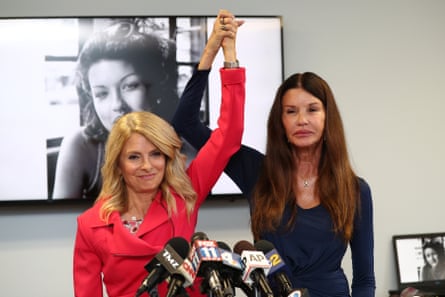
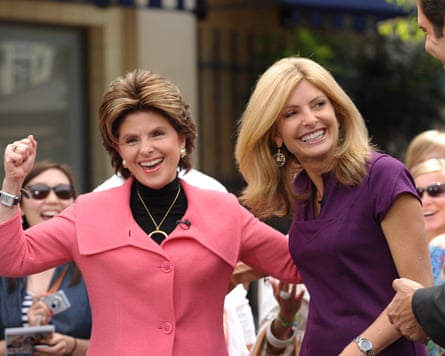
As we talk by Zoom, only Bloom’s face is visible, framed against a neutral background on the computer screen, blond hair resting on her shoulders. Her face will be familiar to close followers of the Epstein case, partly because she is so frequently on television discussing developments, and partly because she looks remarkably like her mother, Gloria Allred, 84, the legendary US attorney, who has also spent a lifetime acting for victims of sexual assault, and who became a leading figure in the #MeToo movement, acting for women accusing Bill Cosby, R Kelly and Sean “Diddy” Combs among others. Allred is representing another 27 survivors of Epstein’s abuse.
Bloom, 64, and Allred have built up reputations as crusaders for the rights of women, securing large payouts for victims of sexual misconduct, and both women have seen those reputations shaken in recent years, amid controversy over their professional practices. Allred was the subject of a critical Wall Street Journal investigation last year, which suggested she put pressure on some of her clients to sign confidential settlements. In a statement, Allred’s firm told the paper that it did not agree with the allegations made in the article.
There is an uncomfortable dissonance between Bloom’s pro-victim, campaigning rhetoric and the details of the advice she emailed to Weinstein as he attempted to silence his accusers, which was later leaked to the New York Times. Bloom reportedly offered to draw on her extensive experience representing victims of sexual misconduct and weaponise it to discredit Weinstein’s accusers, particularly the actor Rose McGowan. “I feel equipped to help you against the Roses of the world because I have represented so many of them,” she wrote. “They start out as impressive, bold women, but the more one presses for evidence, the weaknesses and lies are revealed.” She also offered to help get negative articles about Weinstein buried online to clean up his Google search results, and to organise an interview to promote Weinstein’s “evolving” attitudes to women.
Bloom tells me that this all happened nine years ago, and that she stopped working for Weinstein the moment the first woman went on the record accusing him of sexual assault. I ask if any of her Epstein clients have been concerned by her work with Weinstein, and she says the subject has “never come up”. “Clients want to know: ‘What is your plan for winning my case?’ They really don’t care who else I have represented.” She points out that “lawyers represent distasteful people every day”.
I think Bloom is suggesting that it is naive to expect lawyers to represent only the abused; “accused persons need lawyers too”, she writes on her website. And it is true that David Boies, whose firm represented Virginia Giuffre in her case against Ghislaine Maxwell, also acted for Weinstein for many years, handling a contract hiring an Israeli private detective firm called Black Cube to spy on accusers and journalists. He said later: “I regret having done this … It was not thought through, and that was my mistake.”
If she is irritated at being reminded of this whole episode, she masks it with a polite smile. Throughout the call she is determinedly agreeable, congratulating me frequently on how the interview is going: “It’s a great question!”, “Good question!”, “That’s an important question!” But occasionally we stare through the screen at each other in puzzlement. It is late in the Guardian’s London office when we speak, and as she talks about her lifelong commitment to securing justice for women, the motion-sensitive lighting flicks off. I wave my arms in the air to switch the lights on again.
“Are you giving me a hallelujah?” she asks, surprised.
In her biography on the Bloom firm’s website (punchily headlined My Life, Fighting for Justice), Bloom addresses her work with Weinstein as a “colossal mistake”, noting that the firm switched to acting exclusively for victims as a result of the fallout and urging critics to judge people as she does, “not by their worst mistake but by their lifetime work”. “In my case that is over three decades fighting mostly for underdogs against the powerful,” she writes. It would be easier to shrug at the Weinstein episode if Bloom were less effusive in her own portrayal of herself as a tireless fighter for victims’ rights. In her 3,671 word bio, she details a career spent rejecting multimillion pound salaries to represent victims of discrimination, harassment and abuse.
“How do you assess someone’s reputation?” she asks. “To me, it’s: Do clients still want me to fight for them? Do I get glowing five-star reviews from clients after we end their case? Overwhelmingly. Do I get beautiful cards and letters? Yes.”
She takes pride in her success at securing large payouts for her clients. “It can be uncomfortable or even distasteful for people who are not used to it. They think: how do you put a dollar sign on someone for being sexually assaulted? Sometimes people say to me: all you get is money for your clients, and does money really mean anything? Well … yes! The only people who say money doesn’t matter are people who have a lot of it.”
The settlements she has secured for the Epstein victims she represents have helped them rebuild their lives. “One of them was able to hire an attorney in a custody case and get custody of her child; she was also able to move to a safer neighbourhood to raise her child. One of them went back to school and is getting a master’s degree in a field that is important to her. This is very typical of what women do when they get money. I’m a big believer in taking money from the hands of bad guys and putting it in the hands of women. The money means a lot – it means that they can go to therapy, they can change careers, they can go back to school, they can support their children. Is that complete justice? Of course not, but it’s really helpful.”
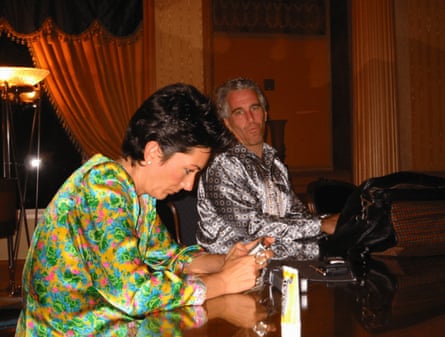
Some campaigners are troubled by the practice of a payment structure based on negotiating high settlements, from which the law firm takes a substantial cut. Weinstein’s former PA Zelda Perkins founded the pressure group Can’t Buy My Silence to campaign against non-disclosure agreements. She did this after breaking the confidentiality clause in her own settlement with the producers, which had prevented her from talking about his predatory and abusive behaviour for decades. She worries that the business model of law firms like Bloom’s and Allred’s means lawyers are incentivised to fight for the maximum payout, often using confidentiality as a bargaining chip.
If victims are unable to speak up to expose others involved in the wider abuse case around Epstein, then predators will be able to continue with impunity, Perkins warns. “These women have been silenced and silenced and silenced. Then a lawyer comes forward, apparently to help them, and weaves into their settlement a clause saying you won’t get this big settlement unless you agree to not talk about anything further. Women need to own their own voices, to own their trauma, and be able to access the help that they need,” she says.
Bloom says she would never push a client to sign a confidentiality clause if they didn’t want to: “That would be antithetical to everything I believe in.” New legislation in New York and California has also restricted the use of NDAs. But she acknowledges that settlements come at the end of difficult negotiations.
“We’re fighting against the most powerful defence lawyers in the country, giant companies and billionaires. And they’re going to push back and they’re going to want certain things. They don’t roll over and just give it to us.” Confidentiality clauses are often requested by the accused, and are sometimes welcomed by the victims, she says. While in the UK there would be a presumption of anonymity for victims of sexual assault, this is not automatic in the US and has to be negotiated. Her Epstein clients have all stipulated that they do not want their full names revealed and she estimates that more than 90% of her clients generally want confidentiality. “They don’t want the allegations to come out publicly. They do not want the amount of the settlement to be known. They want the whole thing to be done and behind them. So they are fine with an NDA,” she says.
Bloom says her firm will never take more than 50% of a payout, unless there have been exceptionally high costs, payments to expert witnesses, for example; the usual range is between 33% and 45%. “You can go to Walmart or to the boutique on the corner, where maybe they sell the same thing, but one is going to be more expensive. At my firm you get a team of quality lawyers on the case, fighting tooth and nail.”
She rejects recent criticisms of her mother’s record. “I love my mum. A lot of litigators burn out, especially female litigators; but I’ve been doing this for 40 years, she’s been doing this for 50 years, and we did not burn out,” she says. “I’m very proud to be her daughter.” Bloom thinks her 50 years of vegetarianism, which developed into veganism 20 years ago, has helped her to avoid exhaustion, and attributes her own good health to regular hiking and mountain climbing excursions. It is impossible to tell from the characterless screen background, but she is speaking from her cabin, a seven-hour drive from Los Angeles, in Lake Tahoe, Nevada, where she has already had a morning hike.
The two women are unable to talk about details of their clients’ cases, but they often discuss broader Epstein-related issues. They have been collaborating on campaigns since Bloom was 12, when she encouraged her mother to help her set up a protest against the local toy shop’s divisions of its wares into boys’ and girls’ shelves – with toy vacuum cleaners and toy kitchens on the girls’ side and all the toy money on the boys’ side. “I just thought that was ridiculous and wrong,” she says.
Bloom says she worked hard to bring up her children without these stereotypes. Both her children became lawyers, and both have worked with her: “I like to joke that we have a pro nepotism policy at my law firm,” she says. Her daughter now works as a lawyer at a tech firm, her son is an environmental lawyer and a former national pole-dancing champion, which she cites as the happy consequence of a childhood free of gendered expectations.
In an environment where the regressive values of the tradwife movement are gaining ascendance, where tech-bro culture has infected politics, where toys are ever more intensively marketed to different sexes, and where voters have turned a blind eye to Trump’s pussy-grabbing machismo in two elections, Bloom still has her work cut out.
Her firm is readying for the next chapter of its campaign to secure compensation for those affected. “I know that the FBI is going to fight back and come up with every legal argument they can and so we’re prepared for that fight,” she says. She has first-hand experience of the bureau recoiling from investigating Epstein related issues. When she told staff there that she was acting for a witness who claimed to have seen the then Prince Andrew dancing at the London nightclub Tramp on the night Giuffre said he assaulted her (which he denies, saying he was at the Woking branch of Pizza Express that evening), the FBI declined to take her statement. “They were not interested in talking to her,” she says. “I believe that the justice department did not want to prosecute a British royal.”
She is enraged on behalf of her clients at the protracted nature of the legal battles, largely the result of delays to the release of the files, and she is worried on their behalf about the softer treatment being offered to Ghislaine Maxwell, who was sentenced to 20 years for sex trafficking in 2022, and who was moved to a minimum-security prison in Texas last August. She says she finds discussions of a possible pardon for Maxwell “stomach-turning”.
Bloom emailed over the weekend to say that she and her colleagues would begin going through the files on Monday, adding that she was disappointed that still “only about half of the files have been released”.
“I know some survivors have complained that their names were released, in violation of their privacy rights, which is completely outrageous.”
She hopes that some of Epstein’s most powerful friends will eventually have to explain their involvement. “In my dream world, there would be a congressional investigation into Donald Trump’s role with Epstein, and that he, like any other US citizen, would be called to answer questions.”