3 months ago
63
3 months ago
63
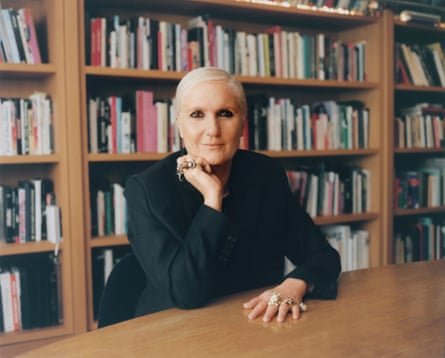
A big name designer’s first catwalk show in a new job is a drumroll moment of pure ego: Maria Grazia Chiuri, who joins Fendi after leaving Dior, is a headline-making hire with main character energy.
The first surprise, as Milan fashion week began, was a catwalk painted with the motto: “Less I, more us.”
Backstage Chiuri explained that she wanted to celebrate the proud matriarchal heritage of Fendi, which has been led by four generations of women in the family. The new motto, she said, was a celebration of “the female way of doing fashion, and also the Italian way of doing fashion, which is about sharing ideas, and craftsmanship, and working in freedom.”
Chiuri’s leadership marks a break with the family line at the Roman brand where founder Adele Fendi was succeeded first by five daughters, and then by granddaughter Silvia Venturini Fendi and great-granddaughter Delfina Delettrez Fendi.
But Chiuri, who is also Roman and spent a decade at Fendi as a young designer, framed herself as an upholder of Fendi tradition, not its disruptor.
Still, Chiuri’s return to fashion’s frontbench, eight months after departing Dior where revenues almost quadrupled over seven years, was stamped with her identity and values. Just as the “We Should All Be Feminists” T-shirt in 2016 began a pivot from ladylike femininity to modern feminism at Dior, so this Fendi debut was about shaking off rich-lady aesthetic codes and engaging with modern women’s lives.
She dressed the first model in the same style of oversized black blazer that she herself was wearing for show day. There were jeans with trenchcoats, and cargo pants with trainers. Several models carried two bags, commuter style: a cute handbag, plus a tote for overspill.
Fendi began as a fur house, a heritage which has become problematic. Chiuri’s solution was to use only archival fur on the catwalk, and to introduce a new atelier where clients can bring vintage furs to be repurposed.
“Fur is very durable,” she said. “To me, fur can be about the softness and sensuality of Fendi.”
One of the masterstrokes of the Fendi women was the hire, in 1965, of a then little-known Paris designer called Karl Lagerfeld, who they brought in as a freelancer. Eighteen years before his tenure at Chanel began, he streamlined and radicalised Fendi, designing the now well-known double F logo, which stood for Fun Fur. (“Because we are not doing basic mink coats,” Lagerfeld deadpanned.)
The bracing, radical spirit that Lagerfeld brought to the house was back on the catwalk here. Evening gowns were worn with Karl-coded starched white collars, not twinkling necklaces. Striped scarves printed with a “5 SISTERS” slogan declared allegiance, terraces-style, to the Fendi family.
As a young designer in the Fendi accessory studio in the 1990s, Chiuri is credited as a co-designer of the iconic Baguette bag, made world famous by Sex and the City. The Baguette was front and centre of this show – a red-and-ivory zebra striped, bugle-beaded take with a snake print strap was a highlight – and will likely benefit from fashion’s version of the new manager bounce.
The designer noted to American Vogue this week that her strong sales figures at Dior were not celebrated in the way a man’s would have been. “When a male designer has a big number, he has a business sense. But if a woman designer does a big number, it is because she is commercial.”