3 months ago
64
3 months ago
64
The novichok attack on Salisbury in south-west England in March 2018 was an extraordinary event, sending shock waves across the world. The targeted man, the former Russian agent Sergei Skripal, recovered from an audacious assassination attempt, but an innocent British citizen, Dawn Sturgess, died. An inquiry was heard in Salisbury and London last year investigating the attack on the Skripals, the response of the emergency services and other public bodies, and how Sturgess was tragically caught up in an international incident. Here are some of the key questions it examined.
Who was Dawn Sturgess?

Sturgess was a 44-year-old mother of three. On 30 June 2018, she and her boyfriend, Charlie Rowley, fell ill at his home in Amesbury, Wiltshire. Sturgess died on 8 July, while Rowley survived but has suffered ill health since. At first police believe it had been a drugs overdose. Within a few days it became clear they had been poisoned with the nerve agent novichok. Sturgess sprayed herself with novichok believing it was perfume. Rowley is thought to have found a container of novichok disguised as a perfume bottle and given it to his partner. The inquiry heard Sturgess was caught “in the crossfire of an illegal and outrageous international assassination attempt”.
What was a container of novichok doing in the south-west of England?
On 4 March 2018, the former Russian spy Sergei Skripal and his daughter, Yulia Skripal, were poisoned by novichok at his home in Salisbury, seven miles south of Amesbury. Skripal had been settled in a suburban cul-de-sac after a spy exchange. Both fell seriously ill but survived.
Why were the Skripals targeted?
The UK government believes Vladimir Putin authorised the assassination attempt on Sergei Skripal. One theory for the motive offered by the UK is that he harboured secret information about the Russian president’s “criminal embezzlement” of profits from metals production. There have also been suggestions Skripal continued to help western security agencies while he was in Salisbury when he was supposed to have retired from the spying game. The UK government expelled 23 Russian diplomats after the attack.
What form did the attack on Skripal take?
UK police believe two Russian agents, who went by the names Alexander Petrov and Ruslan Boshirov, applied novichok to the front-door handle of the Skripals’ house between noon and 12.15pm on 4 March. When the former spy and his daughter left to go out for lunch soon after, they both touched the handle.

What did the agents do with the container of novichok afterwards?
A central mystery of the case. One suggestion is they may have used a portable heat sealer to repackage the bottle containing novichok during a “missing 33 minutes” when they vanished from Salisbury CCTV cameras shortly after the attack and left it in a bin. Rowley said he believed he found the bottle in June, a few days before he gave it to Sturgess. But police think it more likely he came upon it shortly after the attack on the Skripals. Detectives found CCTV footage appearing to show Rowley searching bins in Salisbury on the day the Skripals fell ill. If that is correct, Rowley had the bottle for more than three months and even moved home with it. However, police have not been able to rule out the possibility that there was a second container, which still has not been found.
How dangerous was the novichok?

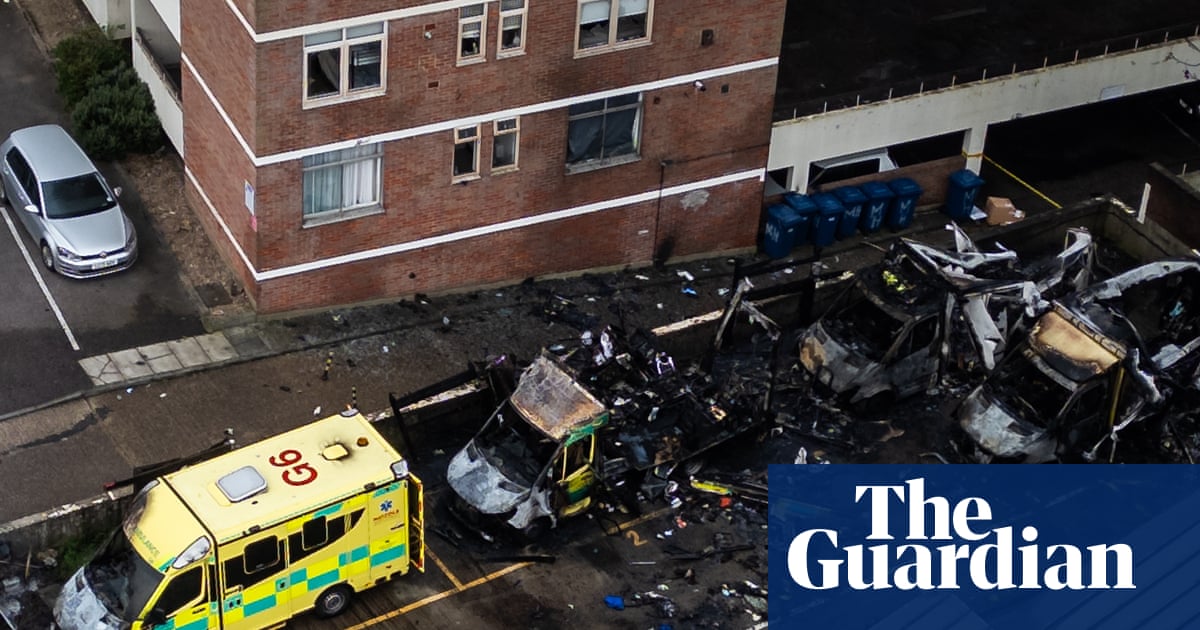
The inquiry was told it was of a very high purity and could have killed thousands. A “minuscule” amount – as small as a sixth of a grain of salt – could have been fatal, a government scientist said. After the poisonings, 87 people self-presented at A&E worried they may have been contaminated. Three police officers were contaminated, including DS Nick Bailey. Emergency services scrapped 24 vehicles they feared had come into contact with the poison.
Should more have been done to protect Sergei Skripal?
Sturgess’s family believes so. They argue that he was a “clear and obvious” target for Putin but was provided with little protection when he lived in Salisbury. Skripal is said to have refused security measures, even basic CCTV.

Should more have been done to protect the public after the attack on Skripal?
Again, Sturgess’s family believes so. No public warnings about picking up containers that may have contained nerve agent were given after the initial attack. Dame Sally Davies, the former chief medical officer for England, claimed she had a “strong recollection” of advising the public not to pick up objects they found near the scene of the novichok attack in March 2018. But there is no record of such a statement. After Sturgess was poisoned in June, a warning was given.
What about the response of the emergency services?
Mixed. There were many instances of great bravery, with paramedics, firefighters and police officers putting themselves in harm’s way. But Wiltshire police has apologised for wrongly categorising Sturgess as a user of illegal drugs. Rowley was – but Sturgess was not.
Was Skripal lucky to survive?

Absolutely. A paramedic told the inquiry that he accidentally gave Skripal atropine, a drug used for organophosphate poisoning, after knocking over a drugs bag. It may have saved Skripal’s life.
What have the Russians said?
The Russian embassy in the UK has claimed there are many “unanswered questions” around the poisoning. It highlights, for example, claims that Skripal’s car was seen out and about on the morning of 4 March and that his and Yulia’s mobiles were turned off for four hours at that time. It also says it does not make sense that there was no CCTV around the Skripal house. UK police have said there have been hundreds, if not thousands, of red herrings in the case.