1 month ago
53
1 month ago
53
For 400 years, The Hare and Hounds in Bowland Bridge offered a warm welcome to locals and travellers. Then the rent doubled. With two pubs a day closing in England and Wales, can the community save this 17th-century gem?
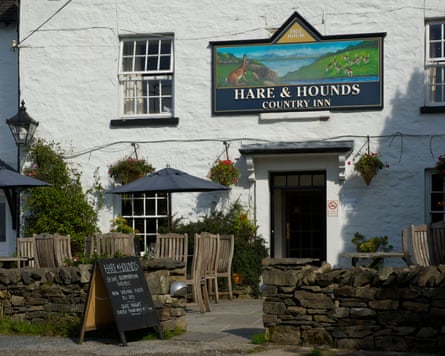
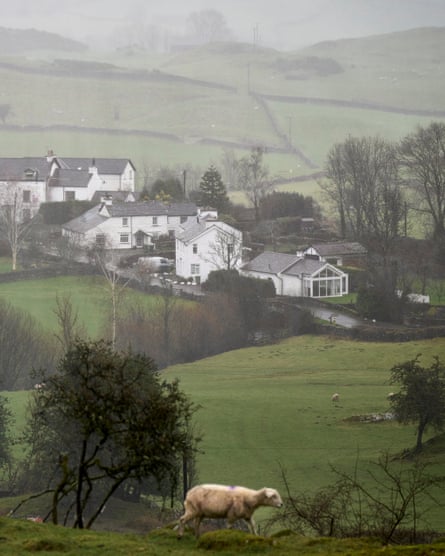
The Hare and Hounds in Bowland Bridge, a few miles from Windermere, is exactly how you’d want a Lakeland pub to be. A pretty 17th-century stone building, whitewashed, with a couple of dormer windows poking up from the slate roof and a view of the fells, it was originally a coaching inn on the route from Manchester to Glasgow.
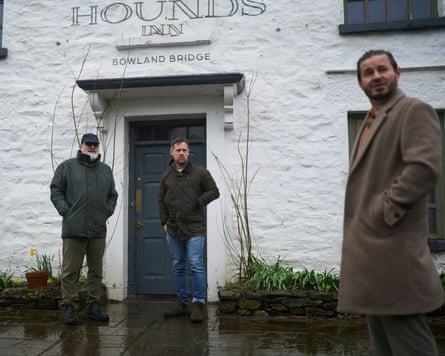
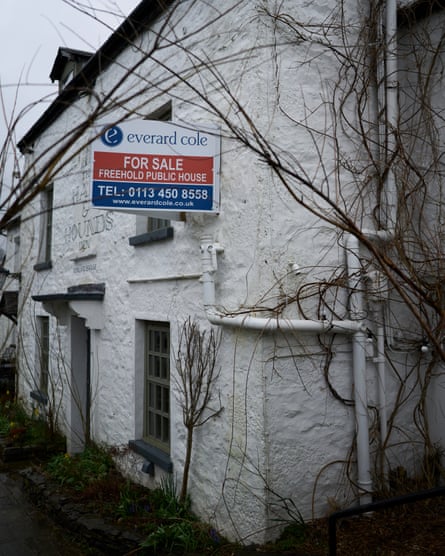
It is not, however, looking its best today. We arrive in a proper Cumbrian downpour. It should be warm and welcoming, with a place by the wood-burner to dry out and down a pint of Wainwright, perhaps. But the door is shut, the curtains drawn in one of the downstairs windows and no sign of life through the other. Attached to the front of the building is a sign; not a pub sign (the name of the pub is painted elegantly in grey over the door), this one has another message: FOR SALE.
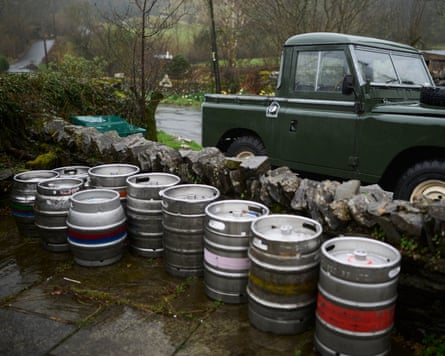
“It’s amazing how quickly a building starts to degrade when it’s not being used,” says Simon Rayner, who I’m here with. He points to the peeling paint and patches of green lichen; the unkempt flower beds; the bedraggled collapsed parasols over the outdoor tables; a line of forgotten beer barrels along the garden wall, still awaiting collection. “It needs some love again.”
Rayner grew up in Windermere. As a teenager in the 90s he did a lot of horse riding, and his routes would often take him through Bowland Bridge. “I used to stop and tie the horse up outside the pub, go in and get a Coca-Cola. I remember it always being very busy.” That had a lot to do with the fact that, at the time, the Hare and Hounds was owned and run by legendary Liverpool winger Peter Thompson.
Rayner left the Lake District in his early 20s and went to live in London – for 25 years. Then the “hefting” kicked in. It’s a word used about the Herdwick sheep of the Lake District; “hefting” (sometimes “heafing”) is the inbuilt homing instinct that compels Herdwicks to return to the place on the fell where they came into the world. “I feel like there’s that for people,” says Rayner, “and that I’m kind of hefted to the area. It’s like a sense of belonging, an anchor.”
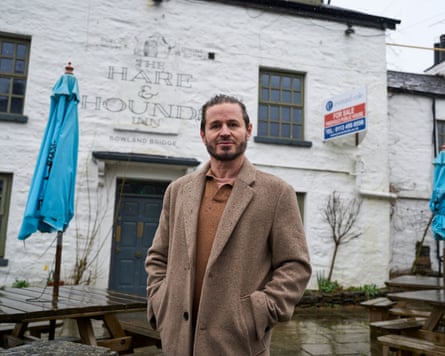
Returning in 2020, just before the first Covid lockdown, Rayner found that the tenancy of the Hare and Hounds was vacant. He’d always wanted to run a pub; he and his business partner Andrew Black “used to sit in London pubs going, ‘Wouldn’t it be lovely to have a pub of our own’, for about 10 years. So when this opportunity came around, I phoned him and said, ‘What do you think?’ And he went: ‘Well, we can either sit and talk about it for another 10 years, or we can give it a go.’”
They chose option B. After doing a lot of work on the place, they opened up in September 2021 – a country pub with food and five rooms. The boy who used to tie up his horse outside and come in for a Coke was now the landlord. Landlord as in running it, not as in the freeholder; the pub was owned by the pub company Admiral Taverns, which was acquired in 2017 by global investment firm, Proprium Capital Partners.
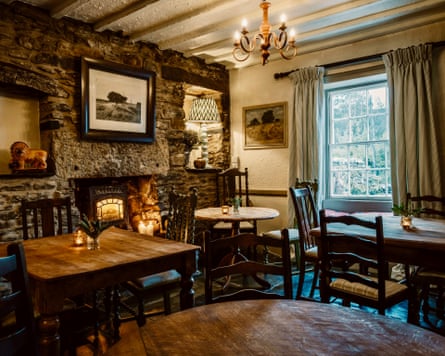
It went well; they were busy when lockdown lifted because people wanted to go out. “But they still weren’t really going abroad at that point, so there were a lot of articles about ‘great places to stay in the UK’, that sort of thing.” The pub featured in the Guardian’s 10 of the UK’s best renovated foodie pubs with rooms: “All the original features have been retained – beams, exposed stone, fireplace – with a smart new paint scheme inspired by the Cumbrian countryside.” An 8/10 review in the Times said that they’d got “the balance just right between spit-and-sawdust boozer and posh gastropub.”
That is what they wanted: a mixture of locals, visitors and tourists. “A place where people come together,” says Rayner. “Which is what it would have been back in the days when it was a coaching inn; there would have been, you know, Jim who lives up on the fell meeting, I don’t know, Jonathan from Manchester on his way to Glasgow. And they would have been sharing information, news and knowledge, all of those things.”
Nights to remember
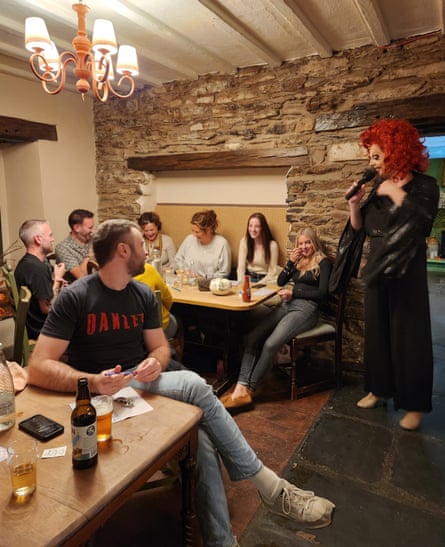
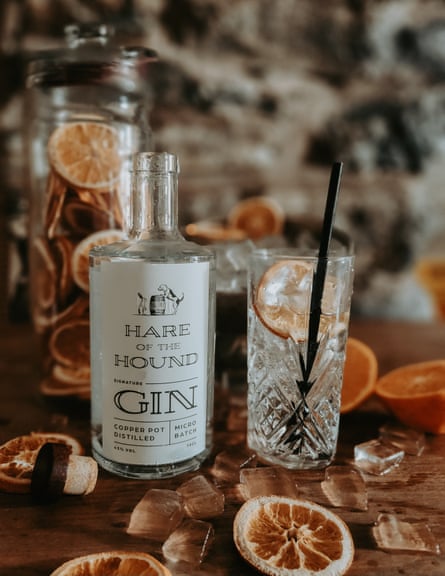
Rayner and Black threw themselves into it – not just the bar, restaurant and rooms, they also had events: kitchen takeovers; Lebanese nights; butchery masterclasses; a gin-blending session (where they created their own Hare and Hounds gin); even drag bingo, with a drag queen from Manchester calling the numbers. Also, more traditional entertainment, such as a regular pub quiz, with “Dave from up on the fell asking the questions. He did it for beer.”
Rayner talks a lot about these “up on the fell” people. Bowland Bridge is a tiny hamlet, just a handful of houses, the pub served the surrounding countryside too. I have this image of Lakeland farmers coming down from the hills in the evening to mix with the tourists over artisan gin and perhaps a spot of drag bingo.
There was a Wednesday night crowd; a group of regulars, some from “up on the fell”, mostly men (occasionally their wives came too). A couple of them have come to join us today, Martin Scovell and Stuart McGill, to have a nostalgic look at their old watering hole. They’re not from up on the fell but relative newcomers, both from a mile or two up the road, they say.
McGill and his family came to the area from Manchester three or four years ago. They used the pub as a base when they were house-hunting. Then, after they found somewhere, “it was a way of meeting people and getting to know each other. It’s a very basic kind of socialising, but that won’t happen any more if these pubs keep going bump and disappearing off the face of the earth.” Another local pub, the Strickland Arms near Penrith, recently closed. The Punch Bowl up the road from here in Crosthwaite is also for sale. “In areas like this, it’s so important there are meeting points where people can socialise informally,” adds Scovell.
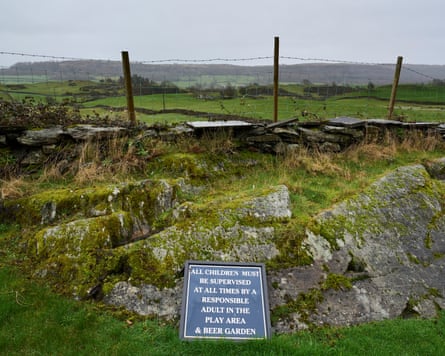
The bar of the Hare and Hounds was at the front left of the pub and was where the Wednesday-nighters used to congregate. Unless it was sunny, when they’d sit outside. The restaurant, which could seat about 50, was on the other side, behind a curtained window. We walk round to the garden at the back where they had an outside bar in the summer, and some of their events took place. A sign still reads “Children must be supervised at all times by a responsible adult in the play area and beer garden”, though now it’s only seen by the sheep in the adjacent field. Herdwicks obviously.
What happened? Why didn’t it work? It wasn’t because of a lack of either effort or custom: Rayner and Black threw themselves into it, working seven-day weeks. It was popular and busy, the rooms had an 80% occupancy rate over the year. But their profit margin, which started off small, got chipped and chipped away until it was simply no longer viable, says Rayner. Staff costs, for one, especially for a remote country pub. “You can’t say: ‘come and do a two-hour shift, and then another shift later’. Once they’re here, they’re here.” He says industry standard staff costs for a pub with food are about 28% of revenue. “We were spending 35 to 40% on staffing.”
Their utility bills went through the roof. “When we took on the pub we were paying something like £1,500 a month on energy bills. At the end we were paying nearly £3,500.” And of course they didn’t own the building. So when Admiral doubled the rent, that was the final nail in the coffin. On 2 November last year, Rayner called time – on the evening, and on their time running the pub.
I picked the Hare and Hounds in Bowland Bridge. I could have gone to another Hare and Hounds on the Isle of Wight. Or the Coore Arms in Northallerton, the beautiful Old Rectory in Stockport, the Kings Head in Cubbington, the Rising Sun in Macclesfield, the Red Lion in Bolton (or any number of Bolton pubs). I could have picked any of the pubs on the Facebook groups Closing Time – A Lost Pub Site or Britain’s Lost Pubs that record closures and show sad pictures of boarded-up and falling-down boozers. I could have gone to any of the hundreds of London pubs that have recently shut. I could have gone to my own former local, the Queensbury in Willesden Green … Actually, no, I couldn’t; it got torn down, the luxury flats replacing it are nearly completed.
Pubs in England and Wales are now closing at a rate of two a day, according to the most recent figures from the British Beer and Pub Association (BBPA). The UK has lost over 2,000 pubs since 2020, and over 16,000 since 2000. Admiral, which owns 1,350 pubs in the UK, sold 77 last year. Stonegate, Britain’s biggest pub chain with over 4,300 pubs, sold more than 100 pubs last year and was reported to be exploring the sale of over 1,000 in response to falling sales and spiralling debt costs. Another big chain, Greene King, has said 150 of its pubs will be put up for sale, because of soaring costs and “changing consumer behaviour”. In the longer term, over the past couple of decades or so, “there have obviously been changes in demographics, fewer people drinking, competition in leisure, socialising in different ways,” says Andy Tighe, chief strategy and delivery officer at the BBPA. “All those things have meant we’ve seen a decline in pub numbers.”
That downward slope has got steeper in the past four or five years. The pandemic was something of an experiment; the first time pubs had been closed since … well … for ever (even world wars didn’t close them). “On a positive side, people realised just quite how much they missed it when they couldn’t go to the pub,” says Tighe. The pandemic was a reminder of how much we love the pub in this country. “But of course then you have the cost of living crisis and everyone having to be careful how often they go out and how much they spend when they do.” Ironically perhaps, Covid also showed us that we could stay in and have a glass of wine at home rather than go to the pub.
The biggest challenges, says Tighe, are on the other side of the bar, and here he echoes Rayner in Cumbria: “It’s really been the cost of running those pubs, which has risen and risen and risen, that’s driven the closures we’ve seen over the past couple of years. Employment costs, increases to the national minimum wage, the national insurance increase in the autumn 2024 budget, energy, food and drink inflation. Plus the already eye-watering tax burden that pubs face – a pound in every three goes to the taxman, whether that’s beer duty, VAT, business rates, employment taxes. It has all meant that even really good operators running busy pubs can’t make it profitable.”
The sector hasn’t exactly been raising a glass to the government lately. Several pubs even barred Labour MPs this Christmas in protest at their lack of support. But didn’t Rachel Reeves’ U-turn on business rates for pubs in January help? “It is significant and does at least, from a business rates perspective, provide breathing space and clarity for the next three years,” says Tighe. “After three years, though, the uncertainty will return. That’s what you’ll be thinking if you’re considering taking on, say, a five-year lease.” The BBPA would like lower rates of VAT on food and drink (including alcohol), and reduced beer duty. “The chancellor did take a penny a pint off draught duty in the budget of 18 months ago, but all the other measures in the budget effectively meant publicans had to add on 20p.”
Pubs also provide jobs. If a factory closes with the loss of hundreds of jobs, you hear about it. “Pubs employ hundreds of thousands of people; maybe only 10 or 12 per pub, but there are 45,000 pubs in the UK.” Often – especially in rural areas, villages and small towns – it’s the only work opportunity there is for young people. “That first step on the career ladder, and the customer interaction dealing with all sorts of folk, you learn a lot. It’s important and we need to take care of it.”
It’s not just about business, though, Tighe says. Covid comes up again: “There are fewer and fewer places where people make face-to-face interactions. Almost a whole generation becoming adults missed some of the ability to go and interact in their formative years. We know from our surveys people say their local pub has a positive impact on reducing social isolation and loneliness. In terms of wellbeing and connecting communities, pubs are so important.”
Back in Cumbria at the Hare and Hounds, they employed about 25 in total, jobs that are now gone. The community stuff too, also missing in Bowland Bridge. I speak to Molly and John Wood, who live across the road from the pub (18 paces across the road from door-to-door, John reckons, 18 paces he admits he made quite often). They’ve been there for 45 years. It was the village post office and shop – they ran it until retiring about 10 years ago. They even had a cafe at one point. “We started serving coffees because Peter said he was too busy and he didn’t want to do coffees,” says Molly. That’s Peter Thompson, the famous footballer, who owned the pub in the 90s.
Molly loved having the pub there. It meant there was life in the village even after the post office/shop was gone. “There was always someone about, it was a hive of activity, especially on a Saturday. It was nice to meet people. Now it’s just dead, there’s nobody about, it’s awful.”
John was part of the Wednesday-night gang. “We didn’t go for hours and hours, it wasn’t a big session or anything like that – just a casual get together, four or five fellas.” He went with Molly, too. “If we’d been working in the garden, we’d pop over for a drink – any excuse. It just seems a shame. It used to support three families, did that pub, maybe more with chefs and kitchen workers, bar staff, cleaners.”
John and Molly have joined a group of 30 or so putting in an Asset of Community Value application to Westmorland and Furness Council. Scovell is the driving force of this group. He explains that if they can get the pub added to the Community Asset Register, it means that if sold, it has to be offered to local community groups first, giving them a six-month pause to prepare a bid. He’s in no doubt of its social value. “We’re a dispersed community with lots of different backgrounds, from old farming families through to relative newcomers like myself.” Scovell has been here for seven years.
He thinks that a lot of people who legislate around these issues don’t really understand rural life: “They’re fundamentally metropolitan because that’s where most things happen. An ageing population, particularly in winter, needs somewhere to come where they feel welcome. It was a nexus for all sorts of different activities. Without it, social cohesion starts to break down.”
At the moment the Hare and Hounds is listed as a pub for sale – “freehold offers in the region of £550,000”. “The perfect scenario for everybody would be that somebody sweeps in who’s got experience and resources, takes it over, then gets it re-opened again,” says Scovell. But he thinks that’s unlikely. What he – they all – fear is that there are no takers “and it ends up being pushed on to the market and redeveloped as holiday flats, Airbnbs. That would be an absolute tragedy for the community, so we decided as a group that we would at least try to avoid that happening.”
Hence the community asset application, and the thought that if no one else comes to run the pub then they might do so themselves. Scovell is aware of all the issues and difficulties involved in running a pub, but at least they wouldn’t be paying rent and they wouldn’t have to get their beer from a particular brewery. And because it would be run, or partly run, by volunteers, that would mitigate some of the staffing costs.
Hazy memories
There are more than 200 community-run pubs in the country, according to Plunkett UK, a charity that supports people in rural areas to set up and run businesses in community ownership. Many are more than just pubs; they’re also shops, cafes, meeting places – community hubs. “In areas like this, it’s so important there are meeting points, where people can socialise, formally, informally, clubs, societies,” says Scovell. “Places like this could theoretically be doing things from 8 in the morning til 11 at night, seven days a week. If we put a bid in and it’s successful, we’ll find a way of making it work.”
It would be nice to have that meeting place right now, somewhere out of the weather. Instead we take refuge in Rayner’s car, with the rain hammering on the roof. It’s sad that the boy who used to go in for a Coke, and ended up running the place and putting so much in, is now shut out. “I met so many people through the pub, people I consider to be lifelong friends,” he says. “And so a part of me feels like I’ve let people down, because they invested in us in the sense that they supported us, and they really wanted it to work.”
Despite his efforts, the enthusiasm and goodwill of the community, it didn’t. For now the Hare and Hounds in Bowland Bridge – for over 400 years a warm and welcoming place for locals and travellers, to come and eat and drink, rest, meet and be merry – is just another empty building, with the paint beginning to peel.