3 months ago
74
3 months ago
74
I have always dreamed of a return to the golden age of Arab trade, when spices, fruits and ideas voyaged across deserts and seas, creating extraordinary food cultures through exchange and curiosity. I’ve imagined bringing new flavours home, letting them transform the kitchen – but with all the madness in today’s world, that dream must stay a dream, for now. So, these recipes become my journey, a way to reconnect with that spirit and taste the magic of the Arab golden age today.
Kbeibat bulgur with spring onion and pomegranate (pictured top)
This dish originates in Latakia, a port in Syria. Kbeibat bulgur translates to “small kibbeh” in Arabic, and refers to a range of dishes that are popular across the Arab world and beyond. It has many variations from Turkey to Iran, even Brazil, but what they all have in common are complex layers of flavour: sweet, sour and spicy. Serve with the spicy fennel and herb salad below, plus bread to mop up the beautiful juices.
Prep 10 min
Soak 20 min
Cook 50 min
Serves 4
For the kbeibat
200g fine bulgur wheat
1½ tsp ground cumin
½ tsp ground coriander
1 tsp aleppo chilli flakes
2 tbsp olive oil, plus extra for drizzling and greasing
1¼ tsp salt
55g plain flour
For the sauce
4-5 large spring onions, trimmed and finely sliced (150g)
5g flat-leaf parsley, finely chopped, plus extra for sprinkling
1 red chilli, deseeded and finely chopped
4 tbsp olive oil
2 tbsp red pepper paste or harissa
2 tsp lemon zest
2 tbsp lemon juice
¾ tsp ground cumin
45g pomegranate molasses
1½ tsp caster sugar, or honey
¾ tsp salt
Mix the bulgur with the spices, olive oil and salt in a bowl, then add 300ml just-boiled water and mix well. Cover the bowl and leave to soak for 20 minutes, until the bulgur has absorbed all the water. Add the flour to the bowl, then mix it in well with your hands, squeezing the mixture until you have a sticky paste. Have ready a bowl of oil next to you (to stop the mixture sticking to your hands), then shape into 20 balls of about 30g each; roll them between your palms to make smooth balls. Put the balls on a plate or baking tray, cover and set aside while you make the sauce.
Put all ingredients for the sauce in a large bowl and mix well to combine. Bring a large saucepan of salted water to a boil, then carefully slip in the kbeibat, stirring gently so they don’t break up or collapse, and cook on a medium heat for 15 minutes.
Using a slotted spoon, lift the bulgur balls out of the boiling water and into the bowl of sauce. Once they’re all in there, stir gently until coated all over with sauce. Spoon into serving plates and finish with chopped parsley and a drizzle of olive oil.
Spicy fennel and herb salad
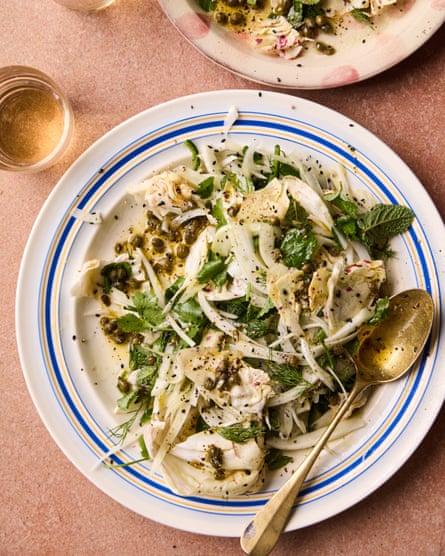
This bright, aromatic salad works beautifully at any meal, but is especially good as a fresh, cleansing contrast to the richness and complexity of kbeibat bulgur. Crisp fennel brings sweetness and crunch, while chilli, herbs and capers add heat and sharpness. Thinly sliced kohlrabi would make an excellent substitute for the fennel, offering a similar texture with a milder flavour.
Prep 20 min
Cook 10 min
Serves 4
For the dressing
2 tbsp lemon juice, plus 1 tsp zest
2½ tbsp olive oil
1 tbsp capers, drained and chopped
Salt and black pepper
For the salad
2 fennel bulbs, trimmed, halved and thinly sliced (about 400g)
1 green chilli, stalk discarded, flesh thinly sliced
100g castelfranco radicchio, or white endive, torn into bite-size pieces
3g mint leaves, roughly torn
3g picked coriander leaves
3g picked dill leaves
2 tsp black sesame seeds, toasted
First, make the dressing. Put the lemon juice and zest, olive oil and capers in a large bowl. Add a half-teaspoon of salt and a good grind of black pepper, and whisk well to emulsify.
Add the fennel and chilli to the dressing bowl, then toss well so the fennel is coated.
Add the radicchio or endive, most of the herbs and the sesame seeds, and toss again, this time gently. Finish with the remaining herbs and serve at once.