2 months ago
69
2 months ago
69
As the UK becomes the latest country to consider following Australia’s lead on a social media ban for teenagers, a question Australians are repeatedly being asked is: how is it going?
“Our data is still minimal,” says Caroline Thain, national clinical adviser with the mental health organisation Headspace. “We’re really waiting for a few more months before we do a deeper dive.”
About one in 10 teenagers coming into Headspace centres have brought up the social media ban as their reason for seeking support, she says.
When the prime minister, Anthony Albanese, talks of the triumph of the ban, he in part measures it by the number of accounts removed: 4.7m from the 10 platforms that were required to comply with the ban from 10 December 2025.
But that number covers just the number of Australian account deactivations on platforms such as TikTok, YouTube, Instagram, Facebook and Twitch in the days after the ban. It may measure the technical success in getting the platforms to comply with the ban – which was no small feat – but it’s not the full picture.
Last week the eSafety commissioner, Julie Inman Grant, announced an evaluation of the ban. The study will follow more than 4,000 children and families for more than two years.
There will be surveys, and opt-in smartphone use tracking, capturing information on time spent and time-of-day app use.
The assessment will build on external data including school test results, and healthcare and drug prescription data.
“The study will explore a wide range of outcomes, including children’s wellbeing and mental health, their exposure to online risks and harms, and their digital habits and social media patterns,” Inman Grant says.
“It will also examine help-seeking behaviour, family relationships and parenting experiences and, the early experiences and impacts on young people under 16.”
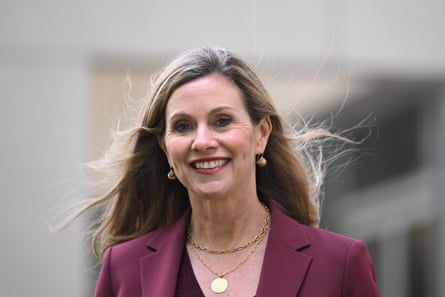
The findings will be released progressively starting later this year.
Schools have reported little change so far – many already banned devices in school hours.
Until eSafety begins reporting its findings, any measurement of success can only be based on vibes.
Teenagers Guardian Australia spoke to two months after the ban came into effect had differing views.
“I’ve got new accounts on TikTok and Snapchat, and Instagram hasn’t flagged my old account as underage yet,” Sarai Ades, 14, said. “It was so much easier than we thought it would be.”
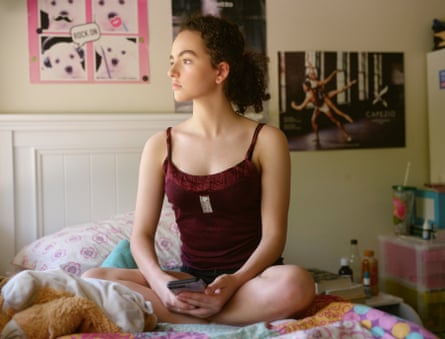
“The ban has made me realise that we sometimes depend on social media a bit too much and there are different ways to communicate and get entertainment,” Grace Guo, 14, said.
Even those who have strongly pushed for the ban say it will take time to see any changes.
Jonathan Haidt, the author of The Anxious Generation, recently told the Hard Fork podcast that if nothing “budges” in five years in terms of mental health improvements for Australian teenagers, his campaign to restrict social media access would have been proved wrong.
However, there is a caveat: it will depend on whether the ban is sufficiently enforced – Haidt says 70% of the population needs to comply with the ban for it to be deemed effective.
The e-safety commissioner is evaluating how the platforms comply with the ban, and ensure teenagers remain off, but it’s too soon to say whether any enforcement action will be coming.
Thain says how the ban is affecting teens will depend on factors such as whether their entire social circle went off the apps, and whether an older sibling in a family still has social media while a younger teen is off.
“We understand that some young people have circumvented the ban,” she says. “It can look quite different in families, in peer groups, but we don’t know what that looks like because nobody’s evaluated all of that data yet.”
Thain cites one example of a group of teenagers who adapted by collectively agreeing to shift from Snapchat to WhatsApp – which is not included in the ban.
Thain urges governments looking to follow in Australia’s footsteps not to assume they know better than young people, and to include them in the development of the policy.
“Consider [teenagers] as experts in their own lives and include them in every single stage of this, if you’re going to do it,” she says.
“And don’t think for a second just because you’re a parent that you know more, because you haven’t grown up with these things in your life.”