2 months ago
54
2 months ago
54
For the first time in our history, more than 70% of Africans are under the age of 30. This, along with entrenched inequalities, poverty, unemployment and socioeconomic fault lines, is reshaping how our societies interact with one another and the world.
This is Africa’s most consequential decade. Leaders who take office over the next 10 years will have to deliver on difficult mandates within a political, economic and social landscape that has been fundamentally altered.
We see politicians responding to this pressure in different ways. This response is summed up by the Namibian president, Netumbo Nandi-Ndaitwah, proclaiming that her administration would be doing “business unusual”.
She is right – this is what the moment calls for. Nothing will ever be the same for whoever takes on the responsibility of leadership in this era.
Those who take office in the next decade will be compelled to deliver results, to make decisions that will shape our socioeconomic norms for the next 100 years. This is why the leadership of the next decade matters.
By 2050, more than 25% of the world’s people will be African. The continent’s population will approach 2.5 billion and, by the end of the century, half of the world’s children will be African.
In practice, a youthful population means exponential demand for healthcare, schooling, jobs, basic services and infrastructure – everywhere, at once. Without deliberate investment in leadership, institutions and systems, our demographic edge could become our most destabilising liability.
This demographic shift is an extraordinary opportunity to tackle future challenges. The moment requires a collective of leaders with the capacity to make deliberate, difficult choices that can deliver at scale.
Young African people are growing up in environments that are not keeping pace with their aspirations. Economies are not creating enough quality jobs. Education systems are out of sync with labour markets. Urban growth is outstripping infrastructure.
Most healthcare systems – especially sexual and reproductive health – remain politically controversial, underfunded and underprioritised, even though they quietly determine outcomes in every sector: learning, labour force participation, household stability and public trust.
But this is not a story of deficit. Young people are already demonstrating what a greater future can look like. They are building enterprises, reimagining governance, and demanding institutions and policies that match their ambition and innovation.
The task for leadership is to meet this energy by creating dignified work that is future-ready, aligning education with emerging industries and ensuring that health systems empower individuals and strengthen societies.
The truth is that a youthful population without opportunities does not stay quiet. But the reverse is also true: when states credibly expand opportunities, a youth-majority population becomes a national advantage.
The countries that intently and strategically invest in youth now will be the ones that define global innovation and competitiveness in the coming era.
So, what is the continent’s challenge? We need systems that nurture the leadership pipelines we require to convert our demographic momentum into sustained growth. To do this, we must evolve the institutional power centres, here on the continent and further afield, that were designed for a different era.
Many of our institutions bear the weight of structural carry-overs: incomplete reforms, weak execution and accountability gaps. Fiscal pressure and high debt-servicing costs for African governments, specifically, have narrowed the room for innovation. The world still does not treat Africa as an equal partner.
Even well-governed countries remain constrained by frameworks that were never built for their ambition, scale or trajectory.
The systemic transformation we need requires a leadership approach that prioritises inclusion, service to the community and long-term sustainability. That is why Leadership Lab Yetu was created: a pan-African initiative convening leaders across generations to practise the kind of leadership this era demands: evidence-based, capable and intergenerational. Yetu (meaning ours in Swahili) reflects the truth that leadership is not the domain of one group or generation, as it belongs to all of us.
The stakes could not be higher. Africa stands at a pivotal moment where leadership transformation is both a necessity and an opportunity. Investing in youth leadership today is about building the structures and support systems that allow people to lead with credibility and confidence, and deliver meaningful results at scale for our communities.
The decisions made in this coming decade on health, education, jobs and more will echo into the continent’s, and indeed the world’s, socioeconomic makeup for the next century.
If we succeed, we can leave a culture of leadership that learns across generations and a pipeline strong enough to reshape Africa’s role in global trade, digital technology and sustainable development.
-
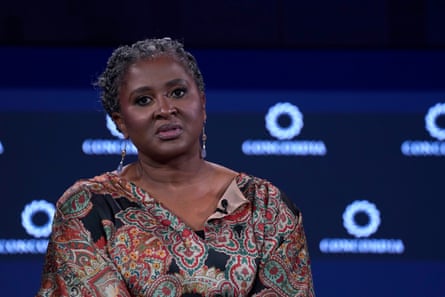
Monica Geingos is the founder of Leadership Lab Yetu and the former first lady of Namibia