3 months ago
79
3 months ago
79
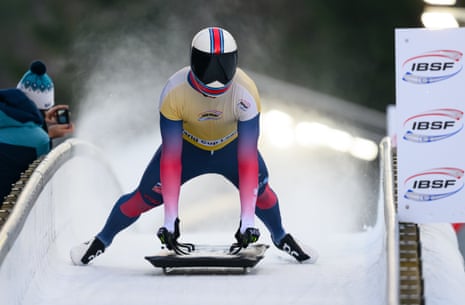
“Excitement is definitely the word I’d use,” Matt Weston says as the world No 1 and the reigning world champion in the skeleton looks ahead to the start of the Winter Olympics this week. Weston has just won the skeleton World Cup, winning five out of seven races and finishing second to his team-mate, Marcus Wyatt, in the two others.
The 28-year-old is clearly Team GB’s strongest hope for a gold medal at Milano Cortina and enthusiasm and belief pours out of him. “I’m just so excited,” he says. “The pressure is higher, it’s a bigger event, and there are a lot of eyes on me. But at the same time there’s that confidence heightened by the momentum and the results I’ve got behind me. I know I can perform.”
Weston is an assured and fluid talker, but he has endured crushing disappointment in the past and adversity as recently as September. In the skeleton he is hurtling down a thick sheet of ice on a hi-tech version of a sled at around 90pmh – headfirst and with no brakes. So he is smart enough to pause.
“I will be nervous. But I can’t wait to enjoy it. The Olympics is such a cool and amazing environment so there’s no point getting bogged down in nerves. When I’m having fun and I’m in that positive mindset I slide faster anyway. The more I enjoy it, the better the results.”
Before his domination this season, Weston had already laid down a huge marker last March when he became world champion for a second time. He casually points out that, being 1.9 seconds faster than his closest rival, Wyatt, “was the second-best winning margin ever” in the skeleton world championships. Weston smiles when I ask if his supremacy over the past year has produced a psychological edge over his competitors?
“Definitely,” he says. “I’ve had comments from opponents saying: ‘Oh, it’s Matt again. How much are you going to win by this week?’ They’re jovial comments and I laugh it off. But that means I am in your head. If you’re focusing on what I’m doing, it means you’re not focusing on yourself. So chat away. It’s great. I put blinkers on to focus on what I need to do to get the best performance out of myself.”
Weston’s current positivity is very different to his dejection after the Beijing Olympics in 2022 when he finished 15th. What had been his aims before that unhappy result? “I don’t ever stand at the top of a start run aiming for anything less than gold,” he says. “That was my mindset in Beijing. That didn’t quite work out, but even before the last run I was like: ‘I can turn this around.’ My mindset never changed from run one to run four. It was only afterwards we had to have a reset.”
Initially, Weston felt so devastated that, he says, “I wanted to quit the sport. I felt that way for three or four weeks. I allow myself that emotional outburst. I was very upset and there were a lot of tears, a lot of conversations with family and my fiancee. But once I decided I was going to try to go to the next Olympics and put this right I never looked back.
“I wouldn’t change a thing. I don’t think I’d be in this position now, talking to you as a two-time world champion, having all this success, without that kind of hardship from Beijing. There’s no way at all.
“I don’t think mistakes are always a bad thing. I’ve had some of my best lessons from my biggest mistakes and that’s one of the reasons why I’m a consistent athlete now. When a race goes wrong, I don’t just push it under the carpet and forget about it. I make sure that I take the lessons that I need.”
Reflecting further on his dismay after Beijing, he says: “I was debating whether I wanted to continue and whether I’d let down myself, my family and the nation. It was a pretty low point. But I took all those emotions and I was like: ‘Is this how I want my skeleton career to end?’ And the answer was ‘no’. I knew I had more in me. I knew the team had so much more potential in us. That lit the fire in me for the next four years.”
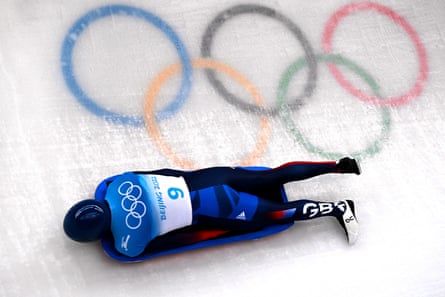
Before Beijing, GB sliders had produced consistent success, remarkable for a country with little winter sports pedigree and few facilities. The most stunning results were achieved by Lizzy Yarnold, who won successive gold medals at the 2014 and 2018 Olympics, while other British sliders including Amy Williams, Shelley Rudman and Kristan Bromley were Olympic or world champions before her.
That legacy explains why Weston found Beijing to be an “embarrassing” experience that carried severe financial consequences. GB Skeleton’s Olympic cycle funding of £6.4m was slashed by £1.7m and Weston says wryly: “Those are big numbers. We expected that we were going to get a funding cut, but it’s always pretty harsh when that happens. We had big plans with all the equipment changes and that became a bit harder without the extra funding. But we’ve managed.”
There has been remarkable success since then for Weston, Wyatt and Tabby Stoecker who, last month, because the first British woman to win an overall skeleton World Cup medal since Yarnold in 2015. Weston suggests that his close friend Wyatt is his most serious rival.
“The instant turnaround [post-Beijing] was amazing. We won the [2023] World Cup straight away as a squad and I won the world championships and the European championships as well. It was a very successful year and every GB athlete who struggled in Beijing won a World Cup medal. We showed the world what we can do when we get it right.”
Apart from implementing radical improvements in their equipment, Martins Dukurs was appointed as GB Skeleton’s performance director in August 2022. The Latvian is a six-time world champion and his influence on Weston has been profound. “Martins knows the tracks inside out,” Weston says. “His equipment knowledge is amazing. But what I most value is his experience. He’s been to multiple Olympic Games. He’s won [two] Olympic [silver] medals. He’s won six world championships. He has vast knowledge of how to deal with pressure. That’s what I use him for the most.
“One of the biggest lessons he gives is ‘that’s life’. He is a big believer in fate and the fact he’s won basically everything else in the sport apart from Olympic gold means he can say: ‘Maybe that’s just not my thing.’
“He encourages you to take a step back because life is bigger than sport and that you’re healthy and you have family around you matters most of all. That’s a really good calming mechanism for me before a race.”
Weston is also philosophical because he realises how fortunate he is to be going to these Winter Olympics. “On 24 September, about eight weeks before the season started, I gave myself a 12cm tear in my quads. That was almost my Olympics over. I thought that was it for about a week – until I had the scans.
“It really felt touch and go because I was on crutches and completely missed pre-season. I went straight into racing and I was only pushing at about 65%. It’s only been the last couple of races that I’ve been back at 100%. The injury was definitely scary.”
Eleven years ago, Weston was committed to taekwondo when a different kind of injury changed the course of his life. A stress fracture in his back, when he was 17, ended his promising combat sports career , competing at national and European level. He also swapped a promising start in rugby for the skeleton after his potential for winter sports was spotted in the UK Sport talent identification programme Discover Your Gold.
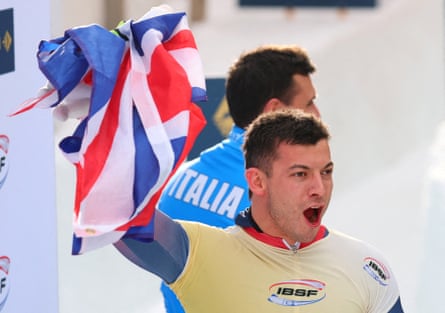
“When I took up skeleton it was the first time I said: ‘Let’s take this more seriously. Let’s put everything into this.’ Part of me thinks if I’d done that with rugby where would I be today? But there’s nothing like skeleton.”
What were his first runs in the skeleton like? Weston is amused by the memory. “When you first start, you get off from halfway down the track,. “My first time was at Innsbruck and, at halfway, the coach was holding my legs and saying: ‘Are you ready?’ Then they let go and you start accelerating. It hits you then that you have no brakes. This is a sheet of ice and I’m on a sled with no brakes. That fear aspect was definitely very real at the start.
“You have no control and you’re hitting concrete walls covered in ice so that was pretty terrifying. But as soon as I got off the sled I wanted more. I got that adrenaline rush and I was like: ‘Right, let’s get back up there, let’s go again.’
“ I’ve loved that kind of speed since then, but the first time is pretty scary. It very quickly gives you respect for the guys at the top because it’s very hard to go in a straight line on a skeleton sled.
“It’s not unusual to crash where you have little control of skidding down an ice track. For us to go fast you want to be on the limit and sometimes you push a bit too much and you don’t have enough grip so you can fall out of some corners, get flipped on to your back and you get some pretty bad ones, especially when you’re learning. But now I don’t really crash that often. Maybe once or twice a year I’ll mess up a corner and have a bit of an accident.”
He adds, with impressive nonchalance, that “my fastest speed is 142.5km which is touching 90 mph. In Cortina I’ll be over 125 km. It’s not the fastest track in the world. It’s quite subtle and technical so that will be the difference. But that’s still over 80 mph.”
Accidents and injuries are inevitable. “In the past three years I’ve had a back fracture and then a year ago I tore my hamstring. It was pretty awful, a grade 3C, which is the worst you can get before rupturing. This season I’ve had that bad quad tear with a 12cm grade 3C again. I said to my coach that maybe it’s my lucky charm. Getting injured in the summer makes me better on ice in the winter.”
Weston’s soaring self-belief has little to do with luck. “My whole mindset since Beijing, and everything I’ve worked for, is that top step on the podium and that’s all I can think of right now,” he says. “That’s everything I’m aiming for. Racing is unpredictable, but we’re in a very good position to get there.”