1 month ago
51
1 month ago
51
Like a sporting Dr Pangloss, Fifa’s president, Gianni Infantino, would like to persuade football followers that they are living in the best of all possible worlds. Maddeningly for him, many disagree. On Monday, Mr Infantino published a 15-page Instagram rant in which he bemoaned the “hate and false rumours” in circulation during the recent men’s World Cup. White House interference over a crucial refereeing decision, prohibitive ticket prices, unnecessary but lucrative hydration breaks; it was all, as his best friend in politics, Donald Trump, would say, “fake news”.
But where the president of world football’s governing body sees haters, others see lovers of the game rightly concerned over where he is taking it. On Tuesday, Fifa confirmed that it hopes to sell stakes in the World Cup and other tournaments to private investors who may include Joshua Kushner, the brother of Mr Trump’s son-in-law Jared. The investors would buy into a new $20bn company, Fifa Forward Enterprise, which would sell all of Fifa’s commercial rights, including ticketing, and take charge of “operational delivery” of World Cups.

Members of the extended Trump family do not generally contemplate business ventures out of a desire to spread “joy and happiness” in the world (which the egregious Mr Infantino presents as his mission). If the plans go ahead – sweetened by offers of a $30m windfall for national associations – investors’ desires to maximise revenues would undoubtedly accelerate the hyper-monetisation of the World Cup that is already taking place.
Almost certainly there would be pressure for more frequent and bigger tournaments at both club and national level, distorting the international game’s calendar to the detriment of domestic leagues. Mr Infantino has already indicated that he would look favourably on such an expansion, despite objections from bodies such as Uefa, European football’s governing body. Innovations such as the widely loathed hydration breaks – which by breaking games up into four quarters, US-style, allowed extra advertising slots – would no doubt proliferate.
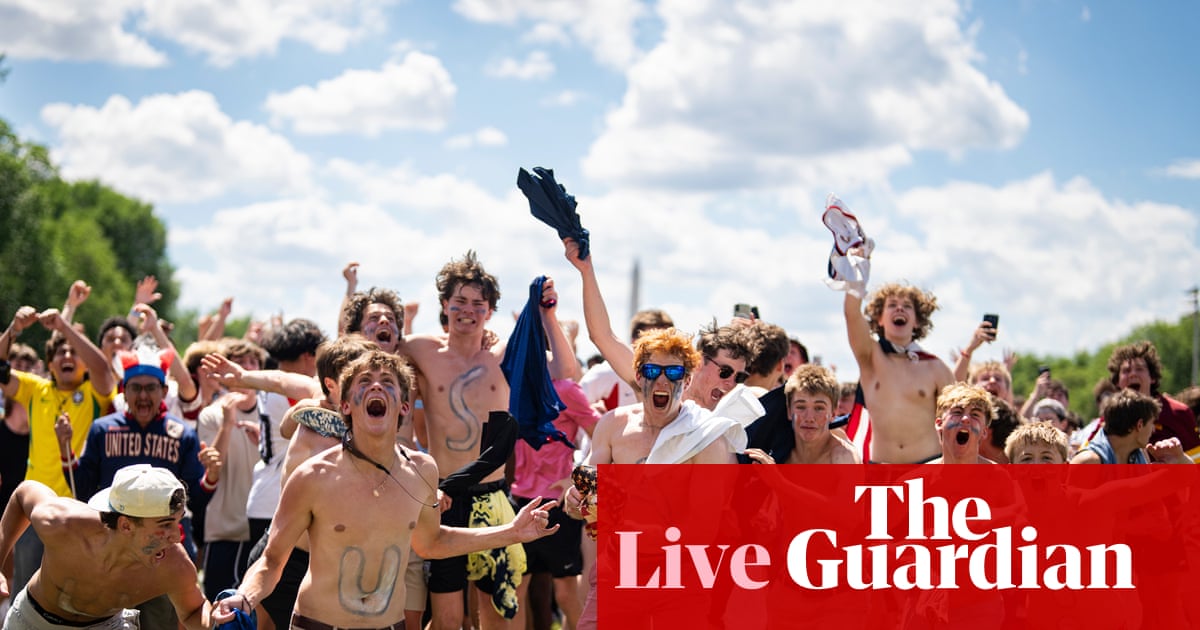
The prospect revives fears generated by the failed European Super League proposals, which were furiously opposed by football supporters in 2021. During this summer’s World Cup in the US, Mr Kushner and others will have seen at first-hand the vast commercial possibilities of an event that unites a global audience in an age of fragmented media. As the highest-level steward of the game, Fifa’s primary job is to protect football from forces that might be interested in exploiting its appeal by selling its soul; instead, under Mr Infantino, it appears happy to do their job for them.
Angry opposition to the plans from Uefa and Concacaf (the equivalent body for North and Central America) suggests that the governance of the game may be at a crossroads. Mr Infantino’s tireless self-promotion, and shameless efforts to curry favour with the Trump administration, have long grated. But placing the planet’s most-watched sporting competition at risk from predation by private capital is of a somewhat different order of magnitude.
The visionary creator of the World Cup, Jules Rimet, hoped that it would help foster unity and solidarity between nations. Mr Infantino routinely pays lip service to such ideals, and did so again in his Instagram screed. In reality, though, he is dragging the world’s favourite sport further and further away from its roots, as he relentlessly follows the money wherever it leads.
-
Do you have an opinion on the issues raised in this article? If you would like to submit a response of up to 300 words by email to be considered for publication in our letters section, please click here.