3 months ago
108
3 months ago
108
José Yugar-Cruz spent 17 months in a county jail in Muscatine, Iowa, despite never having committed a crime.
Originally from Bolivia, he entered the United States legally at the Arizona border in July 2024, affirmatively approached authorities, and requested asylum. Six months later, a US immigration judge found he had been tortured in Bolivia, would probably face torture again if returned, and barred his removal to his home country. The government did not appeal. Yugar-Cruz was not released for almost a year. Instead, ICE spent months searching unsuccessfully for somewhere else to send him. He finally won his release in December 2025.
But after the United States negotiated a new “Third-Country Removal Agreement” with the Democratic Republic of the Congo (DRC), a country beset by conflict and corruption, ICE placed Yugar-Cruz on the manifest for an April charter flight to Kinshasa. On 8 April, he was redetained at a check-in appointment with ICE. Although a temporary stay kept him off that flight, a federal judge later ruled he could not block a future deportation to the DRC, risking Yugar-Cruz’s removal to a country he has never set foot in. “I don’t know [it], I have no family there, I don’t speak their language,” he said. “I feel like a person who has no value.”
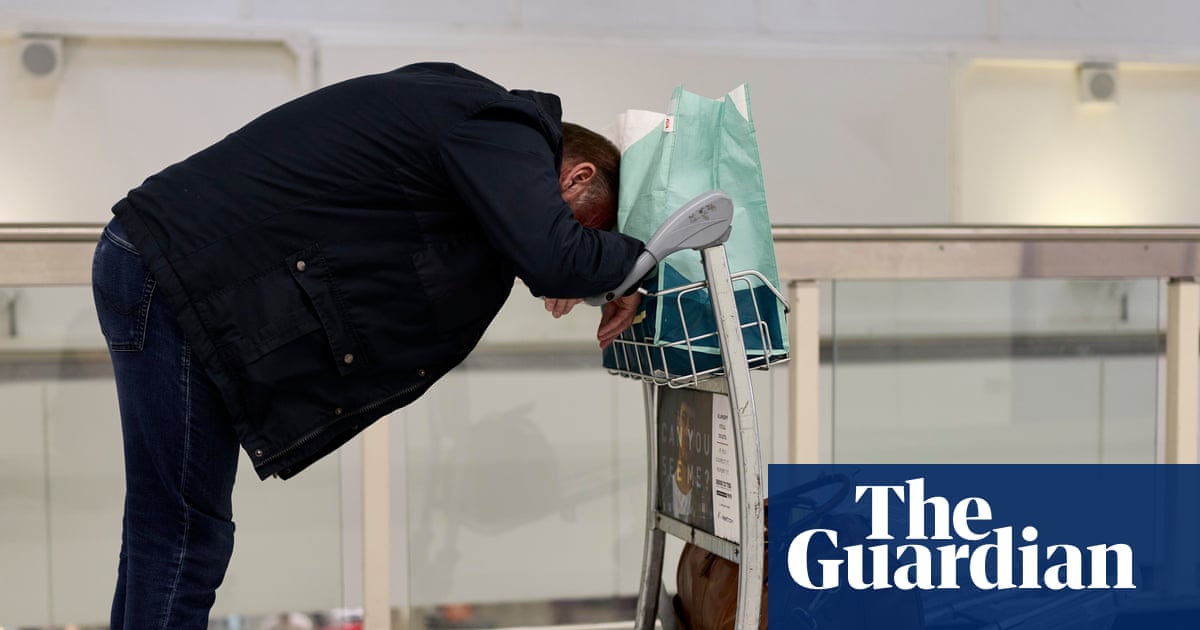
The flight Yugar-Cruz narrowly missed carried 15 South Americans to DRC. They arrived in chains, a routine feature of these flights, where passengers are held in handcuffs, waist chains, leg irons and sometimes straitjackets.
Had Yugar-Cruz been onboard, he would now be among those held in a rundown hotel near the airport, where the water shuts off for days, rodents move through the rooms and mosquitoes are inescapable.
The US-DRC arrangement is the latest deal outsourcing America’s protection obligations to countries whose own asylum systems are collapsing. The Trump administration has deemed conflict zones like South Sudan and authoritarian states like El Salvador and Equatorial Guinea safe enough for third-country deportations. The US is now in talks to send 1,100 Afghans who assisted the American war effort to the DRC. On Wednesday, the US secretary of state, Marco Rubio, touted having “achieved” “signed agreements” with other countries “to allow us to deport people to those countries”.
As human rights lawyers with the Open Society Justice Initiative, we are demanding that the United States halt this inhumane deportation regime. We also urge governments around the world not to become parties to these clandestine arrangements, whose terms remain hidden from the public, courts, lawyers and the people being deported.
The US Department of Homeland Security has kept the terms of its deportation agreements largely hidden, as the administration pressures more governments across the hemisphere to join its expanding third-country removal network. Third Country Deportation Watch, created by Human Rights First and Refugees International, estimates that as of May 2026, more than 17,500 people have been sent to countries not their own, and the pace is rapidly accelerating.
US courts have responded unevenly. In April 2025, a federal judge in Massachusetts issued a class-wide injunction requiring that noncitizens receive notice of where they will be sent and a meaningful chance to raise any fear-based claims. A Washington DC judge found the practice a “widespread effort to evade the government’s legal obligations by doing indirectly what it cannot do directly”. But the supreme court has repeatedly stepped in to lift injunctions, allowing these removals to continue.
While the United States considers these schemes durable solutions, receiving countries are describing them as temporary. The DRC, a current hotbed for deportations, has said its arrangement is “part of the temporary reception mechanism for nationals of third countries” and “in no way constitutes a permanent installation on national territory”. In practice, “temporary” has often meant those deported from the US face detention, pressure to leave, or onward removal.
International law has long prohibited sending people to places where they face persecution or torture. That prohibition also extends to indirect transfers, when a receiving country is likely to send them onward into harm – the very danger US law was supposed to prevent. These arrangements allow the United States to wash its hands of its legal obligations while other governments do the illegal work for it.
No country can guarantee safety if it lacks functioning asylum laws, honest courts, impartial officials and the will to protect people from detention, coercion, disappearance or onward removal. States that facilitate these transfers are violating their own laws and international law.
That is why the Open Society Justice Initiative is supporting lawyers in several receiving countries as they challenge these transfers in domestic and regional courts. Governments in Costa Rica, Panama and Uganda have already responded to litigation by releasing some detainees or pledging not to send others to dangerous destinations. But these deportations continue to accelerate, and for many people the law may arrive too late.
The United States should end this practice. Governments asked to facilitate it should refuse to become US instruments. Real refuge requires law, transparency and safeguards. Anything less is complicity.
-
James A Goldston is the executive director of the Open Society Justice Initiative and Natasha Arnpriester is senior legal counsel at the Open Society Justice Initiative