3 months ago
62
3 months ago
62
On the night of Boxing Day 2021, my dad’s body was found near a Cardiff hostel. His death, at 55, was as sudden as it was not. For years, alcoholism had been changing the shape of his heart.
He died less than a mile from his old office; top law firm, equity partner. Four miles from our once tight-knit home in a leafy neighbourhood. He had lost both his family and his job in 2019. Raised in Barry, working class, he had been proud of the beautiful life he had built for us. Others thought he “had it all”. He was widely adored, but drinking made him volatile. He was homeless and often behind bars in his final two years.
I saw my dad for the last time in the spring of 2019, just before I moved to Australia. I was no longer able to bear the distress and chaos caused by his addiction. From then on I saw him only in photos: an article about homeless people getting Christmas dinner; the police’s missing-person appeals. Where had my caring, clever dad gone?
I never spoke about his drinking. It seemed disloyal, then gloomy, then futile. He had been one of my closest friends. It was only after losing him for good that I realised I wanted others to know him. This came through writing, which I began compulsively the morning after the news. It’s what I do to keep my mind steady. I was five when my dad sat me down to write about an event that had shaken me: my brother’s first epileptic seizure in 1999. It was a lesson in how finding the words could help in the face of unthinkable things.
My memoir, Long Going, came out last summer. It’s the story of my life with and without the lightning-strike man who raised me. Our story resonates, it turns out. Readers say they found it surprisingly uplifting. I feel lighter since writing it.
At events, I’m often asked about my relationship with alcohol. My response is evolving. Like my dad, I never suffered hangovers. I could drink to oblivion with friends and wake up fine. Nowadays I’m vigilant. Since becoming a parent myself, I count myself among the rising number of sober-curious people. I know what’s at stake.
In June I was on a Tŷ Newydd writing course with Amy Liptrot, whose memoir The Outrun is an invigorating account of recovering from alcoholism in Orkney (the film adaptation, starring Saoirse Ronan, was released in 2024). Amy suggested to us that memoirs could be windows on to different worlds, or mirrors of our own worlds. Or sometimes, I wonder, both? Even writing my own book, my dad’s pencilled notes gave me a window into his world of prison cells and leaky tents.
Over the past year, I’ve been drawn towards other memoirs about addiction. Either I hadn’t realised these books existed or I avoided them. I’m not sure which is true, but I wish I had read them sooner.
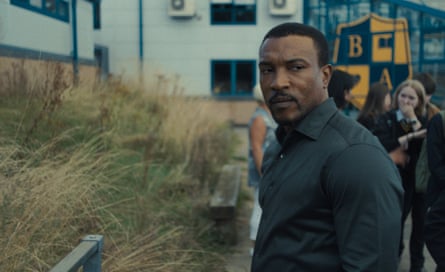
Take Always Winning by Top Boy star Ashley Walters. Raised in Peckham, with his dad circling between prison and binges, Walters ended up in a young offender institution at 20. He ultimately managed to turn his life around, and forged a stellar acting career, most recently starring in hit show Adolescence. His reading of the audiobook is revealing, particularly on how he confronted his alcoholism and broke cycles by going into rehab. I saw my dad in Walters’ recollections of his arrogance. I saw myself in his memories of loved ones treading on eggshells, unsure which version of him to expect.
Alcoholism is known as a family disease, whether that means lurking in genes or spilling consequences on to those around the addict. A powerful testament to this is In the Blood, co-written by Arabella Byrne and her mother, Julia Hamilton. With admirable honesty, they reflect on what brought them to Alcoholics Anonymous nine months apart. Arabella and I held an event at Blackwell’s in Oxford during my book tour. Her mother was in the front row. My baby daughter was on my lap. It felt like we were breaking cycles together.
Thankfully, there is no shortage of memoirs about recovery. We need them. Haunted by his dad’s addiction, Jesse Thistle’s From the Ashes is a gritty, gripping book about his own long struggle with addiction and homelessness before he went into rehab, found love and became a scholar. Octavia Bright’s This Ragged Grace beautifully articulates her journey into sobriety, alongside her dad’s descent into Alzheimer’s.
In reading these books, I inevitably look for explanations. Why didn’t my dad recover? What else could I have done? I won’t pretend to know the unknowable, but something does keep coming up. Each writer describes a moment of clarity that life would be better without alcohol. This simple inner conviction – rather than external pressure – takes them to AA or rehab. Here, ego and destructive patterns are exchanged for community and healthy habits. A day at a time, they continue to choose this better life, embraced again by loved ones.
I was told that my dad once said he’d rather die than go sober. Some things can’t be explained. He had so much to live for. He deserved to enjoy retirement and time with grandkids. Had he recovered, he’d have been an incredible presence in my daughter’s life – just as he had been in mine.
This month I’m marking his birthday with three events – from a bookshop in Chester, where he attended law college, to the homeless shelter that fed him on Christmas Day, to Bristol with Nacoa, the charity for children of alcoholics. I can’t change how my dad’s story ended, but I can pass on what he taught me about finding the words. Here’s to more windows opening, and fewer unthinkable things.
-
Long Going by Sophie Calon is published by Honno Welsh Women’s Press. To support the Guardian, order your copy at guardianbookshop.com. Delivery charges may apply