3 months ago
86
3 months ago
86
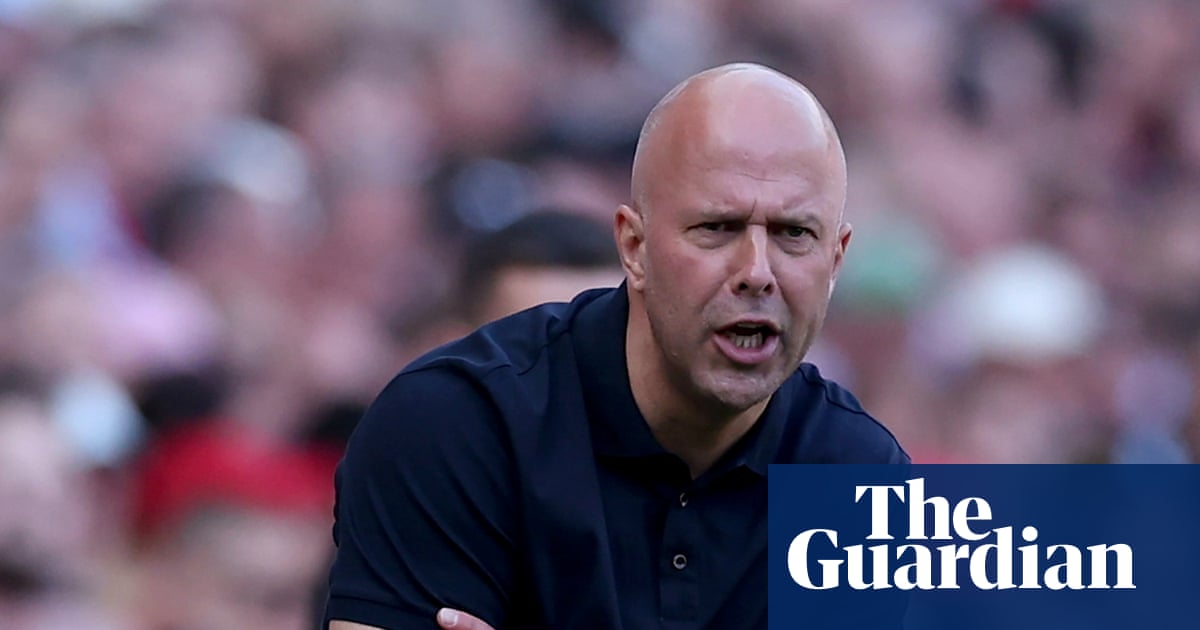
“I tell you now, there is an attempt by some of the longer serving chief constables to get rid of me,” says Ch Insp Andy George. “I can guarantee I know exactly what they think of me: that I’m a wee upstart, so I am, that doesn’t know my place,” he adds with a smile.
The eldest son of a Protestant mother from Armagh in Northern Ireland and a father who was born in Malaysia but served in the British army, George is the longest-serving president of the National Black Police Association (NBPA).
He was first elected in July 2020 to represent its 6,000 members, three months after the murder of George Floyd in Minneapolis by the officer Derek Chauvin.
Twice highly commended during his time in active service in Northern Ireland, which included a near decade in an armed response unit, George says he preferred to “keep his head down” early in his career.
It was the death of his sister, Vikki, who killed herself at the age of 23, that led him to put time into the NBPA, a staff network that seeks to support black officers and improve the quality of the service to minority ethnic communities.
His sister had struggled with her mental health but “the racism side was a big part of it”, he says. “She ended up calling herself the N-word and the P-word – it just ended up shattering herself as a person.”
He discovered her body in the home he helped her find.
George, 46, hoped to play his role in changes to British policing as it duly paid its lip service to the new awareness sweeping through the west of societal and racial iniquities, as a result of Floyd’s murder.
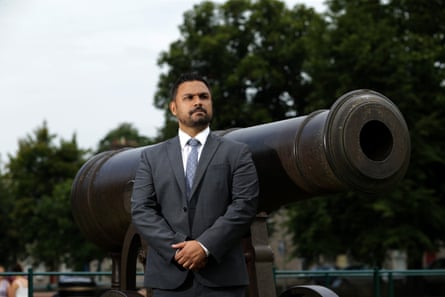
His time has instead seen him face toxic abuse on social media and subject to a host of formal investigations after complaints about his comments on British policing. Most recently he was also ordered to return to core duties in what he believes is an attempt to marginalise the views of those he represents.
“I believe that I am being victimised and discriminated against in an attempt to silence me,” he says.
In the early years of him leading the NBPA, George says there were “challenging” conversations with the then Met commissioner, Cressida Dick. But there were at least conversations.
From 2022, everything changed, he says. The then home secretary, Suella Braverman, who this week defected to Nigel Farage’s Reform, was suddenly talking about the “Guardian-reading, tofu-eating wokerati”.
George said his style of championing the interests of minority ethnic communities was as it had always been. “The political environment had changed,” he says.
When Sir Mark Rowley succeeded Dick in September 2022, the new commissioner prohibited Met officers from taking the knee.
What had been embraced by some officers was then described by Rowley as an act of alignment with an interest group, a position shared by Braverman.
George requested an early meeting with Rowley. It was declined, he claims.
The two men have met just twice in more than three years.
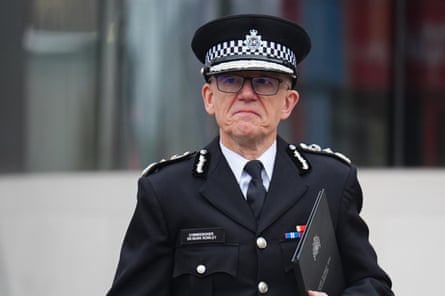
The Met counters that it holds meetings with the Metropolitan Black Police Association branch and that Dr Shereen Daniels has been appointed as an expert adviser.
George asks why Rowley would shy away from tough conversations with those not working in New Scotland Yard or appointed by its executive committee.
Since 2023, George has faced five misconduct investigations by his local force, the Police Service of Northern Ireland (PSNI), following complaints about his interventions in the media or on X.
In two cases that met the PSNI’s threshold for investigation, it was found there was no case to answer.
The other two ended in “managed action”: a low-key conversation about the way he communicates.
The fifth and most recent misconduct investigation, launched in December, relates to two posts on X in which he reacted to the BBC’s Panorama investigation into racism at Charing Cross police station.
“How many platitudes and excuses can we hear from the commissioner?” George wrote. “@Metpolice commissioner has empowered toxic culture and it is laughable for him to suggest it is racists and misogynists who want him out.”
George then claimed Rowley was behind a delay in a two-year review on Louise Casey’s 2023 report that found the Met to be institutionally racist and misogynistic, a phrase that Rowley has refused to accept.
The charge against George is that his comments were liable to lead to a loss of public confidence in policing. He counters that he is doing his job by holding truth to power.
“It’s not the behaviour, it’s the audience,” he says. “They try to single me out as this person that wants to run my mouth all the time, and just likes to be controversial, which isn’t the truth.”
He has initiated a fair employment case against the PSNI, alleging racial discrimination.
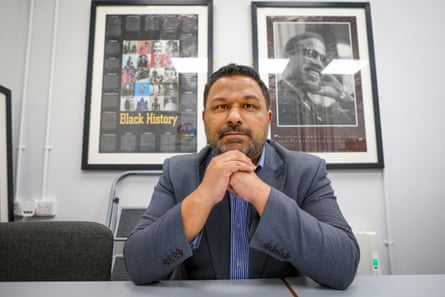
Included as evidence for his claim is the demand last year by the chief constable of Northern Ireland, Jon Boutcher, that he end his secondment to the NBPA and return to core duties due to “organisational requirements”.
He was re-elected to his post with 75% of the membership vote and is now having to carry out his NBPA work in his free time.
As evidence of what he believes is an attempt to unseat him, George’s claim cites a meeting with Boutcher in October 2024, where the chief constable was said to have “confirmed that the [Met police service] regularly contacted the PSNI about putting pressure on me and the NPBA”.
“It is apparent the [Met] and PSNI are working together to silence me and the NBPA, undermine my personal and professional reputation and limit my career progression,” he writes in his employment claim, seen by the Guardian.
The allegation is denied by both the Met and the PSNI.
“I do love being a police officer,” George says. “I say to people, remember how you felt when you first got that email saying you got accepted as police officer, bring yourself back to there. But I can’t really stand wholeheartedly and say I am invested in where things are.”
A PSNI spokesperson said that when Boutcher became chief constable he had supported a two-year extension of George’s secondment to the NBPA up to October 2025.
She said: “The chief constable has personally supported him throughout that period and has had no personal involvement in the misconduct investigations that emanate from his social media or messaging on behalf of the NBPA, including publicly supporting him regarding one such investigation into his social media messaging.
“The Metropolitan police has not influenced the chief constable in any of his decision-making regarding Ch Insp George.
“He has returned to be a police officer in Northern Ireland in line with the original agreement in October 2023. The position regarding his return has been repeatedly made clear to him during his tenure as president of the NBPA …
“The legal action taken by Ch Insp George should be allowed to take its course, however we do not recognise any of the remarks he has made in the article with regards to the PSNI.”
A Met spokesperson said: “We value the contribution of the National Black Police Association in supporting black police officers and staff and ensuring their voices help shape equality in policing.
“Given the Met’s London focus, however, our efforts are concentrated on working primarily with the Met Black Police Association. This ensures that officers and staff within the Met, with relevant lived experience, are heard. Senior leaders do seek regular meetings with Mr George and others at the NBPA.”